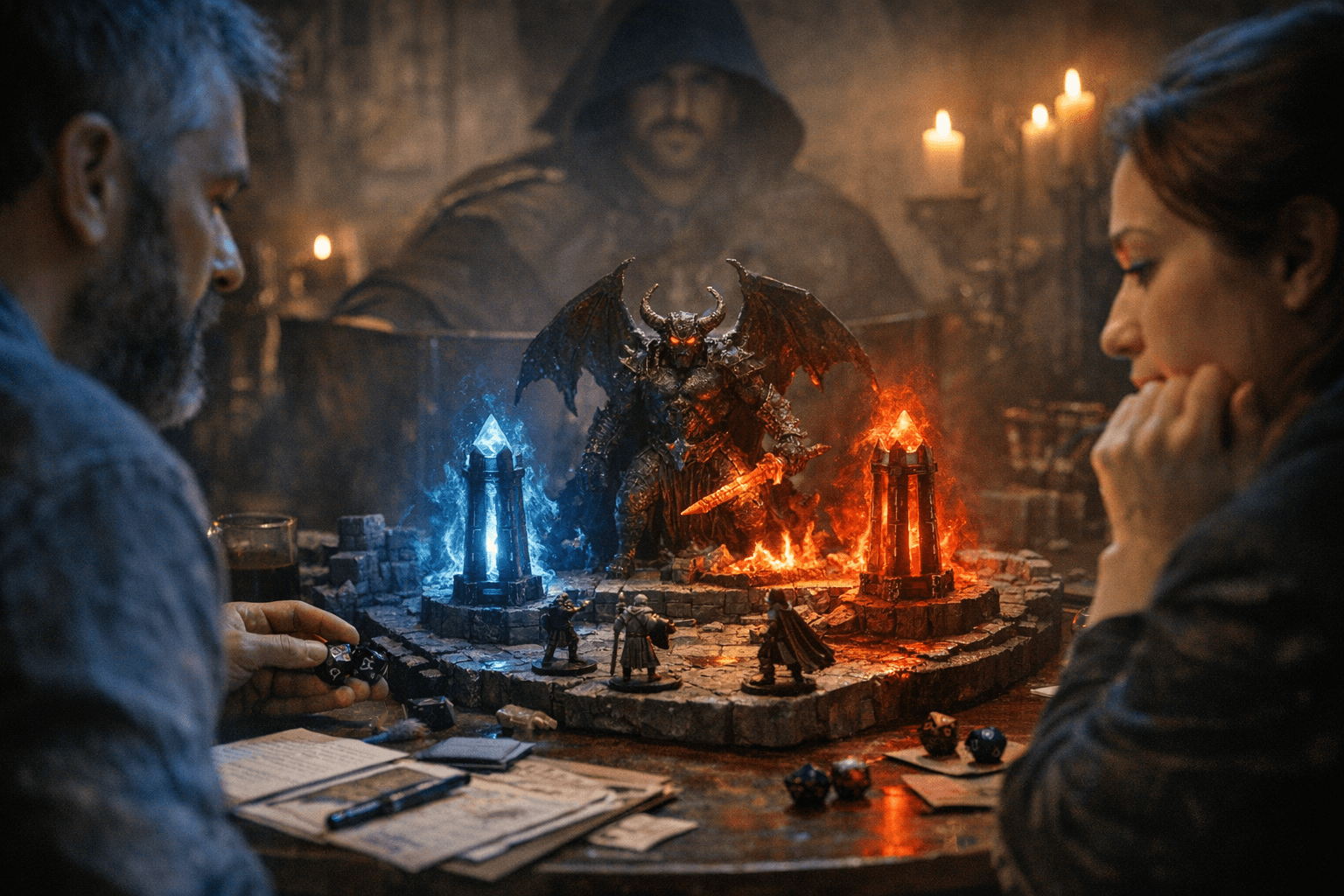
How to start playing Dungeons & Dragons - a practical primer
Learn D&D’s core idea, character creation basics, starter adventures and tools, and where to find groups to run your first sessions.

1. Core idea of Dungeons & Dragons
Dungeons & Dragons is cooperative storytelling with a Dungeon Master (DM) who frames the world and players who portray player characters (PCs). The rules act as a shared toolkit for resolving risk and drama—think skill checks, combat, and roleplay as ways to let the story breathe while giving mechanical stakes. Embrace improvisation: the best sessions balance rules with the group's creativity, letting the DM adjudicate and players shape the narrative together.
2. Dungeon Master versus player roles
The DM designs scenes, runs NPCs and monsters, and sets challenges; players make choices, describe actions, and control their PCs’ personalities and tactics. If you’re starting as a DM, focus on managing pacing, reading the table’s fun signals, and saying “yes, and…” more than “no.” Players can make the game smoother by preparing a short backstory, sharing expectations during a session zero, and being ready to lean into roleplay or rolls as the table prefers.
3. Character creation basics
Character creation boils down to a few core steps: choose race and class, assign ability scores, pick skills and equipment, and define a background and personality. For new players, prioritize a single interesting class feature and one role at the table (damage dealer, face, support, scout) so you don’t get overwhelmed. Keep your first character simple: pick a prebuilt or use the builder to avoid paralysis by options and learn how your class shines in play before branching into multiclassing or complex builds.
4. Use the free Basic Rules to get rolling
The Basic Rules provide the essentials: core classes, races, combat procedures, spell basics, and how to run adventuring sessions—without cost. They’re perfect for learning the mechanics that matter in your first few games and are more than enough for a handful of levels. New groups should read the relevant combat and spellcasting sections so everyone shares a baseline vocabulary at the table.
5. Starter adventures like Stormwreck Isle for your first sessions
Starter adventures are short, focused scenarios crafted to walk new groups through exploration, social scenes, and combat without long-term commitments. Stormwreck Isle is an example built for beginners, with clear objectives, approachable foes, and pre-generated characters to speed setup. Running one of these gives your table a safe sandbox to learn initiative, turns, and teamwork without the pressure of maintaining a long campaign story.
6. Starter and Essentials product lines for beginners
Starter/Essentials product lines bundle rules, short adventures, and ready-to-play characters in formats designed for first-timers and DMs looking for structure. These products are practical for gifting new players or as a DM’s first toolkit because they reduce prep time and provide a guided experience. Treat them as scaffolding: use the boxed material to learn the flow, then customize or expand once your group finds its groove.
7. D&D Beyond character builder and digital toolset
The D&D Beyond character builder automates the mechanical grunt work—ability score math, equipment choices, and spell lists—so you can focus on role and tactics. The digital toolset stores character sheets, rules compendium entries, and searchable references, making rules checks and leveling smoother at the table. Use the builder for quick level ups, to share printable sheets, or to test different class combinations before committing to a paper character.

8. Where to find groups: Discord, local stores, and live-play events
Join community Discord servers to find pickup games, ask questions, and read session threads; many servers host organized play, one-shots, and mentorship channels for new DMs. Local hobby stores and game shops run weekly play nights and posting boards where tables form—walk in, introduce yourself, and ask about beginner-friendly tables. Live-play events and conventions offer one-shot tables and demos that let you try different styles and DMs without a long-term commitment; treat them as low-pressure auditions for your regular group.
9. Pre-generated characters and starter scenarios for fast first sessions
Pre-generated characters let you start playing in minutes and are ideal for one-shots or first sessions where learning the rules is the priority. Starter scenarios paired with pregens remove decision friction: players can learn turn sequencing, action economy, and role responsibilities during play rather than during character creation. Encourage a short session zero—5 to 10 minutes—to pick hooks and align expectations even when using pregens; it prevents table friction and speeds fun.
10. Glossaries and New Player Guides to flatten the curve
Glossaries explain essential terms like AC, HP, proficiency bonus, and advantage/disadvantage—those shorthand phrases you’ll hear a hundred times at the table. New Player Guides stitch together the rules, etiquette, and quick-start advice so players can absorb what they need without reading every rulebook cover to cover. Keep a small cheat sheet at the table with common terms and combat reminders; it lowers the barrier for new players and keeps gameplay flowing.
11. Treat the D&D Beyond How to Play hub as your roadmap
The How to Play D&D hub centralizes these beginner resources: the free rules, starter adventures, product recommendations, the character builder, and community-finding tips—making it a practical one-stop starting point. Use it as your checklist: learn the basics, pick a starter adventure or product, build or grab a pregen, and find a table via Discord or your local store. For many new groups, that sequence turns confusion into confidence within a single session or two.
Our two cents? Treat your first games as experiments: start small with a pregen and a starter adventure, lean on the digital tools to reduce bookkeeping, and prioritize fun over perfect rules. You’ll learn faster by playing and tweaking than by reading every rule—so grab dice, find a table, and roll with it.
Sources:
Know something we missed? Have a correction or additional information?
Submit a Tip