How to stay safe from jellyfish stings this beach season
Summer brings more jellyfish encounters, but the bigger danger is bad first aid and missing the rare signs of an emergency.
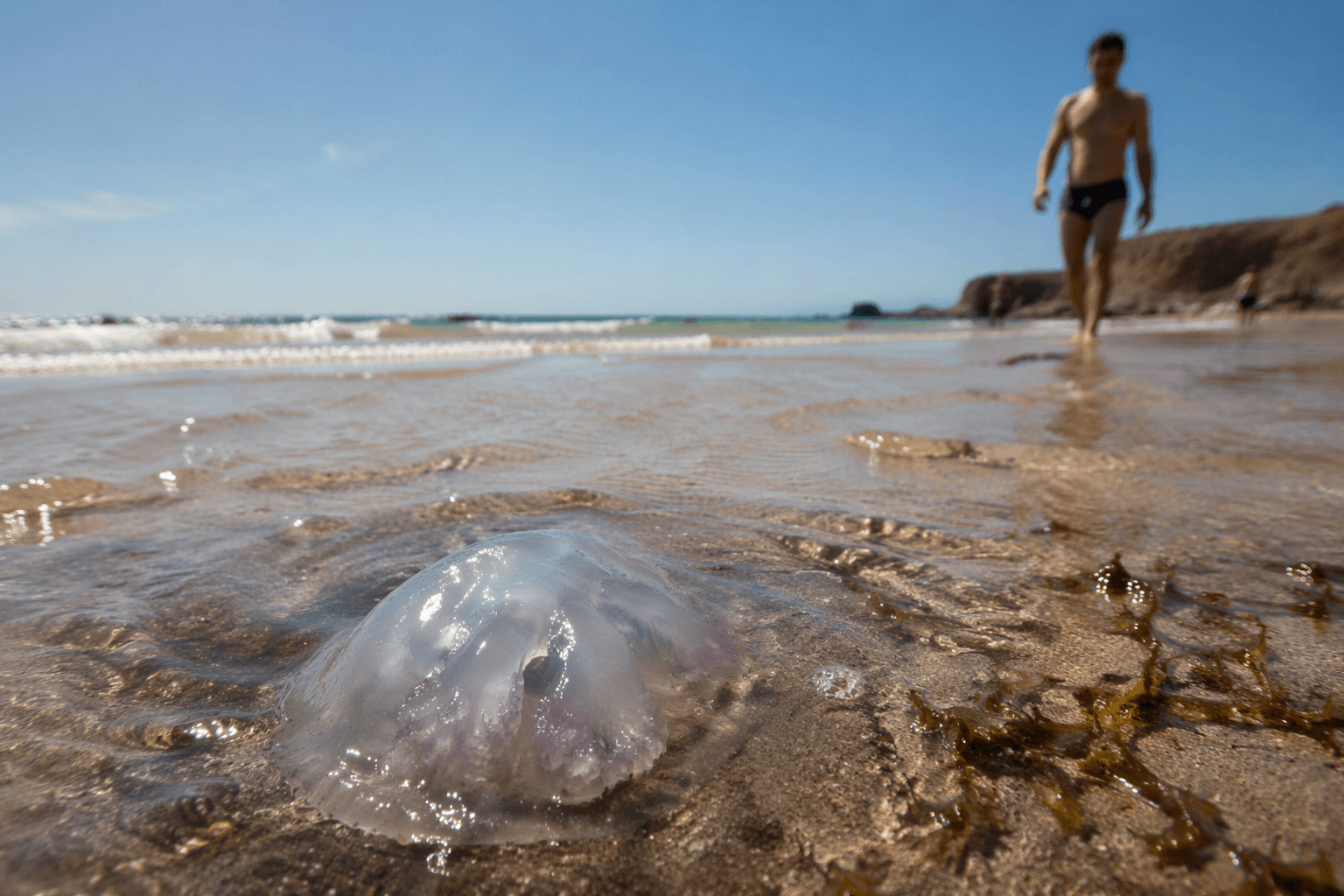
Why beach season raises the odds
Jellyfish encounters generally rise in summer, when more people are swimming, wading, diving, and spending longer stretches along the coast. That does not mean every warm month brings a crisis. It does mean the combination of people, water, and stinging marine life creates more opportunities for contact, especially when conditions concentrate jellyfish near popular beaches. NOAA also notes that ocean sprawl, the spread of artificial structures tied to shipping, aquaculture, and coastal protection, may give jellyfish polyps new habitat and help fuel blooms.
The bigger scientific point is that jellyfish are not simply marching upward in a neat, universal pattern. A 2024 review found that bloom occurrence remains unpredictable after decades of monitoring, and that the evidence for a worldwide increase is still limited. That matters for public health because the practical response is not panic, but readiness: know what species are around, understand local conditions, and treat every sting seriously enough to respond correctly the first time.
Know the difference between a sting and a dangerous species
In the United States, most jellyfish stings are painful but not life-threatening, though some can trigger systemic illness or severe allergic reactions. Those reactions can involve breathing problems, heart problems, paralysis, or even death in the rare worst cases. The basic message is simple: most beach stings are not emergencies, but no one should dismiss a sting just because it looks like a simple rash.
Some species elsewhere are far more dangerous. NOAA considers the Australian box jellyfish, Chironex fleckeri, the most venomous marine animal. It can grow to about one foot in diameter, trail tentacles up to 10 feet long, and swim at speeds approaching four knots. In warm coastal waters where box jellyfish occur, that combination of speed, size, and venom is exactly why first aid has to be fast and species-aware.
Another common mistake is assuming anything floating at the waterline is a harmless jellyfish. The Portuguese man o’ war is not a true jellyfish at all. It is a siphonophore, a colony of genetically identical zooids working together as one animal, and NOAA warns that it can still sting weeks after washing ashore. That means even a dead-looking strand of tentacles can still pose a live threat on the beach.
What to do the moment a sting happens
The first step is to get the person out of the water and remove any visible tentacles carefully, preferably with tweezers or by scraping with a credit card. After that, rinse with seawater rather than fresh water. Fresh water can encourage more toxin release, while seawater is the safer rinse in the guidance reviewed by major medical sources.
For pain relief, current guidance supports hot-water immersion, usually around 110 to 113 F, or 43 to 45 C, for about 20 to 45 minutes. Mayo Clinic recommends keeping the affected skin immersed or under a hot shower until the pain eases, and the CDC says hot water immersion can potentially halt the effects of some venoms, including Australian box jellyfish toxin. If the water feels scalding rather than very hot, it is too hot.
Myths that can make a sting worse
The internet loves a jellyfish myth, but some of the most common fixes are useless or harmful. Peeing on the sting does not belong in proper care. Mayo Clinic lists human urine, cold fresh water, alcohol, ethanol, ammonia, pressure bandages, towel rubbing, and scraping out stingers as unhelpful or unproved, and it specifically warns that cold fresh water can make matters worse by encouraging more toxin release.
That is why improvised treatment can be more than a waste of time. If a person spends several minutes chasing a folk remedy, they may delay the one thing that actually helps: removing tentacles, using the right rinse, and managing pain with hot water when appropriate. The goal is to stop further envenomation, not to test old beach folklore against a venomous animal.
When a sting becomes a medical emergency
Get emergency medical help if the person has difficulty breathing, signs of shock, severe pain, or symptoms of a severe allergic reaction. The American Red Cross also says to treat a sting as an emergency if it comes from a known lethal jellyfish, an unknown marine animal, or if the person has a history of allergy to marine life stings. Stings to the neck or face, and especially those near the eye, need immediate attention too.
This is where public forecasting becomes part of public safety. NOAA’s National Centers for Coastal Ocean Science runs experimental sea nettle forecasts for Chesapeake Bay, showing where jellyfish are most likely to appear and noting that the Bay’s sea nettles are most common in the middle Bay’s tributaries. The maps do not predict exact density, but they do help people and managers reduce the odds of an unpleasant encounter. More broadly, NOAA’s ecological forecasting tools are designed to alert officials to bloom location and movement so communities can prepare instead of react.
The safest beach habit is not fear, but attention: look before you wade, treat unknown tentacles as a sting risk, use seawater and hot water instead of folk remedies, and call for help fast when breathing, shock, or severe allergic symptoms appear. Preparedness is what keeps a routine day at the shore from turning into a preventable emergency.
Know something we missed? Have a correction or additional information?
Submit a Tip