How to test and pick Call of Duty weapon attachments
This explains a reproducible method to test and choose attachments for modern Call of Duty titles. Use role-first builds and one-change testing to match map and playstyle.
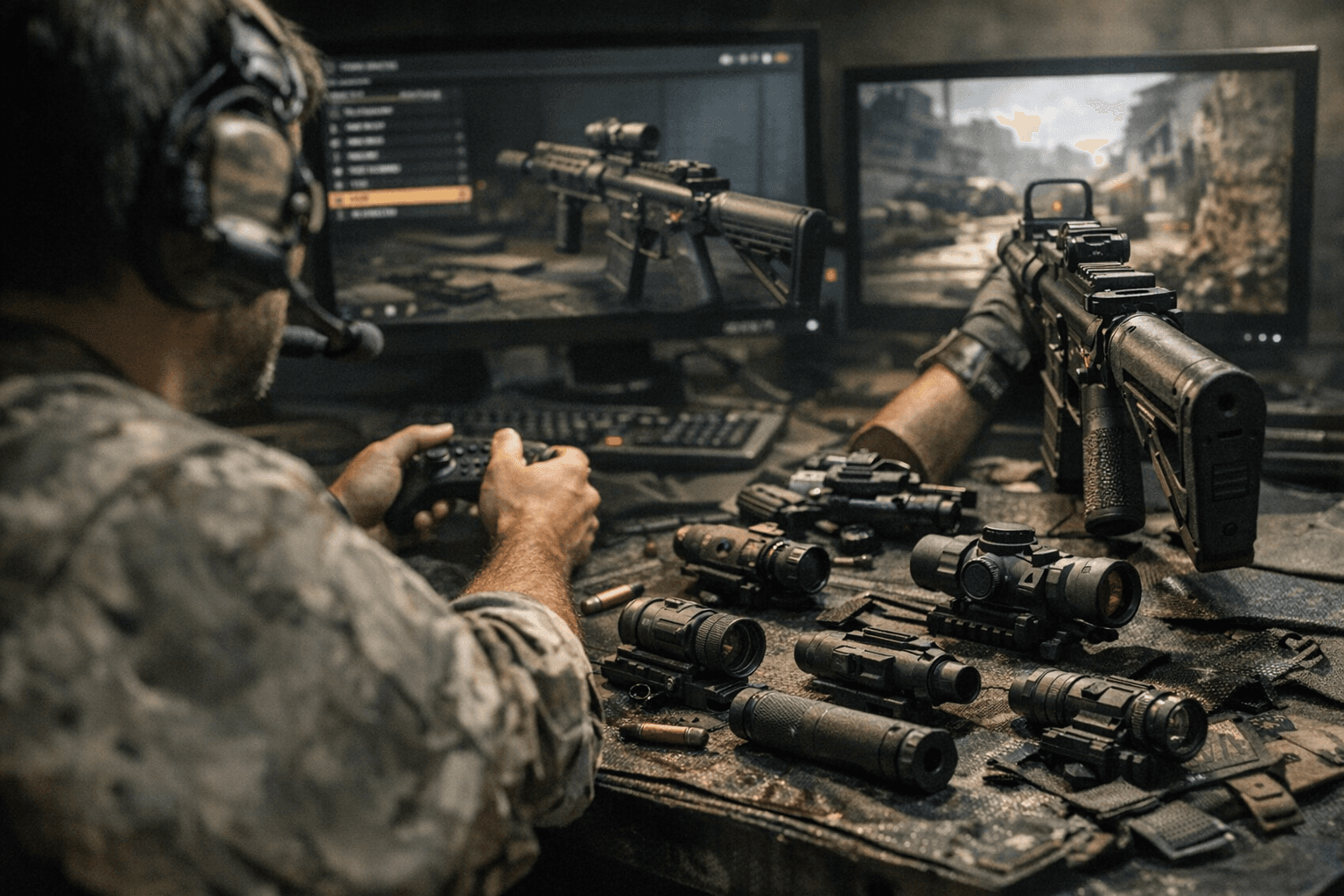
Stop chasing every new meta and learn a repeatable way to build attachments that match your role, map, and playstyle. The core idea is simple: treat attachment selection as controlled testing, not guesswork. Start with a role-first template, change one attachment at a time in the firing range, and measure three things: time-to-kill, recoil pattern feel, and mobility impact.
Know what each attachment category trades off. Muzzles commonly control recoil, sound suppression, or bullet velocity and often cost ADS speed or increase ADS sway. Barrels affect range, velocity, recoil, and accuracy with longer barrels usually boosting range at the expense of mobility. Optics improve target acquisition at distance but can obscure periphery; keep magnification low on tight maps. Underbarrels like grips and lasers help hip-fire and recoil control but can slow sprint-to-fire. Magazines change capacity and reload time; larger mags give sustain but hit mobility. Rear grips and stocks alter ADS speed and stability, with stability usually costing mobility. Perks and field upgrades should complement the weapon, for example faster reloads or stealth options in objective modes.
Pick a role-first baseline before tuning. If you run close-quarters slayer loadouts with SMGs or shotguns, prioritize mobility, ADS speed, sprint-to-fire, and hip-fire accuracy with short barrels, lasers, and fast mags. For mid-range AR or hybrid roles, balance recoil control and mobility with mid-length barrels, compensators or muzzles, and a modest optic. For long-range marksman play pick long barrels, high-zoom optics, and recoil-reducing attachments. LMG players should accept reduced mobility for extended mags and stability.
Use the firing range methodically. Apply the one-change rule: swap a single attachment, then record TTK using clips or a stopwatch, assess recoil pattern and feel, and note any movement penalties. Repeat until you understand how each slot shifts your gun’s personality. That data-driven approach prevents stacking bizarre trade-offs and reveals whether a muzzle that tames vertical rise ruins your sprint-to-fire window.
Templates help speed testing. An aggressive SMG might use a short barrel, laser for hip-fire, fast mags, and a quick rear grip to maximize mobility. A balanced assault rifle can pair a muzzle brake or compensator with a mid-length barrel, vertical grip, a 45–60 round mag for objective play, and a stippled rear grip for quicker ADS. A long-range AR or marksman build leans on a long barrel, 2.5–4x optic, suppressor or recoil reducer, and a foregrip or bipod if supported.
Tune for map and mode. Run mobility-focused kits on high-tempo 6v6 maps, favor sustain and recoil control on objective maps, and lean into range and suppression for Warzone rotations. After patches check notes and re-run short-range tests; small buffs or nerfs to a single attachment can flip your best choice.
Practice in the range, save multiple loadout presets, and grind recoil control until follow-up shots are muscle memory. Use this testing routine as your baseline and specialize once you know which core traits matter to your playstyle. The result is fewer wasted attachments, faster loadout swaps between matches, and a kit that actually performs where you expect it to.
Know something we missed? Have a correction or additional information?
Submit a Tip