How to Upgrade Dance of the Elements and Blight Curse Precons
Learn concrete, multiplayer-friendly upgrades for Dance of the Elements and Blight Curse precons, what they change about the decks, and which swaps need Rule 0 chats.
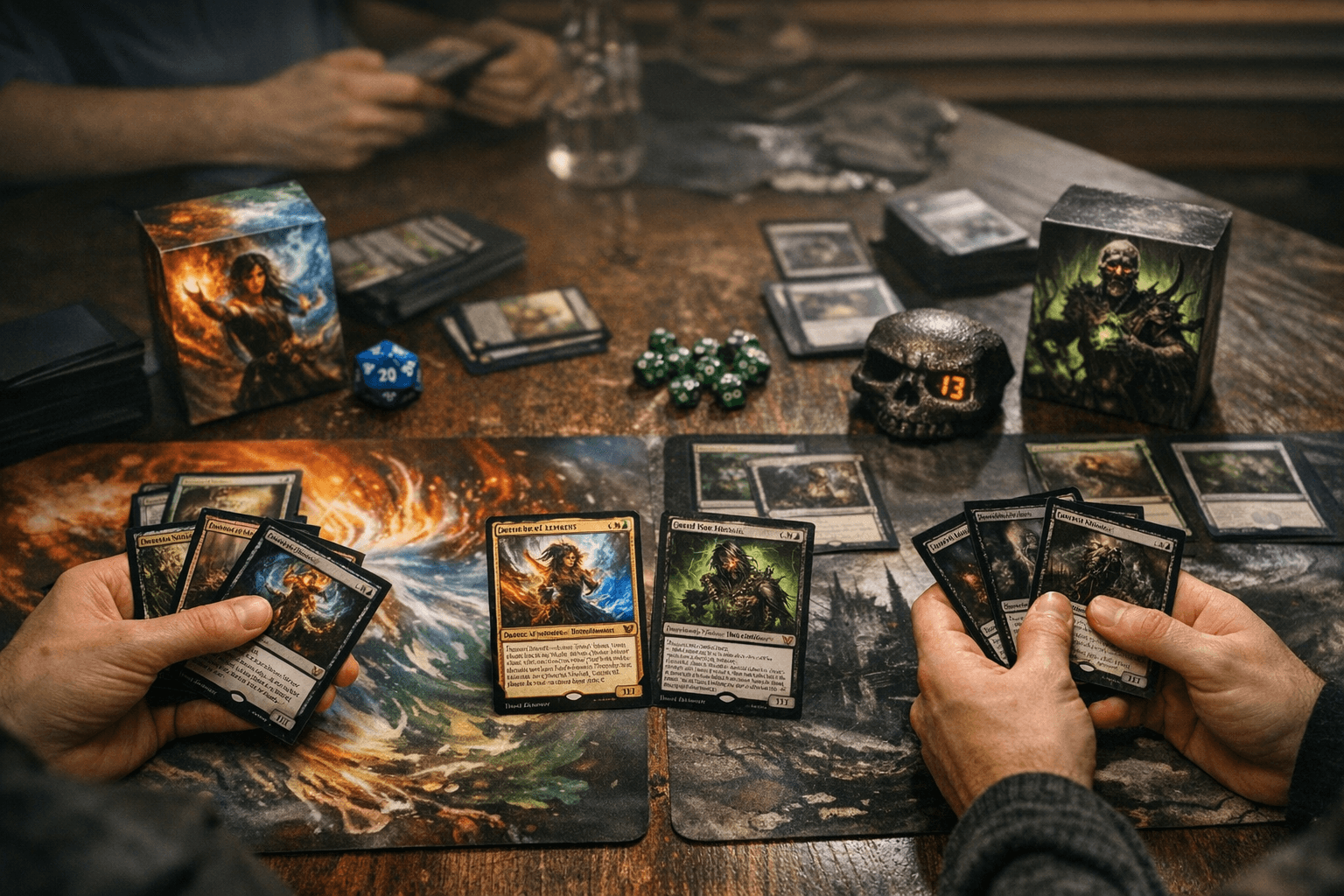
How to upgrade these Lorwyn Eclipsed precons for Commander tables
1. Dance of the Elements, upgrade philosophy and key additions
Dance of the Elements is a 5-color Elemental/evoke/myriad brew that wants cheap creatures, big token payoffs, and ways to turn short-lived evoke bodies into long-term value. Upgrades should focus on lowering creature costs, amplifying or copying the myriad/tokens output, and adding recursion so evoke creatures keep contributing after they leave the battlefield. Below are targeted card and category recommendations and why each one matters at multiplayer tables.
- Animar, Soul of Elements, make evoke cheaper and more consistent
Animar provides a powerful cost-reduction and growth engine for creature-heavy decks, which directly benefits evoke-based lines by lowering the mana required to cast those transient bodies. In multiplayer Commander, Animar accelerates your curve, lets you stabilize tempo, and increases the chance that myriad triggers or token payoffs resolve before opponents answer you. Adding Animar shifts the deck toward a more proactive creature-led plan, so mention that shift at Rule 0 if your playgroup prefers slower, more casual starts.
- The Master, Multiplied, token doubling and payoff scaling
Including a dedicated token doubler or payoff like The Master, Multiplied magnifies myriad and other token sources so a single big attack or evoke cascade becomes table-threatening. Doublers convert ephemeral evoke tokens into board states that demand removal or significant answers, turning what was a single-turn swing into multi-turn value. These cards increase the deck’s upside dramatically, and are a straightforward way to upgrade Dance of the Elements into a more gratifying midrange-token deck.
- Enduring Renewal, convert evoke death into long-term advantage
Enduring Renewal (or similar recursion engines) is a textbook upgrade for evoke-heavy lists because it changes the narrative: instead of losing value when creatures are evoked and sacrificed, you get recurring, repeatable board presence. This card lets the deck smooth out the inherent volatility of evoke, converting short-lived body slots into engines that grind out advantage in multiplayer. Adding recursion tends to make the deck more resilient and less “one-and-done,” which is often appreciated in longer Commander games.
- How these changes change the power profile and etiquette to follow
Adding cost-reducers like Animar and payoff engines/recursion pushes Dance of the Elements from a casual precon toward a stronger, proactive strategy. That is great for players who want more impact and consistency, but it also raises the deck’s expected win-rate and table pressure. Talk to your pod: explain you’re adding pieces that increase consistency and token output, and be ready to swap out anything that the table flags as too swingy or oppressive.
2. Blight Curse, upgrade philosophy and key inclusions
Blight Curse is a Jund precon centered on -1/-1 counters and blight mechanics, leaning into efficient removal, proliferate synergies, and small resilient creatures. The cleanest upgrades tighten its themes: prioritize cards that apply or exploit -1/-1 counters, add cheap interaction, and stabilize the midgame. Below are specific card inclusions and a critical rule-of-thumb about a low-mana infinite interaction the article flags.
- Obelisk Spider, a natural theme enabler
Obelisk Spider is called out as an “obvious inclusion” because it directly interacts with -1/-1 counters while offering immediate board impact and synergy with the rest of the blight toolkit. Cards that naturally fit the theme increase consistency and make the deck feel like a cohesive archetype instead of a set of loosely related parts. Obelisk Spider also plays well in multiplayer because it creates repeatable value and can pressure single targets without overcentralizing the strategy.
- Persistent Constrictor, improve counter economy and snowballing
Persistent Constrictor is another staple that upgrades the deck’s core mechanic by amplifying every -1/-1 counter you apply. That exponential growth turns minor value plays into lasting threats, improving your odds of winning attrition battles. In casual pods, Constrictor is a user-friendly power boost, but in more tuned environments it becomes a backbone piece that can flip games by itself, so flag it during Rule 0 conversations if your group dislikes runaway snowballing.
- Hapatra + Blowfly Infestation, a low-mana infinite interaction to know and discuss
The combo of Hapatra and Blowfly Infestation can generate an infinite loop at very low mana investment; owners should absolutely consider this under Rule 0 before bringing it to the table. Even if you keep it because you enjoy combo wins, make sure opponents know it exists so they can consent (or request it be removed) before the game starts. This is the classic Commander social hygiene moment: high-impact, low-cost synergies can break multiplayer expectations, so be explicit about intentions.
- Other efficient additions to stabilize the theme
Beyond the specific cards named, the precon benefits from efficient removal, recursion for persistent threats, and low-cost creatures that apply counters consistently. Choose cards that increase your board resilience, such as cards that proliferate, add redundant counter-application, or protect your key pieces, so you can survive long multiplayer turns. These choices keep the deck competitive without needing to swap into an entirely different archetype.
- Casual vs. power-increasing swaps, practical guidance for Rule 0
Label upgrades as either friendly (casual-stack) or power-increasing so conversations stay simple. Friendly swaps are thematic and interactive: adders that make the deck smoother without drastically shortening games (e.g., Obelisk Spider, cheap removal, modest recursion). Power-increasing swaps are the ones that raise the deck’s ceiling: things like cost reducers, infinite loops, or premium tutors that let you combo off turn earlier. If you’re adding anything from the second bucket, tell your playgroup and be ready to take it out if someone prefers a looser meta.
Closing practical wisdom
Both precons reward focused, theme-first upgrades: Dance of the Elements becomes livelier and more consistent by lowering creature costs, doubling tokens, and recycling evoke bodies, while Blight Curse shines when it tightens its -1/-1 engine and avoids unannounced infinite loops. The easiest, most community-friendly path is incremental, add one payoff or recursion piece at a time and play a few games, then reassess at the table. And when a change could drastically shift the deck’s power (Animar-level acceleration or a cheap infinite with Hapatra), say so at Rule 0: it keeps games fun, expectations aligned, and your upgrades welcome company at any Commander table.
Know something we missed? Have a correction or additional information?
Submit a Tip