HSBC PMI shows India's factory activity at four-month high, final reading 56.9
S&P Global/HSBC final manufacturing PMI rose to 56.9 in February from 55.4, signaling stronger factory output and hiring even after a flash 57.5 reading was revised down.
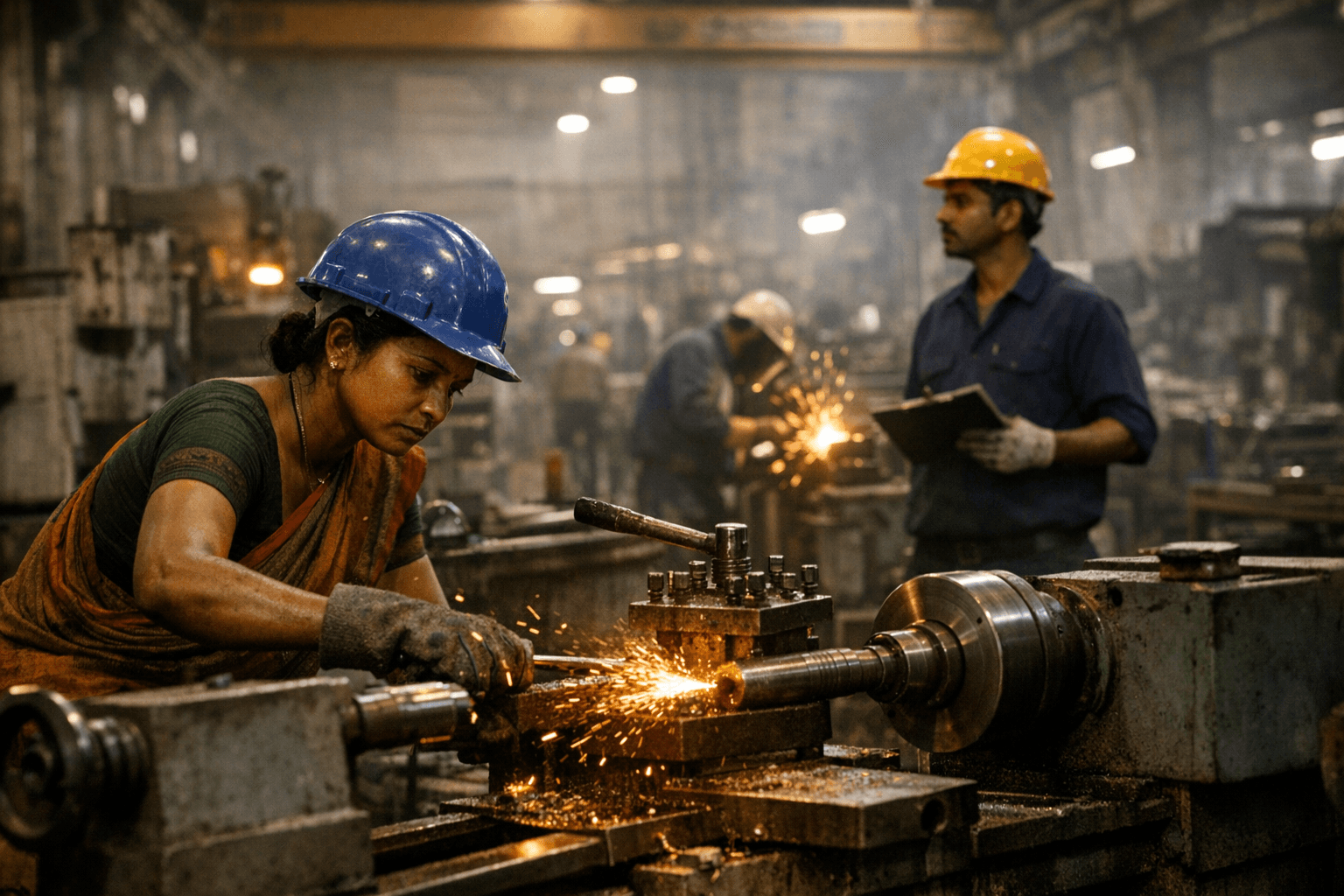
S&P Global/HSBC’s India manufacturing PMI strengthened to a four-month high in February, with the final reading at 56.9 from January’s 55.4, after an initial flash report of 57.5. Tradingeconomics summed the revision plainly: "The HSBC India Manufacturing PMI rose to 56.9 in February 2026 from 55.4 in January, revising lower from initial estimates of 57.5."
The flash release, which reported data collected between February 9 and February 17, showed broad strength across the economy: the HSBC Flash India Composite PMI Output Index stood at 59.3, the services activity index at 58.4, and the manufacturing output sub-index at 61.4. PMI S&P Global noted the headline manufacturing reading sat well above the neutral 50.0 threshold and its long-run average of 54.2, underlining the expansionary pulse in factories.
Survey respondents and market reports attributed the gain largely to domestic demand. Moneycontrol reported the flash reading as 57.5 and said "output growth accelerated, supported by stronger domestic demand, while new orders increased at the fastest pace since last November." PMI S&P Global added that "survey participants attributed growth to demand strength, local tourism, marketing efforts and rising client enquiries," and that input buying climbed to a four-month high as goods producers scaled up purchasing volumes.
Employment and stocking behavior reflected the heavier workloads. Tradingeconomics reported employment "rose slightly, recording the fastest pace in four months, as firms hired to cope with higher workloads." Multiple sources said firms increased input purchases and inventories to meet production needs and for precautionary stock building. PMI S&P Global also highlighted supplier performance, noting: "Still, data suggested that suppliers were comfortably able to delivery materials in a timely manner, with the current sequence of improving vendor performance stretching to two years."
Export demand, however, showed a softer edge. Pranjul Bhandari, chief India economist at HSBC, summarized the mixed picture: "The manufacturing industry strengthened in February, supported by robust growth in output and new domestic orders. That said, growth of new export orders slowed. Conversely, services saw a notable acceleration in new export business, while its domestic orders moderated. Both manufacturers and service providers were optimistic about the future, despite rising inflationary pressures." Moneycontrol and Tradingeconomics diverge slightly on the export lookback, with Moneycontrol calling it the "slowest rise in 16 months" while Tradingeconomics described the slowdown as "the weakest in 17 months."
Inflationary signals were present but characterized differently across reports. Moneycontrol said "input costs continued to climb at a sustained pace, matched by rising output prices," while Tradingeconomics described input cost inflation as "moderate and unchanged from January" even as output prices accelerated. Business sentiment remained positive across the snapshots available.
The PMI uptick sits against broader indicators that point to manufacturing momentum. Multibagg AI noted manufacturing GVA accelerated to 9.1 percent in the second quarter and cited the PLI program’s record of attracting Rs. 2,00,000 crore of investments across 14 sectors as of September 2025, supporting incremental production and more than 12.6 lakh jobs. IBEF highlighted sector drivers such as pharmaceuticals, motor vehicles and cement and projected India approaching roughly Rs. 88,67,000 crore in manufacturing output by FY26.
Looking ahead, Tradingeconomics’ short-term model expects the manufacturing PMI to reach about 58.0 by the end of the quarter, while its long-term projection sees a trend near 53.0 in 2027. For policymakers and investors, the February readings reinforce domestic-led factory recovery but also underscore the need to monitor export demand and inflationary pressures as the government pursues manufacturing-led growth.
This article was produced by Prism’s automated news system from verified source data, official records, and press releases, then run through automated quality and moderation checks before publishing. The system is built and supervised by the people who set the standards it runs under. Read our full AI policy.
Did this article answer your question?

