HUD delays homelessness report as first national decline in years appears
HUD’s missing 2025 count arrives just as local data hint at the first national decline in homelessness in nearly a decade.

The headline is promising, but the national data are still late. As local counts point to the first decline in homelessness in nearly a decade, the federal benchmark that should have clarified the trend was still missing by late May, leaving cities, states and advocates to read the country through fragments instead of a single official tally.
HUD’s Annual Homeless Assessment Report Part 1 is the federal point-in-time census used to estimate sheltered and unsheltered homelessness nationwide. It is normally released in December and draws on counts collected during the last 10 days in January, which makes the delay especially consequential for city, county, state and federal officials who use the report to track trends and allocate resources. Some counties, including San Francisco, had already released their own 2026 local counts before the federal 2025 report appeared.
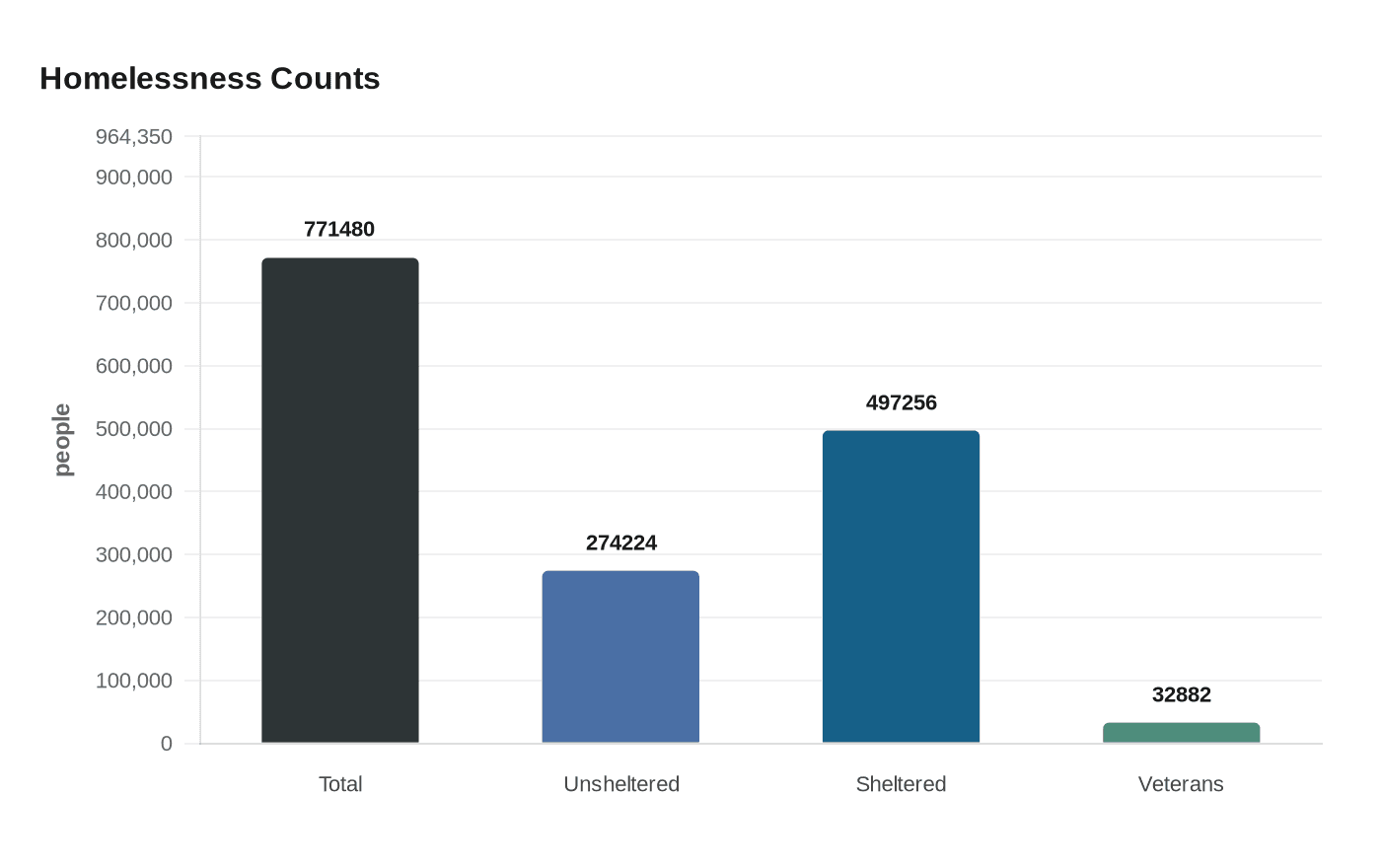
The last complete national snapshot, released on December 27, 2024, showed how severe the crisis had become. HUD said 771,480 people experienced homelessness on a single night in January 2024, up 18.1% from 2023. Of that total, 274,224 people were unsheltered and 497,256 were sheltered. Veteran homelessness moved in the opposite direction, falling nearly 8% to 32,882, the lowest level on record.

That mixed picture is why the delayed 2025 report has drawn so much scrutiny. A modest decline would mark the first national decrease in nearly a decade, and national homelessness advocates say even a small drop matters because it can mean thousands fewer people sleeping outside. But they also caution that a downturn would not erase the broader crisis, especially if many states continue to show increases and local systems remain under strain.
The delay itself has become part of the story. Outside the disruptions of the COVID era, the federal count has typically arrived in December, giving communities a common national baseline before winter funding and policy decisions are set. In 2020 and 2021, when the pandemic disrupted counts, the reports slipped into February and March. This year’s lag has left officials, researchers and advocacy groups relying on local point-in-time counts and preliminary community compilations while waiting for HUD’s national picture.
For policymakers, the stakes are practical as much as symbolic. The report helps determine how leaders compare conditions across communities, whether current interventions are moving the numbers, and where resources should go next. The veteran decline shows that targeted federal and local efforts can work in at least one category, but the broader count, still unreleased months after its usual schedule, may yet show that the nation is making progress in only part of a much larger housing emergency.
This article was produced by Prism’s automated news system from verified source data, official records, and press releases, then run through automated quality and moderation checks before publishing. The system is built and supervised by the people who set the standards it runs under. Read our full AI policy.
Know something we missed? Have a correction or additional information?
Submit a Tip