Humboldt County Faces Seasonal Flooding, High Surf and Winter Storm Risks
Eel River has recent NWS flood advisories; Humboldt County warns of hypothermia, carbon monoxide risk and power outages during the late-fall through early-spring hazard window.
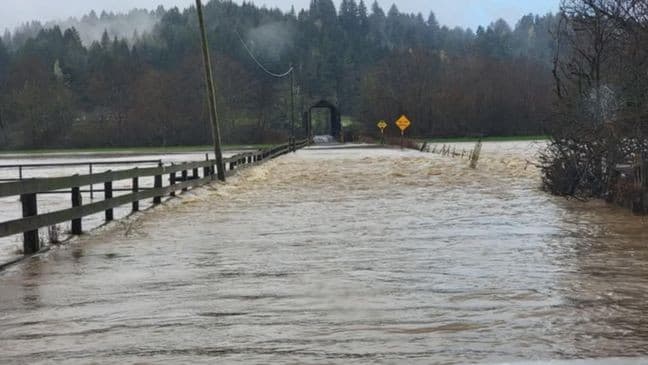
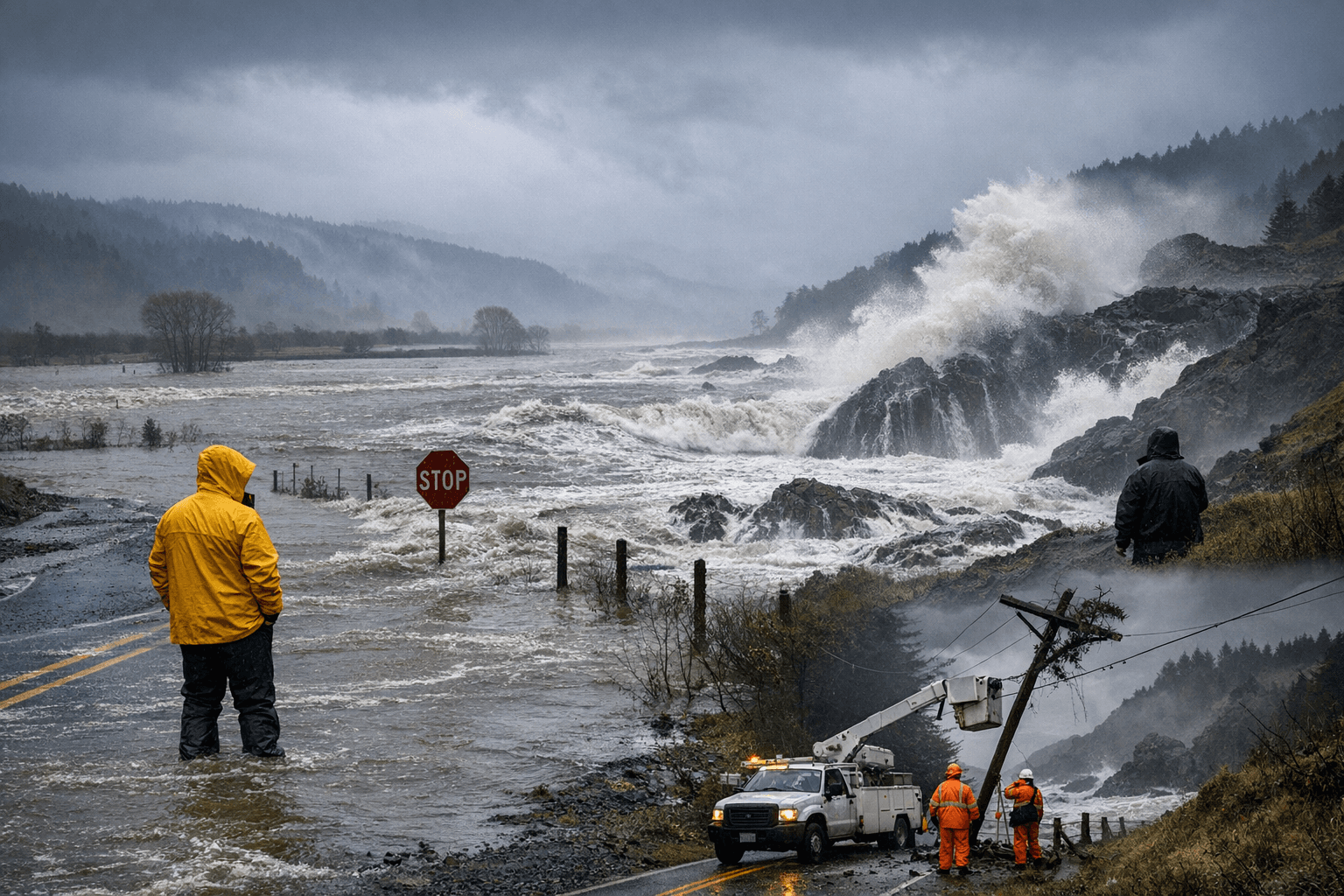
Humboldt County faces a predictable seasonal hazard window of heavy winter rain, saturated soils, high surf and localized flooding from roughly late fall through early spring. Recent flood advisories and warnings from the National Weather Service (NWS) for the Eel River and low‑lying coasta, the Original Report said, setting the context for county and community preparedness.
Humboldt County’s online guidance lists the stakes in stark terms: "Winter storms create a higher risk of car accidents, hypothermia, frostbite, carbon monoxide poisoning, and heart attacks from overexertion." The county also warns that "These storms can last for hours or even days, often causing power outages," and highlights "older adults, children, sick individuals, and pets" as vulnerable populations.
Local reporting in the Mad River Union on Saturday, February 28, 2026, focuses on practical steps for snow and winter conditions. The paper ran a HUMBOLDT dateline and opened with "With more winter weather ahead, Humboldt County residents are encouraged to recreate responsibly when visiting areas of our county with snow." It advised: "Stay Warm – Be sure to bring water-resistant snow clothing, gloves, hats and scarves to protect against hypothermia. Bring a change of clothes for the drive home and pack extra blankets in case your vehicle becomes disabled." The piece also urged drivers to "Use a 4-wheel drive vehicle and always carry chains" when public access properties require it.
Mad River Union’s snow safety instructions include detailed survival actions if a vehicle becomes disabled: "Stay in the vehicle. If you leave your vehicle, you will become disoriented quickly in wind-driven snow and cold. Run the motor about 10 minutes each hour for heat." The paper adds practical ventilation and signaling steps: "While running the motor, open the window a little for fresh air to avoid carbon monoxide poisoning. Clear snow from the exhaust pipe to avoid gas poisoning. Be visible to rescuers. Turn on the vehicle’s parking lights at night. Tie a bright colored cloth, preferably red, to your antenna or door. After snow stops falling, raise the hood to indicate you need help." For non-emergency situations the paper advised to "contact a private towing service. For emergency rescue, call 9-1-1."
A local voice on r/Humboldt framed the on-the-ground perspective for workers who drive county roads. "Hey Humboldt! I'm traveling healthcare and this is my first winter in Humboldt. I moved here in May," the poster wrote, noting "I drive a lot for my job around Eureka / Fortuna" and that they follow the "FEMA app, weather apps, and listen to the radio." The same poster listed personal supplies: "food, water / water purification, sleeping bag, a couple small portable chargers for electronics, headlamp, extra raincoat, extra clothes / layers."
County web resources point readers to tools and contacts. Humboldtgov highlights a Snow Depth Map, noting "The map shows the snow depth, in inches, from the the National Weather Service's Office of Water Prediction." The site also displays the county contact block — "826 Fourth Street Eureka, CA 95501" and "Phone: 707-445-7251" — and the emergency number "911." The county page repeats the Cal OES reminder: "Cal OES would like to remind drivers to make sure they’re prepared to travel safely in changing conditions. Winterizing your vehicle and preparing an emergency kit for your trip can help keep yourself and others safe on the road during inclement weather." The site encourages residents to "Sign Up for Humboldt Alert."
Recreation and property notes in local coverage underscore access rules: Mad River Union asks residents to "Utilize Public Recreation Locations – Residents are asked to use public recreation locations only, such as the Horse Mountain Botanical Area in the Six Rivers National Forest," and warns that "Though there may be snow, the Kneeland Greenwood Heights area is private property and trespassers can be prosecuted." Property owners are likewise told to install visible No Trespassing signs to alert snow-goers.
Taken together, county officials, local reporters and community members point to a clear set of steps: winterize vehicles, pack the explicitly listed provisions, monitor NWS advisories for the Eel River and low-lying coastal areas, and use Humboldt Alert and the NWS Office of Water Prediction snow depth map to track conditions. Cal OES’s admonition that residents winterize vehicles and prepare emergency kits remains the final practical note for travel and safety this season.
Know something we missed? Have a correction or additional information?
Submit a Tip