Hundreds of Minnesota businesses close as statewide anti-ICE economic blackout takes hold
Organizers call a one-day economic blackout to protest intensified federal immigration enforcement and the Jan. 7 shooting death of Renée Good, shuttering hundreds of businesses.
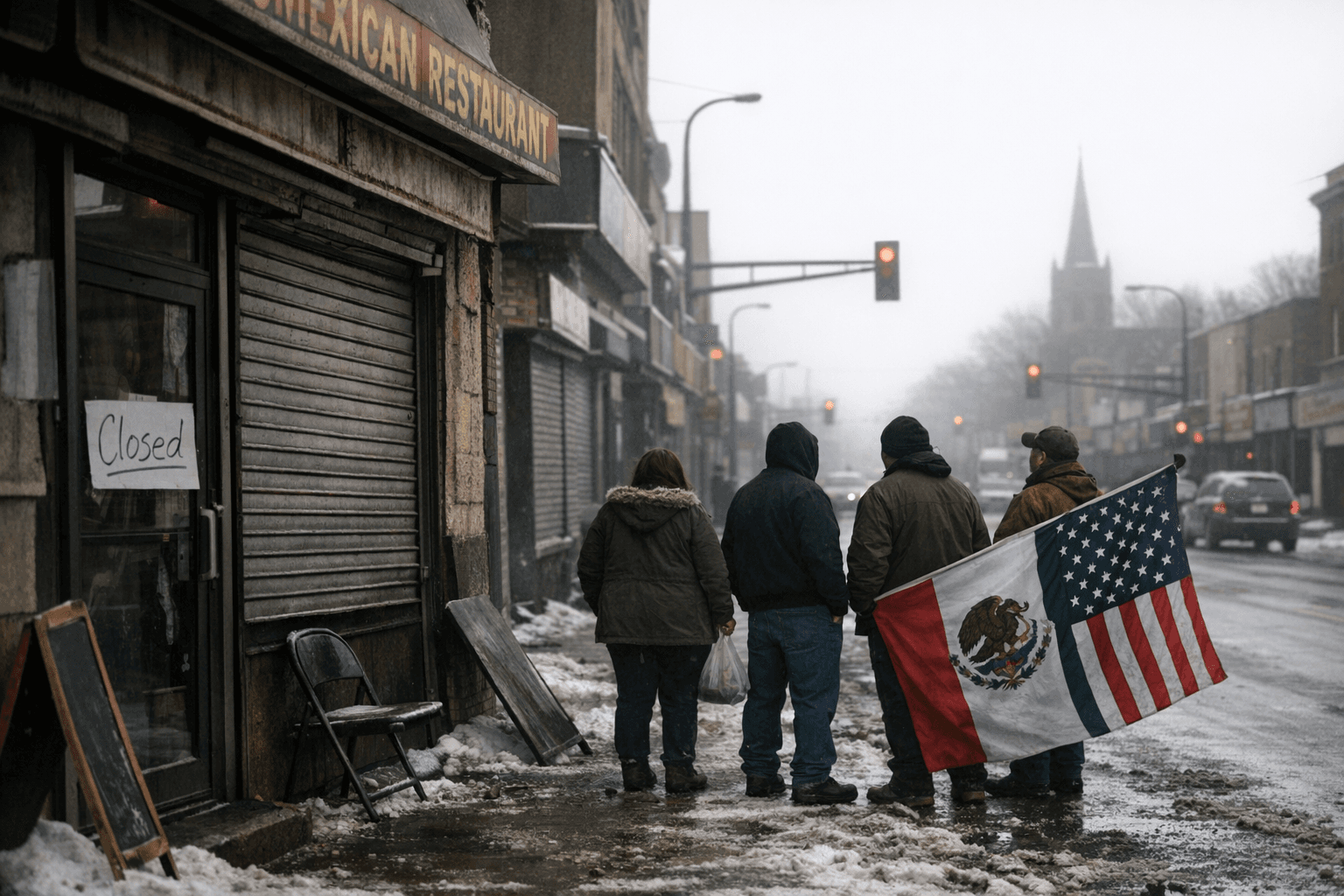
Hundreds of businesses across Minnesota are closing their doors today as organizers and a broad coalition of labor groups, faith leaders and civil-rights organizations press a statewide "economic blackout" to protest intensified federal immigration enforcement operations and the Jan. 7 shooting death of Renée Good by an ICE officer. The closures are concentrated in commercial corridors and neighborhood shopping districts and reflect a coordinated effort to demonstrate the economic power of immigrant communities and their allies.
The stoppage, called publicly by the coalition on the morning of Jan. 23, prompted small retailers, restaurants and service firms to suspend normal activity for the day. Attendance at planned solidarity gatherings and community events is high in several cities, underscoring the political mobilization behind the action. Organizers framed the blackout as both a moral response to the shooting and a tactic to pressure federal and state officials over enforcement practices they say have intensified in recent months.
Economically, the blackout highlights the vulnerability of local economies to coordinated shutdowns. Small businesses account for a large share of private-sector employment and local tax receipts, so even a single day of closures can ripple through payrolls, supplier orders and municipal sales-tax collections. Urban economists estimate that concentrated interruptions to foot traffic and retail activity can shave measurable percentages off weekly sales for neighborhood commercial strips, and repeated actions of this sort could alter business planning and credit profiles for small owners.
Market implications in the short term are uneven. Larger retail chains and supermarkets with online or regional distribution can absorb a one-day stoppage, while independent operators reliant on daily customer flows face immediate revenue shortfalls. For financial institutions and lenders that service small-business loans, a pattern of intermittent closures increases credit risk assessment costs and may tighten underwriting for the most exposed sectors. Municipalities could see dips in daily sales-tax receipts and parking revenues, complicating short-term cash flow projections for services funded by those streams.
Politically, the blackout amplifies pressure on lawmakers and local officials to respond to community demands. The convergence of labor groups, faith leaders and civil-rights organizations signals a durable coalition that could translate protest energy into legislative or regulatory campaigns at the state level. State and local policymakers will need to weigh public safety, cooperation with federal agencies and the economic consequences of visible enforcement actions on immigrant-dependent neighborhoods.
From a longer-term perspective, the tactic reflects an emerging pattern in which civil-society actors use targeted economic interventions to shape public policy debates. If such blackouts recur or expand in scope, they could shift how businesses engage with civic issues and how officials calibrate enforcement to avoid amplified economic fallout. For now, the immediate metric will be the economic damage contained to a single day: hundreds of businesses have closed, and the broader question is whether the political signal, measured in shuttered doors and lost transactions, translates into policy change or further escalation between communities and federal agencies.
This article was produced by Prism’s automated news system from verified source data, official records, and press releases, then run through automated quality and moderation checks before publishing. The system is built and supervised by the people who set the standards it runs under. Read our full AI policy.
Did this article answer your question?