Hundreds of thousands of blue sea creatures wash ashore on West Coast beaches
Tiny blue Velella velella blanketed West Coast beaches, a wind-driven mass stranding researchers tied to warm waters and shifting spring winds.
Tiny blue sails, not pollution or a jellyfish invasion, covered stretches of the West Coast as Velella velella rode wind and currents ashore. The surface-dwelling hydrozoans, known as by-the-wind sailors, use a stiff sail to catch the air and drift where weather systems push them, which is why beaches from the San Francisco Bay Area to Southern California suddenly turned blue.
The creatures were reported as far south as Manhattan Beach, with local coverage saying hundreds of thousands, and possibly millions, had washed up along California’s coast. Beachgoers and photographers treated the scene as a spectacle, with the shoreline in Malibu described as carpeted in brilliant blue gems. The unusual strandings were also visible at other beaches, including Baker Beach and Santa Barbara, underscoring how widely the bloom spread.
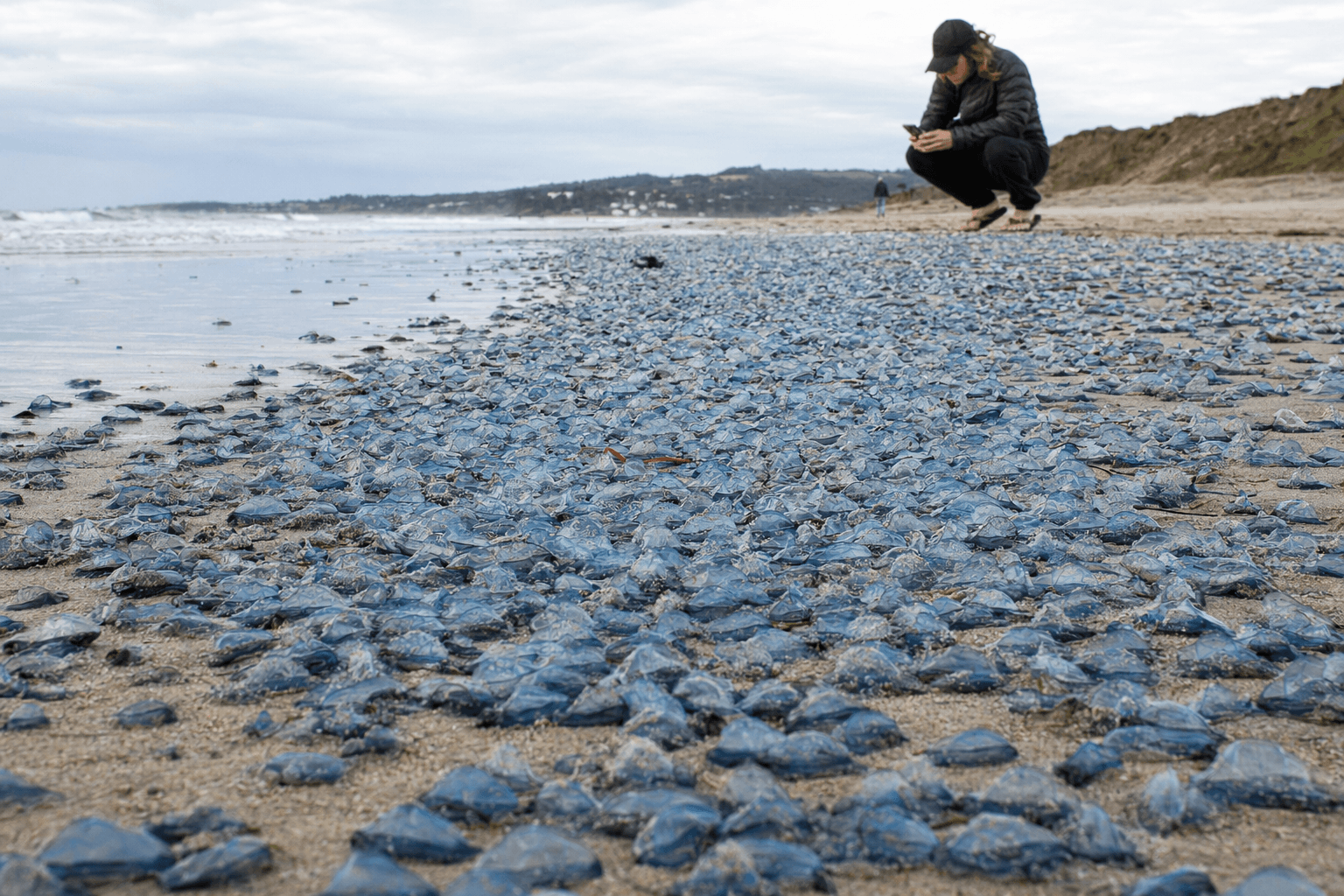
Marine researchers said the timing may fit a broader ocean pattern. Developing El Niño conditions and a marine heat wave were cited as possible drivers, and both can reshape surface conditions, winds and the movement of plankton, the creatures’ main food source. Velella velella are generally harmless to people, but experts still advise against touching them and recommend keeping pets away because their stings, while weak, can still irritate skin.
The latest appearance fits a pattern University of Washington researchers documented using 20 years of citizen-science observations. Their work found that large strandings tend to happen when winters are warmer than usual and spring winds shift in ways that push the animals toward shore, with reports stretching from Washington’s northwest tip south to the Mendocino coast in California. That history helps explain why the same species can seem to appear all at once over a vast stretch of coastline.
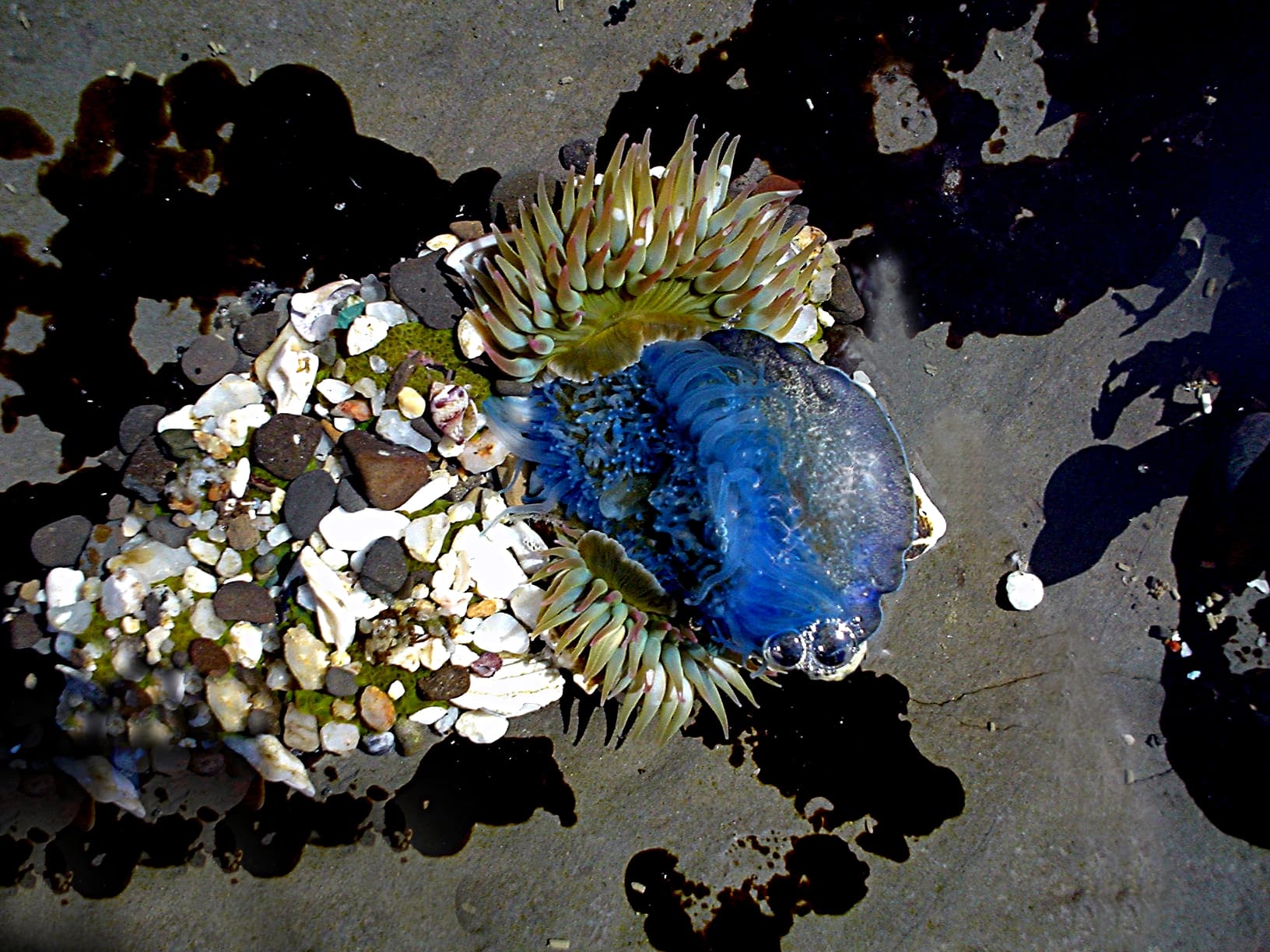
The West Coast has seen this before. In April 2023, millions, and possibly more than a billion, washed ashore along California beaches, and smaller numbers were reported again in 2024 and 2025. The animals have even been mistaken for an oil spill when masses floated offshore near Jenner, California, before NOAA identified the material as biogenic, not pollution. For scientists, the blue wash is less a mystery than a reminder that wind, warm water and spring conditions can turn the ocean surface into a conveyor belt.
This article was produced by Prism’s automated news system from verified source data, official records, and press releases, then run through automated quality and moderation checks before publishing. The system is built and supervised by the people who set the standards it runs under. Read our full AI policy.
Did this article answer your question?