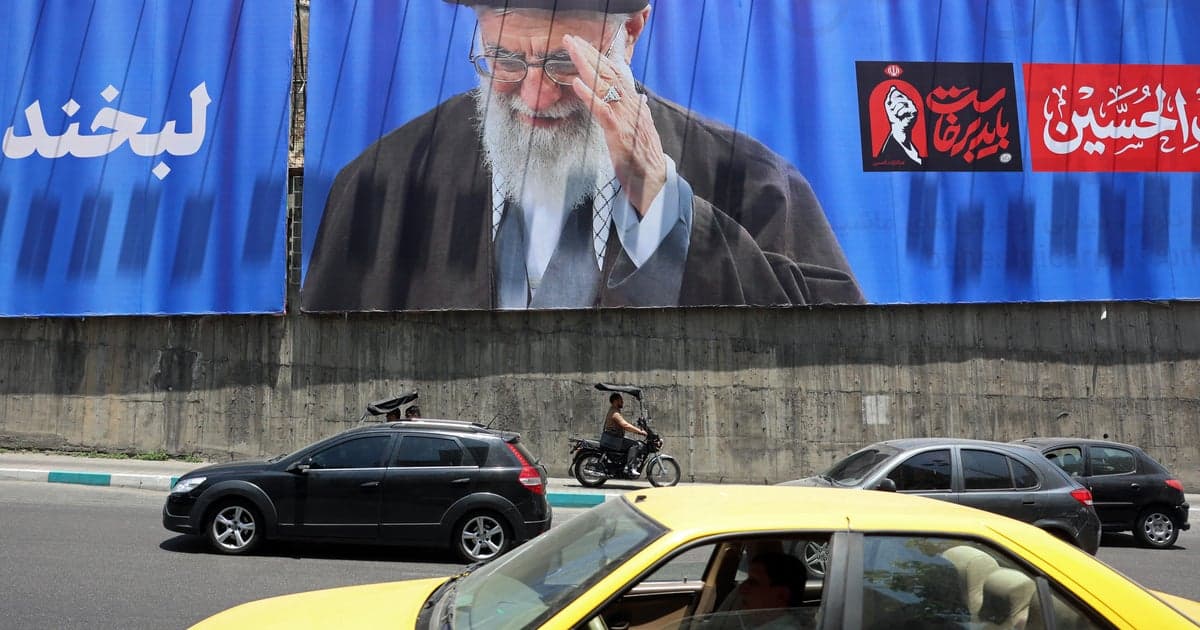
Hundreds of Thousands Rally in Budapest for Magyar Ahead of Hungary Vote
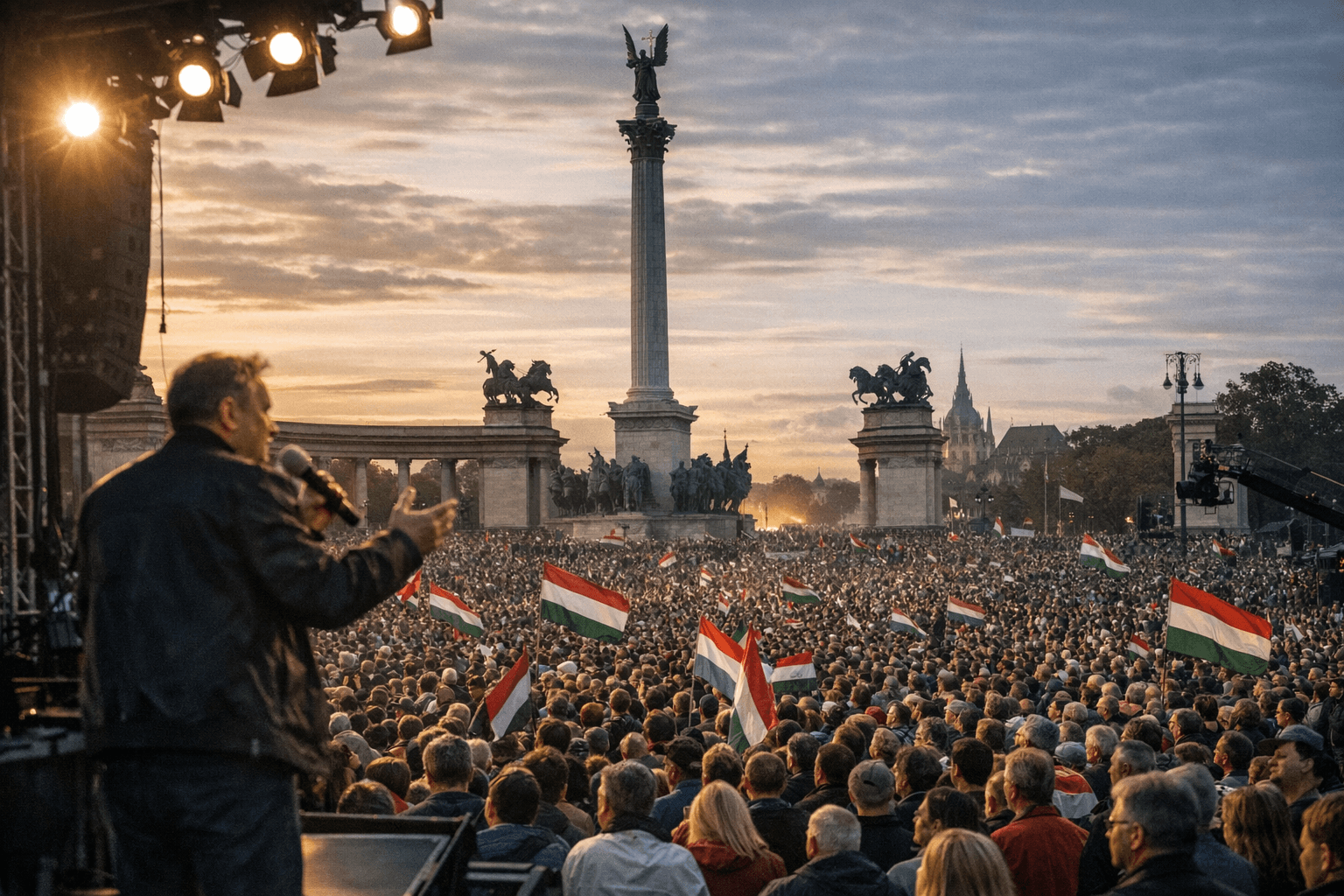
Over 100,000 packed Budapest's Heroes' Square for a megaconcert two days before Hungary's pivotal election, as Magyar's Tisza Party leads polls against Orbán's 16-year grip on power.
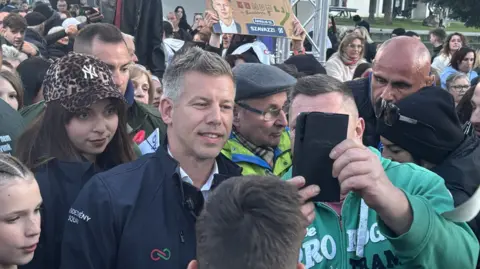
More than 100,000 Hungarians filled Heroes' Square in Budapest on Friday night for a megaconcert finale to Péter Magyar's opposition campaign, with adjacent avenues of the capital overflowing and another 100,000-plus viewers following via livestream. The gathering, held two days before Sunday's vote, represents what analysts across Europe are calling the most credible challenge to Viktor Orbán's authority in 16 years and a genuine stress test for an EU and NATO member whose democratic institutions have been systematically reshaped since 2010.
The geopolitical stakes extend far beyond Hungary's borders. Orbán has wielded Budapest's EU membership, and the unanimity rule governing key bloc decisions, to block a 90-billion-euro loan to Ukraine, oppose Kyiv's EU accession, and refuse to phase out Russian oil and gas imports. U.S. Vice President JD Vance visited Budapest earlier this week in a show of support for Orbán, underscoring the transatlantic fault lines running through this vote. A Tisza victory, Magyar has pledged, would reverse that posture: he has promised to align Hungary more closely with EU and NATO partners, invite the EU's public prosecutor to examine alleged misuse of European structural funds, and unlock more than 20 billion euros in recovery funds Brussels has withheld over rule-of-law concerns.
Magyar, a 45-year-old lawyer, built that platform from near-obscurity in just two years. As the former husband of Judit Varga, Orbán's Justice Minister, he broke publicly with the Fidesz orbit in early 2024 after President Katalin Novák pardoned a man convicted of covering up child abuse crimes. By June of that year, Magyar had converted the scandal into a political movement: his Tisza Party, formally the Respect and Freedom Party, secured 1.3 million votes in the European Parliament elections, finishing second behind Fidesz.
Polls tell sharply divergent stories. Independent Hungarian pollster Medián puts Tisza at 58% against Fidesz's 33%, projecting 138 to 142 seats for Magyar, comfortably above the 133-seat threshold needed for a constitutional two-thirds majority in the 199-seat National Assembly. A separate survey by the 21st Research Institute put the gap at 19 points among definite voters. McLaughlin and Associates, a U.S. firm with ties to pro-Trump political circles retained by Fidesz, shows Orbán ahead by 5.3 points. Magyar has refused to treat any lead as decisive: "Elections are not won in opinion polls, and there are at least 30 to 40 constituencies where the difference is within 1,000 votes. So this could still go either way."
The structural terrain remains stacked. Since 2011, Fidesz has redrawn constituency boundaries in ways condemned as gerrymandering and created voter-registration provisions critics call "voter tourism." Hungary's public broadcaster has been shut down; major private networks are owned by figures with ties to Fidesz. CSIS analysts describe the resulting system as "effectively a patronage state," and the European Parliament in 2022 labeled Hungary a "hybrid regime of electoral autocracy."
Election day conduct will be tracked by a full OSCE-ODIHR observation mission, which deployed 18 long-term monitors from 7 March and will be joined Sunday by OSCE Parliamentary Assembly and Council of Europe delegations. In 2022, nearly 20,000 independent civic ballot counters were mobilized; documented cases from that election included vote-buying in rural Hungary at prices between 5,000 and 10,000 forints.
Magyar's "Hungarian New Deal" centres on reclaiming EU funds he argues Orbán has misappropriated, having accused the prime minister of "impoverishing the country by misusing public funds and turning Hungarians against one another." Even if Magyar wins, the institutional architecture Fidesz built over 16 years, from loyalist-aligned courts to a captured media landscape, will not dissolve on election night. Sunday's result will determine whether dismantling it is even attempted.
This article was produced by Prism’s automated news system from verified source data, official records, and press releases, then run through automated quality and moderation checks before publishing. The system is built and supervised by the people who set the standards it runs under. Read our full AI policy.
Did this article answer your question?