Hungary Votes in Most Consequential Election Since Democratic Transition
Péter Magyar's Tisza party leads most independent polls ahead of Sunday's vote, threatening to end Viktor Orbán's 16-year grip on Hungary's 199-seat parliament.
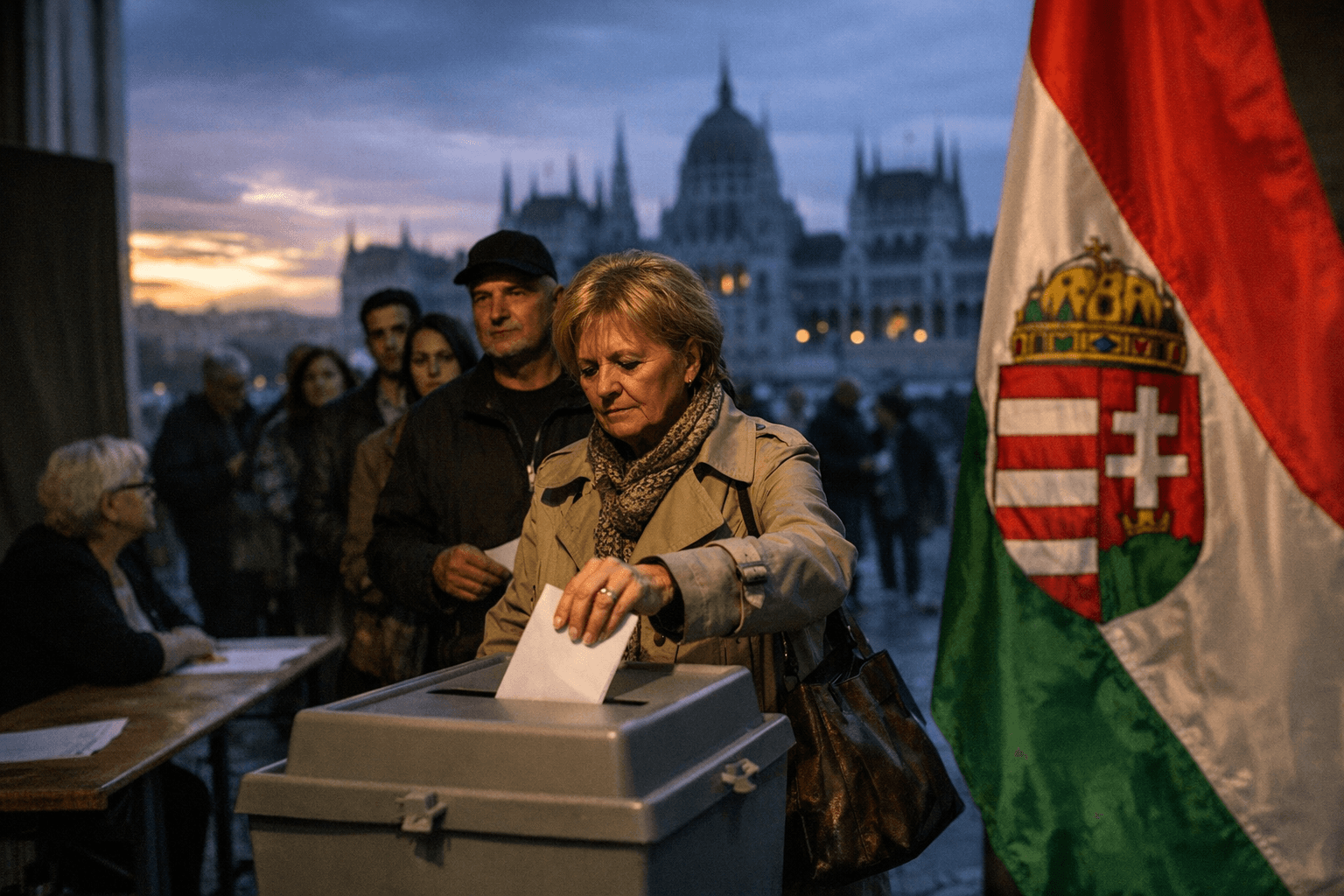
Hungarians go to the polls Sunday in a parliamentary election drawing more intense international scrutiny than any vote in the country since the fall of communism. All 199 seats of the National Assembly are at stake, along with the political future of Viktor Orbán, Europe's longest-serving head of government and the architect of what he has called "illiberal democracy" since taking power in 2010.
The contest pits Orbán's nationalist Fidesz party against the newly formed Tisza party, led by Péter Magyar, a former Orbán ally turned opposition leader who has channeled widespread discontent into a centre-right movement. Independent pollsters have consistently placed Tisza ahead in national surveys; government-aligned pollsters show a tighter race. A high proportion of undecided voters remains the wild card that analysts say could determine which reading of the polling landscape turns out to be right.
The final days of campaigning were charged. Opposition gatherings in Budapest drew crowds exceeding 100,000, including a mass "System Breaker" concert that doubled as a political mobilization event. Fidesz staged its own competing rallies. Meanwhile, independent researchers documented coordinated waves of pro-Orbán messaging on Telegram, narratives engineered to spread fear about the consequences of an Orbán defeat.
Hungary's mixed electoral system adds another layer of uncertainty. The combination of single-member constituency races and proportional party-list seats means that national vote shares can translate into seat distributions that look nothing like the raw numbers. The far-right Our Homeland, known by its Hungarian name Mi Hazánk, is fighting to clear the 5% parliamentary threshold; should it succeed, it could become a kingmaker in a fractured legislature.
Foreign capitals are watching for reasons specific to each of them. Brussels has spent years in confrontation with Budapest over rule-of-law standards and the disbursement of EU funds. Washington and Kyiv are monitoring Hungary's posture on Ukraine aid and sanctions policy toward Moscow, where Orbán has maintained warmer relations than most NATO allies. A Tisza majority would, analysts argue, open the door to a significant political realignment in Central Europe. A Fidesz hold would signal that Orbán's governance model has survived its most serious test and that EU efforts to use funding conditionality as leverage have run out of time.
Analysts have also cautioned against expecting immediate transformation even if the government changes hands. Sixteen years of Fidesz rule have embedded loyal networks across the judiciary, public media and state institutions. The infrastructure of power Orbán built was designed to outlast any single election result, and dismantling it would require sustained political will over multiple legislative terms.
Sunday's vote is the first in years where the outcome is genuinely in doubt. Whatever the result, its reverberations will extend well past Budapest.
This article was produced by Prism’s automated news system from verified source data, official records, and press releases, then run through automated quality and moderation checks before publishing. The system is built and supervised by the people who set the standards it runs under. Read our full AI policy.
Did this article answer your question?