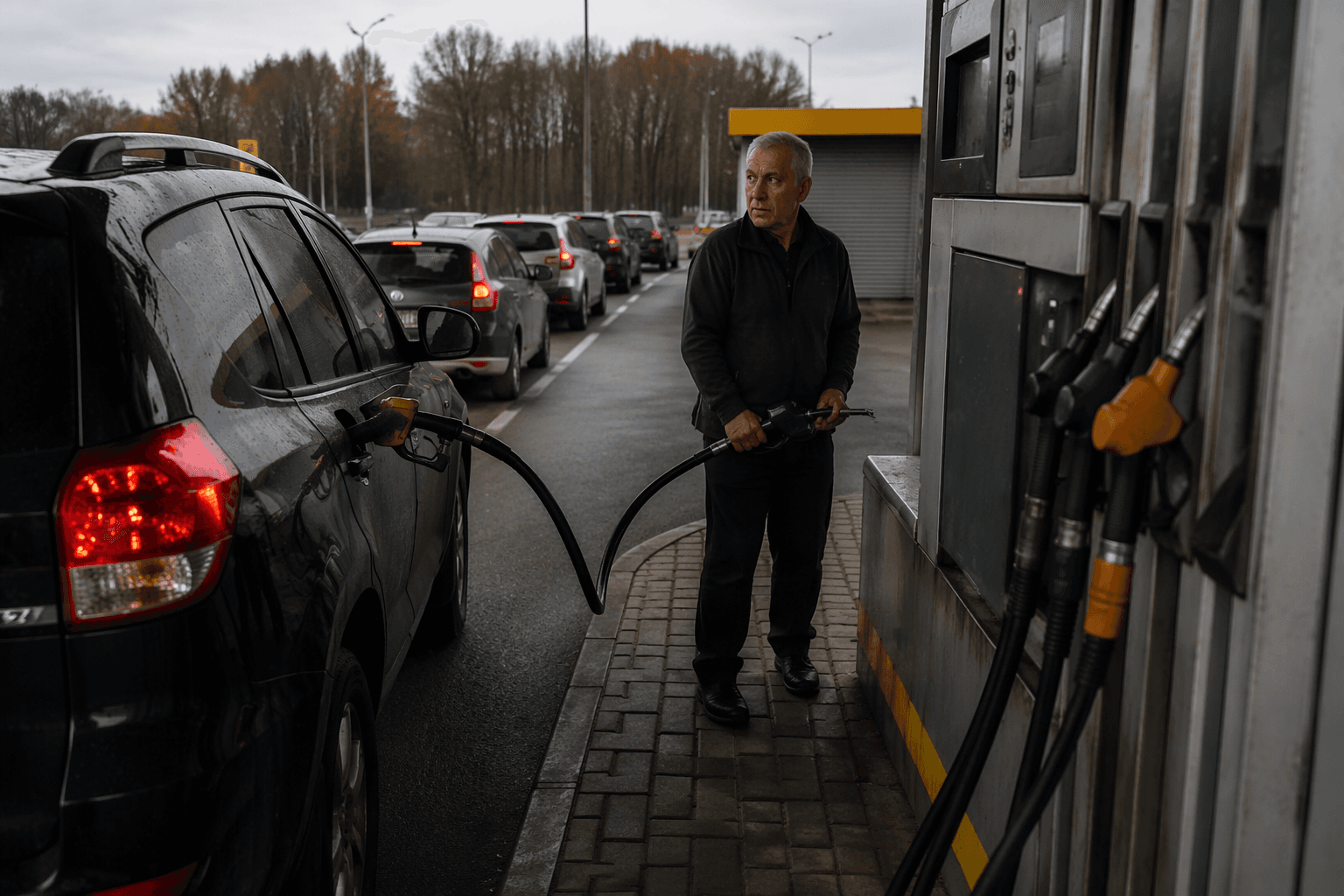
Europe Faces Systemic Jet Fuel Shortage If Hormuz Passage Stays Blocked
Europe's airports gave EU officials a three-week deadline to reopen Hormuz or face systemic jet fuel shortages, with some nations holding barely 8 days of reserves.
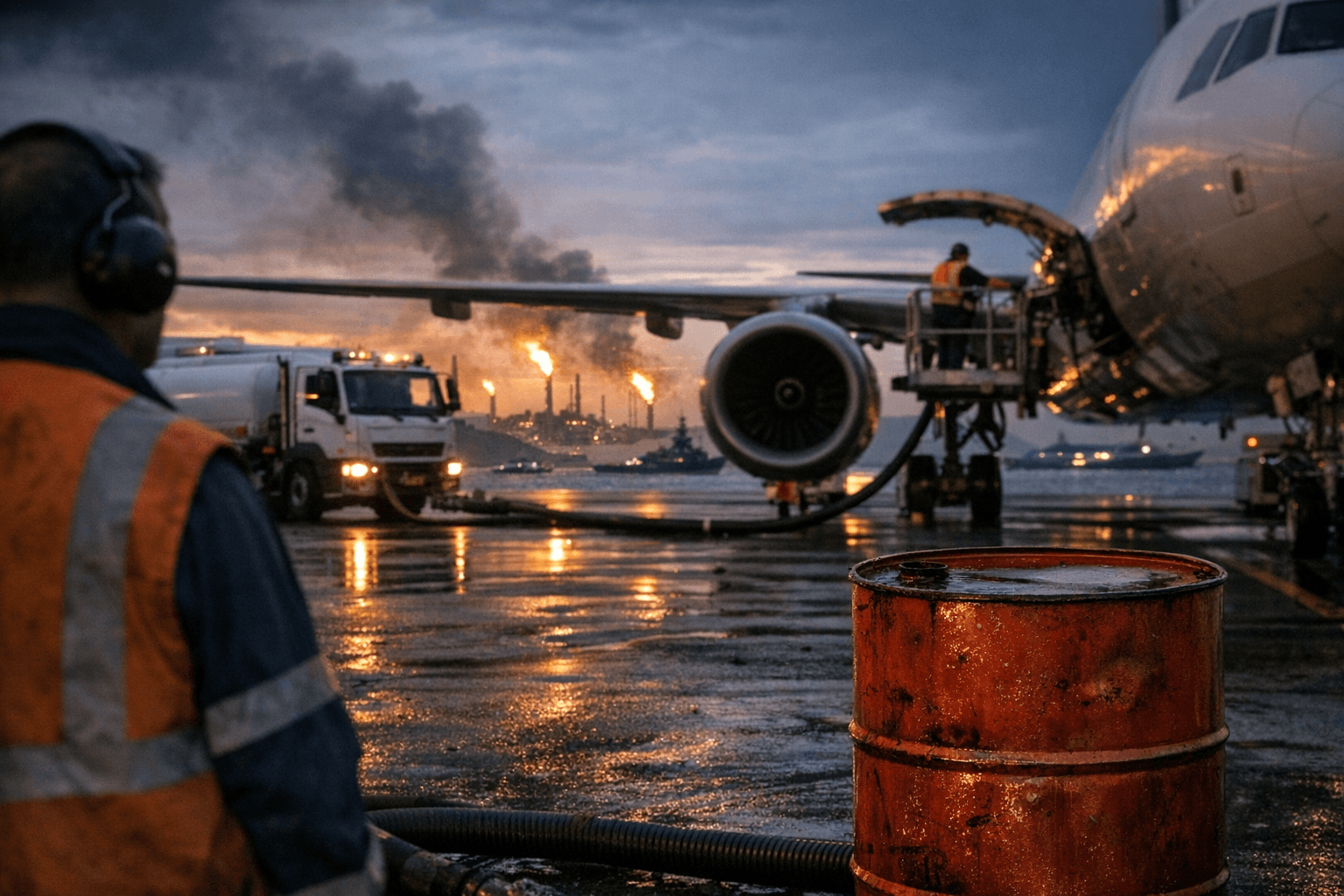
Three weeks. That is how long Europe's airport industry says it can hold the line before a systemic jet fuel shortage becomes inevitable. In a letter dated April 9, 2026, ACI Europe Director General Olivier Jankovec wrote directly to EU Transport Commissioner Apostolos Tzitzikostas and Energy Commissioner Dan Jørgensen warning that "if the passage through the Strait of Hormuz does not resume in any significant and stable way within the next three weeks, systemic jet fuel shortage is set to become a reality for the EU." ACI Europe represents more than 600 airports facilitating over 95% of commercial air traffic across the European Union.
The urgency is rooted in a structural dependency that has no quick fix. Roughly 40% of the world's jet fuel supply transits the Strait of Hormuz, and the European Union imports more than 60% of its aviation fuel from Gulf refineries, with over 40% of that volume passing through the chokepoint. When the strait effectively closed following Iran's Islamic Revolutionary Guard Corps launching 21 confirmed attacks on merchant ships since early March, the consequences for European aviation fuel supply were near-immediate. Tanker traffic plummeted first by roughly 70%, then to near zero. As of April 9, some 230 loaded oil tankers sat waiting inside the Persian Gulf, unable to move.
A two-week ceasefire between the United States and Iran took effect April 8, but it has not reopened shipping in any meaningful sense. Sultan Ahmed Al Jaber, CEO of Abu Dhabi National Oil Company, was unambiguous on April 9: "The Strait of Hormuz is not open. Access is being restricted, conditioned and controlled." Iran is requiring individual ships to obtain its permission to transit, a condition Al Jaber called "coercion, not freedom of navigation." Reports also indicate Tehran wants to charge vessels for passage. Shipments remain restricted by more than 90%, equating to approximately 10 million barrels per day of blocked oil production.
The timeline for European airports to exhaust buffers is alarmingly short. Several European states hold strategic reserves of jet fuel for only eight to ten days before rationing would begin. An estimated 170 million barrels remain blocked in the Persian Gulf. Jet fuel prices have more than doubled since the conflict erupted on February 28, 2026, now trading at $150 to $200 per barrel, a severe blow for carriers for whom fuel typically accounts for up to a quarter of operating expenses. Brent crude reached $96.02 per barrel and WTI crude briefly surpassed $100. Susannah Streeter, chief investment strategist at Wealth Club, noted that "carriers have had to deal with a more than doubling of fuel costs since the conflict erupted and the threat of shortages lingers."
Airlines across the continent are already cutting. SAS is cancelling 1,000 flights in April. Ryanair CEO Michael O'Leary said the Irish carrier would reduce summer capacity if the shortage continues. Lufthansa CEO Carsten Spohr told employees the German carrier is forming contingency teams and could ground aircraft. Across the Atlantic, United Airlines has cut 5% of its capacity, while Delta and American Airlines each face approximately $400 million in additional monthly costs. Italy's airports in Bologna, Venice, and Milan Linate are already operating under jet fuel limits.
The economic stakes extend well beyond aviation. Air connectivity generates 851 billion euros, nearly $1 trillion, in GDP for European economies and supports 14 million jobs. Jankovec warned that "the reduced connectivity that would inevitably result from a shortage of jet fuel would significantly damage the European economy, thus exacerbating the macroeconomic impact of rising oil prices." Smaller airports serving fewer than one million passengers annually, already commercially fragile before the crisis, could face closure.
The crisis also exposed a striking institutional blind spot. A recent meeting of the European Commission's oil coordination group revealed there is currently no EU-wide mapping, assessment, or monitoring of jet fuel production and availability. ACI Europe called on the Commission to immediately assess current and projected supply against actual demand, identify alternative import sources, evaluate reserve levels, pursue collective purchasing, and temporarily lift import restrictions, including those tied to the EU's methane regulation, which takes effect in January 2027 and has already deterred non-EU suppliers from signing summer delivery contracts.
The IRGC's first attack of the crisis struck the oil tanker Skylight on March 1, 2026, north of Khasab, Oman, killing two Indian crew members and injuring three others. The strait was formally declared closed to vessels traveling to and from ports of the United States, Israel, and their allies on March 27. Iran's closure breaches the UN Convention on the Law of the Sea, though enforcement of that principle has proved impossible against active military threat.
Jankovec framed the crisis as both immediate emergency and long-term structural indictment, writing that it "has exposed the reduced refining capacity of the EU for jet fuel production, and its acute dependence on imports from other world regions." He called for the crisis to accelerate investment in sustainable aviation fuel as a hedge against conventional fuel volatility. With peak summer travel season now directly in the line of fire, the clock on Europe's three-week window is already running.
This article was produced by Prism’s automated news system from verified source data, official records, and press releases, then run through automated quality and moderation checks before publishing. The system is built and supervised by the people who set the standards it runs under. Read our full AI policy.
Did this article answer your question?