Hungary to review Paks nuclear expansion financing and construction plans
Budapest’s new review could slow Paks II just as first concrete was poured, reopening questions over a 12.5-billion-euro plan tied to Rosatom.
Hungary’s new leadership has put the Paks nuclear expansion back under scrutiny at a moment when the project has already crossed into construction. The review could shape not just the pace of work at the site south of Budapest, but also Hungary’s long-term electricity mix, its exposure to Russian state nuclear interests and the public cost of one of the country’s largest infrastructure bets.
The government says it will examine both the financing and the implementation of Paks II, a 12.5-billion-euro, 14.7-billion-dollar project designed to add two Russian-made VVER reactors to the existing 2-gigawatt Paks plant. The original award went to Russia’s state nuclear corporation Rosatom in 2014 without a tender, and the scheme has been delayed for years. The new review does not amount to cancellation, but it opens the door to tighter oversight, schedule changes or a reshaping of the project’s financial terms.
That matters because Paks is Hungary’s only nuclear power station and now operates four reactors. The expansion was sold as a way to maintain and eventually replace that ageing fleet with two new units at the same site. For successive Hungarian governments, the plant has been framed as a pillar of energy security in a country that depends heavily on imported energy and wants more control over future supply.
But the project has never been only an engineering exercise. Its ties to Rosatom have made it a test of Hungary’s relationship with Moscow, even as Brussels has treated the project as a state-aid and procurement issue. The European Commission approved Hungarian investment aid for Paks II in March 2017, but the case remained contested. In September 2025, the Court of Justice of the European Union annulled that approval, saying the Commission should have checked whether the direct award of the construction contract to a Russian undertaking complied with EU public procurement law.
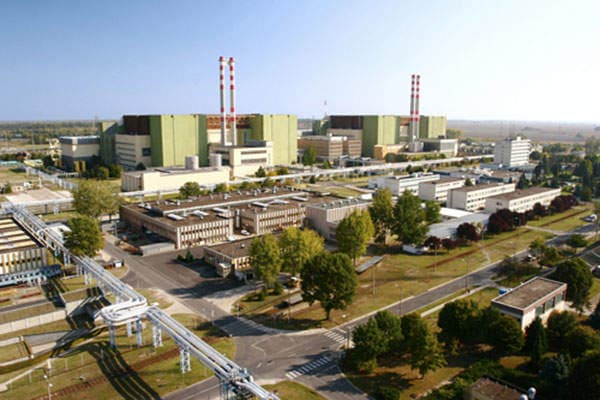
The physical work has advanced anyway. In February 2026, first concrete was poured for the reactor building foundation at Paks II, the point at which nuclear-industry practice treats a plant as officially under construction. That milestone gave the project a new level of momentum just as the government began its review, raising the stakes for financiers, contractors and regulators alike.
For Hungary, the issue now is no longer whether Paks II is an abstract future plan. It is a live industrial project with a contested legal past, a Russian supplier at its center and a budget that leaves little room for error. The review will determine whether the government tries to steady that path, slow it down or redraw it altogether.
This article was produced by Prism’s automated news system from verified source data, official records, and press releases, then run through automated quality and moderation checks before publishing. The system is built and supervised by the people who set the standards it runs under. Read our full AI policy.
Did this article answer your question?