Hungary’s Magyar starts EU talks to unlock frozen funds
Magyar opened talks in Budapest as 17 billion euros in frozen EU money hangs over his promise to end Orban’s confrontational break with Brussels.
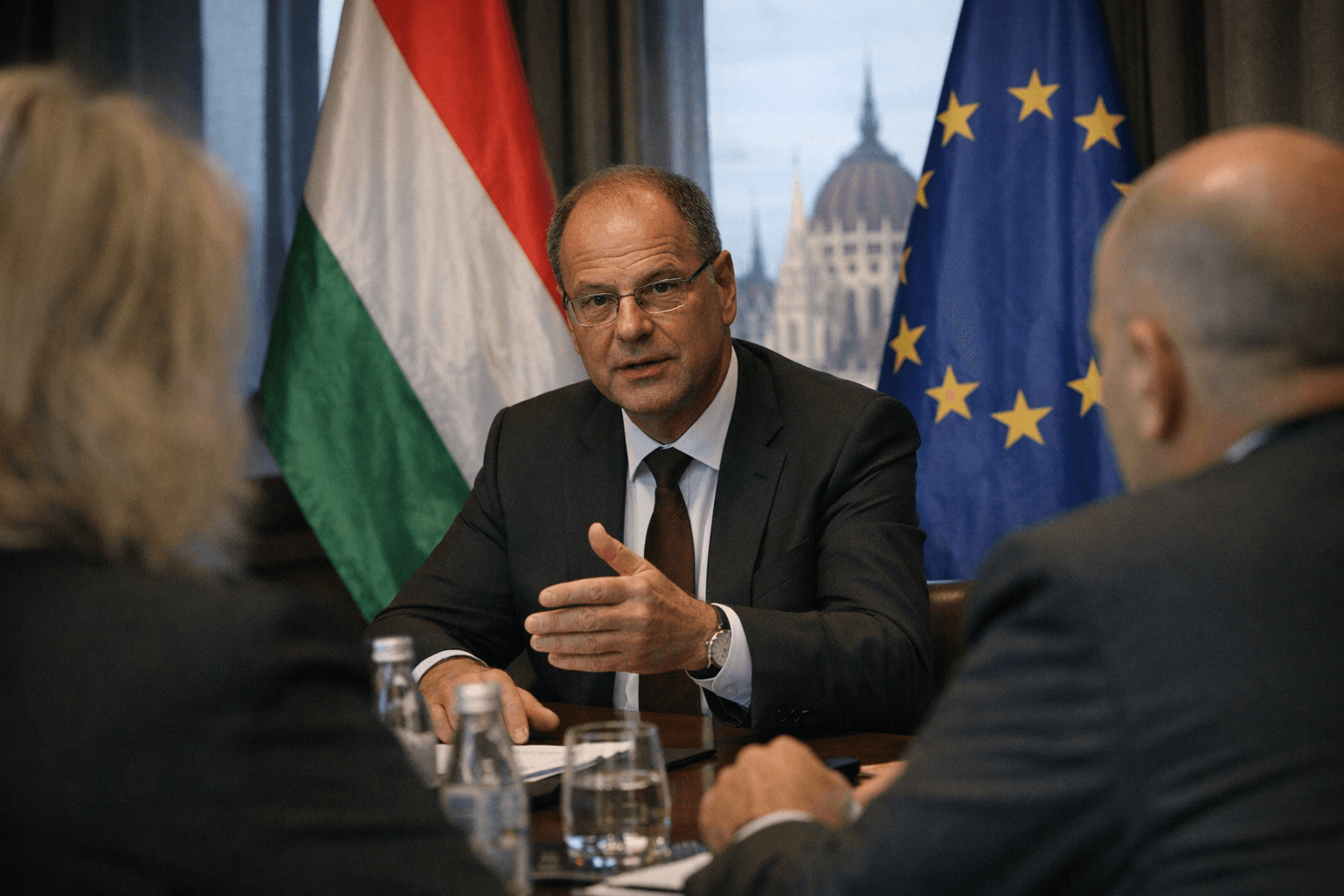
Peter Magyar opened early talks with European Union officials in Budapest on Friday, saying there was “no time to waste” as he tried to unlock billions of euros frozen during Viktor Orban’s rule. The European Commission chief of staff was due in the Hungarian capital around 5 p.m. local time, and Magyar said he wanted the meeting to begin by identifying the points where Budapest and Brussels already agree.
The talks are an immediate test of whether Magyar’s landslide victory on April 12, which is set to end Orban’s 16-year rule, marks a genuine reset in Hungary’s relationship with the EU or simply a tactical rebrand aimed at releasing badly needed cash. The agenda stretches beyond Hungary’s own finances to include a large loan for Ukraine, underscoring how the negotiations touch both domestic politics and the bloc’s wider support for Kyiv.
Brussels has made clear that the money will not move without reforms. Ursula von der Leyen spoke with Magyar on April 14 and said there was “swift work to be done” on the changes required to unfreeze EU funding. The frozen package is tied to rule-of-law and anti-corruption conditions, and the Commission has repeatedly said the funds will stay blocked until Hungary delivers the required institutional reforms. Politico reported that the conditions are explicitly laid out in the Council Decision of December 15, 2022.
The sums at stake are large enough to shape Magyar’s first weeks in office. Reporting has put the frozen total at roughly 17 billion euros, including about 8.4 billion euros in cohesion funds and 9.5 billion euros in COVID-19 recovery money. Hungary also faces an August deadline to draw on about 10 billion euros from post-pandemic recovery funds, adding pressure to show progress quickly. Magyar has said he hopes to be sworn in around May 9 or 10, depending on parliament’s inaugural session, while Orban and his ministers are expected to remain in a caretaker role until at least May 5.
That leaves Magyar negotiating before he formally takes office, with a narrow window to persuade Brussels that his Tisza party is ready for more than a change in tone. Hungary’s economic strain gives the talks added urgency, but the EU’s message remains unchanged: money will follow only if Budapest proves it can meet the rule-of-law benchmarks, curb corruption risks and carry out the reforms that were left undone under Orban. The opening of talks is only the first step in showing whether Magyar can turn political momentum into a durable shift in Hungary’s place in Europe.
This article was produced by Prism’s automated news system from verified source data, official records, and press releases, then run through automated quality and moderation checks before publishing. The system is built and supervised by the people who set the standards it runs under. Read our full AI policy.
Did this article answer your question?


