I-485 express lanes open in south Charlotte, tolling begins
N.C. transportation officials opened I-485 express toll lanes Feb. 28 at 6:00 a.m., adding one tolled lane each way across 17–18 miles to speed commutes and launch new toll tech.
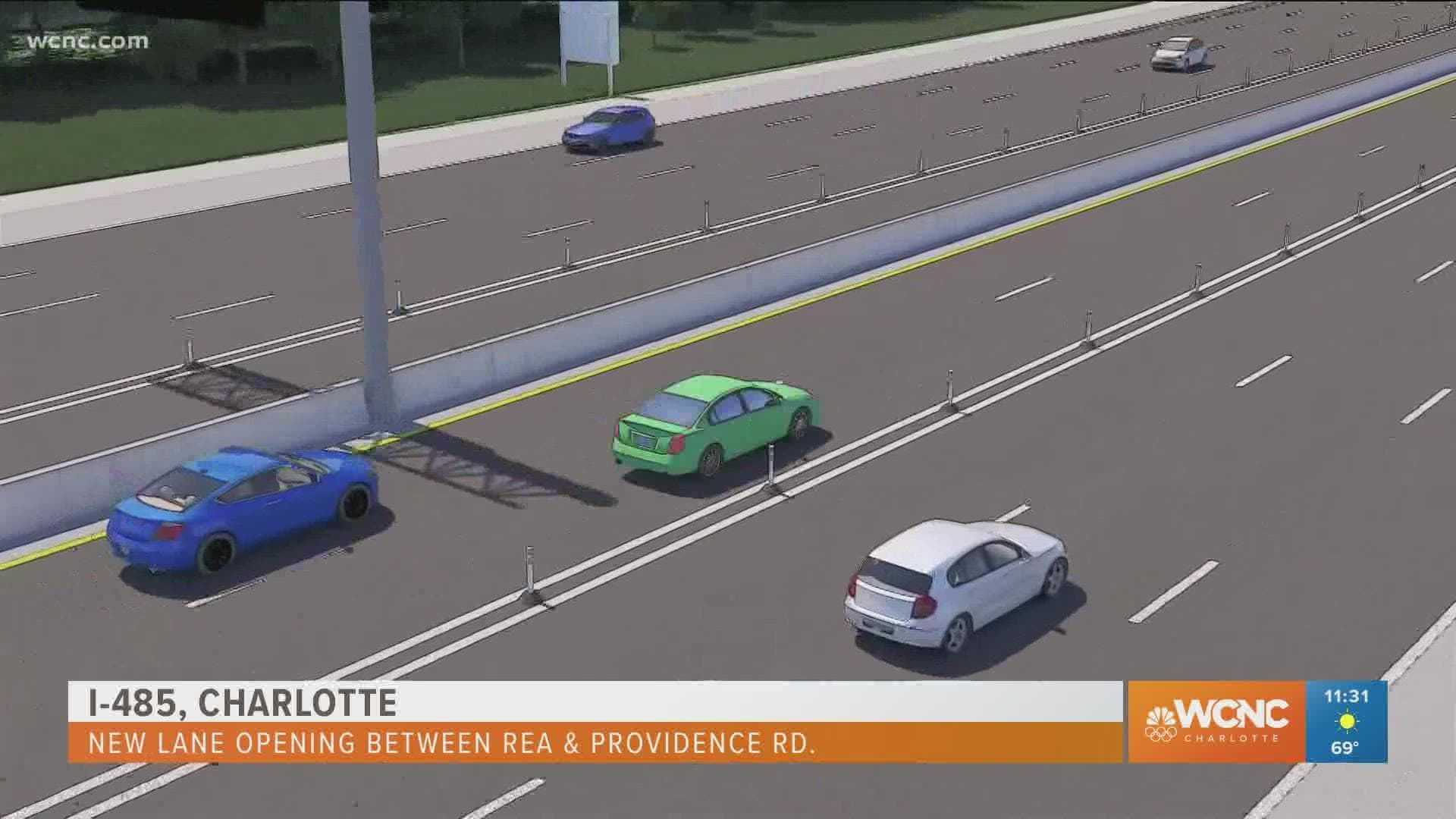
State transportation officials opened the I-485 Express Lanes to traffic at 6:00 a.m. on Feb. 28, 2026, adding one tolled lane in each direction on a corridor described by NCDOT as approximately 17 miles between Interstate 77 and U.S. 74 and by other project summaries as an 18-mile stretch. The lanes are intended to provide drivers a priced alternative designed to improve regional connectivity and reduce commute times in south Charlotte.
Officials staged a ribbon-cutting ceremony Friday morning in Ballantyne to mark completion of construction and the formal launch of the tolling system. The highway project also includes an additional general-purpose lane in each direction from Rea Road to Providence Road, a new interchange at Weddington Road, improvements at the E. John Street interchange in Matthews and a wider bridge carrying Ballantyne Commons Parkway over I-485.
Tolling will begin under a variable pricing model tied to vehicle length, time of day and day of week. Traffic managers say the lanes will move toward dynamic pricing within the first year, with tolls adjusting to maintain traffic flow; planners have set a target service speed of at least 45 miles per hour. J.J. Eden, executive director of the N.C. Turnpike Authority, framed the lanes as a response to regional growth: “We’re seeing some growth in areas that are restricted here in Charlotte, also in Raleigh, and in other places that you wouldn’t even anticipate. It’s just the nature of growth. In order to attract industry and to move people, we have to figure out transportation solutions.” Eden also explained the managed-lanes pricing logic: “Managed lanes work by increasing the price to keep traffic moving at a certain service level. If traffic gets high, you’ll see the rates go up. That’s the only way to keep traffic moving.”
The system powering toll collection and roadway monitoring was supplied and promoted by Indra Group. Indra described the Feb. 27 ceremony as the full-scale launch of its all-overhead Open Road Tolling system, supplemented by an industry-first combined C-V2X Toll & Safety subsystem delivered in December 2025 and supported by 3D LiDAR perception and back-office intelligence. Raúl Ripio, senior vice president of mobility business at Indra, said in the company release, “The official launch of the I-485 Express Lanes is a proud moment for us. By integrating all-overhead tolling, 3D LiDAR perception, back-office intelligence and C-V2X for tolling and safety, we are showing what the future of connected mobility looks like today.”
NCDOT and toll authority materials encourage drivers to open NC Quick Pass accounts to reduce costs and to use the NC Quick Pass toll calculator to plan trips. Agency material promotes a 50 percent savings for NC Quick Pass users; officials said account holders will pay about half of the posted toll compared with nonaccount holders. Electronic signs will display toll rates before drivers enter the lanes.

Agencies warned that for the first few weeks after opening roadway transactions will be manually reviewed to ensure accuracy, a process that will temporarily delay charges appearing on NC Quick Pass accounts for several days. NCDOT also noted that, unlike the I-77 North Express Lanes, the I-485 lanes do not provide discounted or free travel for high-occupancy vehicles.
NCDOT materials reference transit and vanpool services and say transit vehicles can participate with an NC Quick Pass Transit account. The agency also notes first responders with NC Quick Pass First Responder accounts will be permitted while responding to emergencies for law enforcement, fire, rescue and medical services.
The lanes represent a policy choice to use pricing rather than vehicle-occupancy exemptions to manage congestion. Local officials and operators will face early questions about how dynamic rates affect equity, freight access and commuting patterns as the system moves from manual oversight to automated dynamic pricing.
This article was produced by Prism’s automated news system from verified source data, official records, and press releases, then run through automated quality and moderation checks before publishing. The system is built and supervised by the people who set the standards it runs under. Read our full AI policy.
Did this article answer your question?

