IAEA Confirms Damage to Natanz Entrance Buildings, No Radiological Impact
The IAEA said satellite imagery shows recent damage to entrance buildings at Natanz Fuel Enrichment Plant, but it expects no radiological consequences and found no further impact to the underground halls.
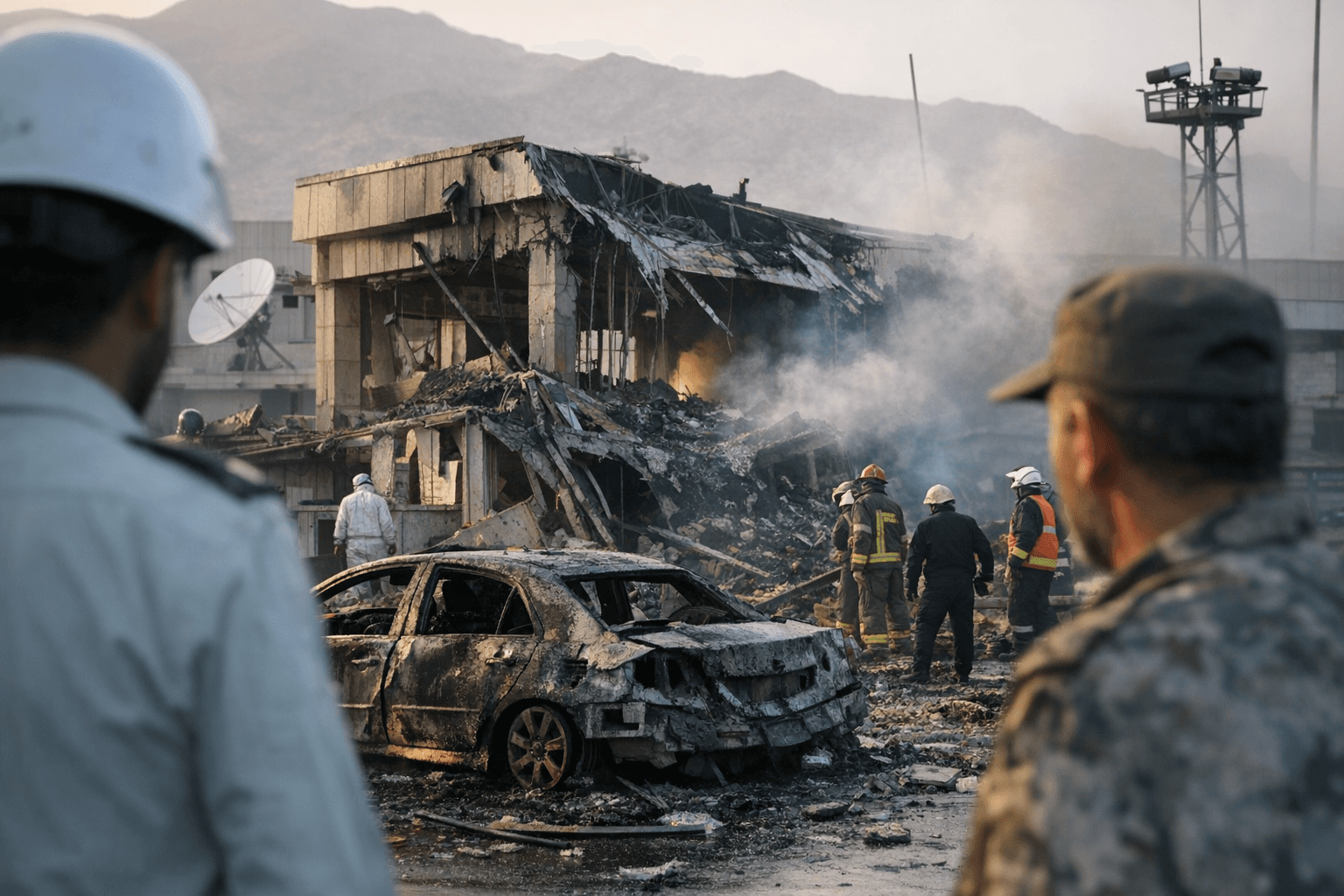
The International Atomic Energy Agency posted on March 3, 2026 that satellite images show damage to entrance buildings at Iran’s underground Natanz Fuel Enrichment Plant, and it said the harm is limited and not expected to release radioactivity. “Based on the latest available satellite imagery, IAEA can now confirm some recent damage to entrance buildings of Iran’s underground Natanz Fuel Enrichment Plant (FEP),” the agency said on the social media platform X. The post added, “No radiological consequence expected and no additional impact detected at FEP itself, which was severely damaged in the June conflict.”
The March 3 confirmation followed an earlier briefing in which IAEA Director General Rafael Grossi told an emergency Board of Governors meeting that, up to March 2, the agency had seen no indication that Iran’s nuclear installations had been hit. Grossi said, “Regarding the status of the nuclear installations in Iran, up to now, we have no indication that any of the nuclear installations … have been damaged or hit.” The agency’s March 3 update indicates that new imagery acquired or analyzed after Grossi’s March 2 remarks changed the assessment for surface entrance structures.
Iranian officials and local monitors also reported the incident. Newsbase and other outlets reported that Iran’s Atomic Energy Organisation separately confirmed structural damage to the facility’s entrance in Isfahan province while stating there had been no radioactive leakage or contamination. Ukraine’s Permanent Representative to the United Nations, Reza Najafi, was reported as saying that “a large nuclear facility located in Natanz was attacked during US and Israeli strikes against Iran,” a comment attributed to Najafi on March 2 in reporting carried by Ukrinform.
Natanz is Iran’s primary uranium enrichment site and is a hardened underground facility that Newsbase says houses thousands of centrifuges. Multiple outlets reiterated that the Natanz FEP was “severely damaged” in the June 2025 conflict, and the IAEA statement explicitly referenced that prior damage when noting no additional impact to the underground plant itself. Newsbase also reported that aerial bombing of mountains near Natanz was highlighted on Iranian social media and later confirmed by the imagery analyst IntelliNews.
The IAEA post did not attribute responsibility for the entrance damage and limited its technical claim to imagery analysis. Newsbase flagged that governments will watch the finding closely because the agency’s confirmation that the underground enrichment halls were not affected reduces immediate risk of radiological contamination in an active conflict zone. The IAEA’s language leaves open several technical follow-ups that operators, regulators and suppliers will want to see: the acquisition dates and providers of the satellite imagery, any on-site radiation monitoring results, and detailed identification of the entrance structures affected.
The agency’s March 3 update narrows the immediate safety picture by ruling out an expected radiological consequence, but it also shifts attention to verification steps and the timing of the strikes. Inspections, imagery timelines and any released radiation readouts will determine operational and regulatory next steps for Natanz and for international monitoring of enrichment activity.
Know something we missed? Have a correction or additional information?
Submit a Tip