IAEA Report Flags Isfahan Tunnel Holding 20% to 60% Enriched Uranium
Confidential IAEA report says uranium enriched to 20% and 60% U‑235 was stored in an underground tunnel at Isfahan, and the agency urged inspections ahead of a 35-country board meeting next week.
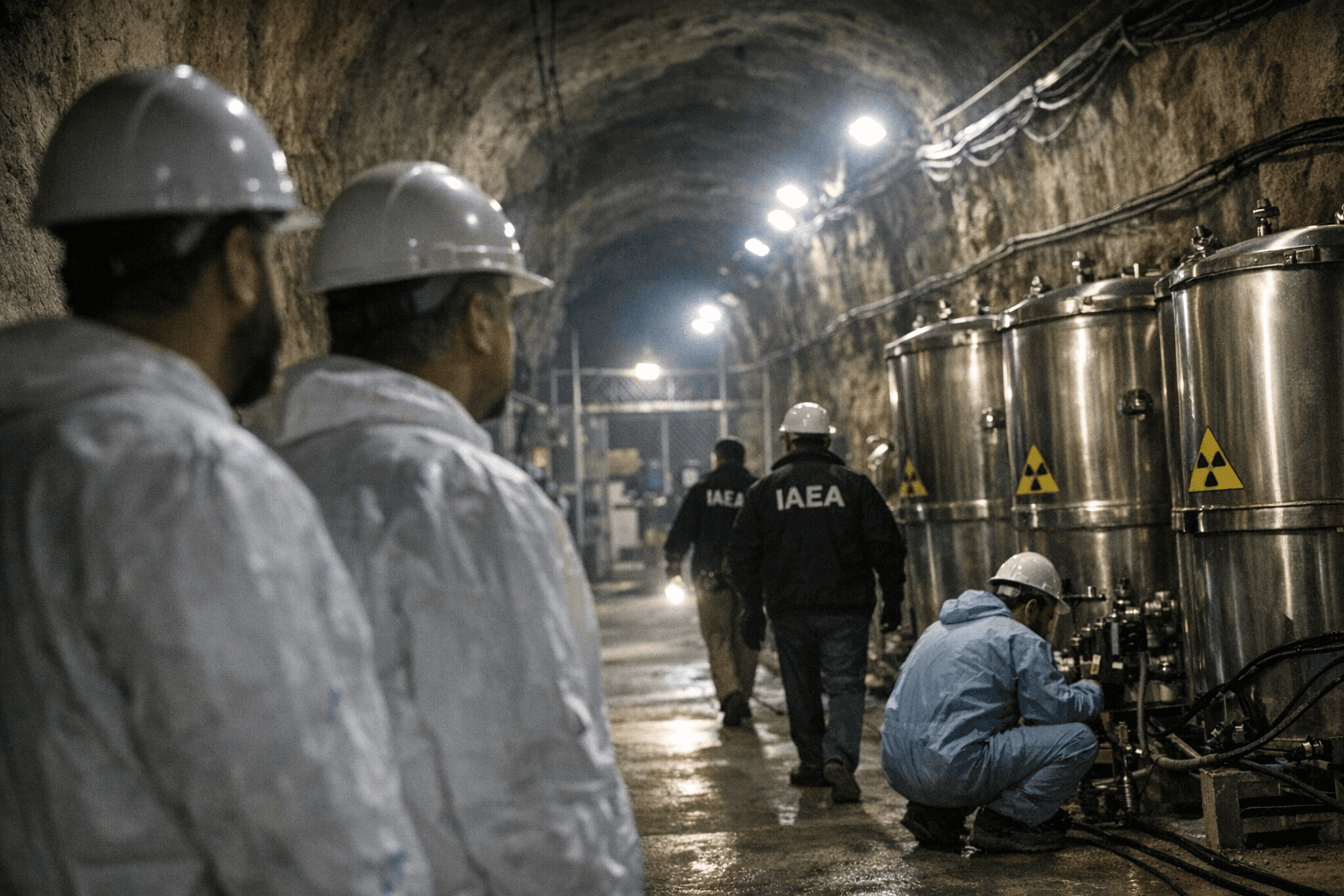
A confidential International Atomic Energy Agency report circulated to member states and reported by Reuters identified the Isfahan nuclear complex as a “place of interest,” saying uranium enriched up to 20% and up to 60% U‑235 had been stored in an underground tunnel there and urging Iran to allow inspections. Reuters reporter Francois Murphy said the assessment was sent to members ahead of the IAEA’s quarterly 35-country board meeting next week, making the board session the immediate milestone for follow-up.
The IAEA said it had observed “regular vehicular activity around the entrance to the tunnel complex at Isfahan in which (uranium) enriched up to 20% and 60% U‑235 ... was stored,” the report said. Arabnews Jp placed Isfahan some 350 kilometers southeast of Tehran and noted the site is mainly known for producing the uranium gas fed into centrifuges for enrichment, reinforcing the agency’s focus on the conversion and storage infrastructure there.
Kurdistan24 and AFP flagged that this is the first time the agency has publicly specified where material enriched to up to 60% purity was kept. Al Jazeera reported that the IAEA had previously recorded 440.9 kilograms, or about 972 pounds, of uranium enriched up to 60% prior to the 12-day war, a figure likely to be central to diplomatic talks over the material’s disposition.
The confidential assessment also flagged gaps in verification. Reuters quoted the report saying, “It is a matter of increasing concern that Iran has never provided the Agency with access to its fourth declared enrichment facility since it was first declared by Iran in June last year.” Iran told inspectors in June it was setting up a fourth enrichment plant in Isfahan, but the IAEA said it still does not know the facility’s precise location or whether it is operational. Arabnews Jp summarized the report’s warning that, without full access, the Agency “cannot provide any information on the current size, composition or whereabouts of the stockpile of enriched uranium in Iran” and “cannot verify whether Iran has suspended all enrichment-related activities.”
The report drew on commercial satellite imagery beyond Isfahan, noting observable activities at Natanz and Fordow while cautioning that “without access to these facilities it is not possible for the Agency to confirm the nature and the purpose of the activities,” Arabnews Jp reported. The IAEA said inspectors had been given access to each of the unaffected nuclear facilities at least once since the military attacks of June 2025, except the Karun Nuclear Power Plant, which is in early construction and does not contain nuclear material, according to Arabnews Jp.
June strikes by U.S. and Israeli forces are part of the backdrop. Reuters reported U.S.-Israeli attacks are believed to have destroyed or badly damaged the three uranium enrichment sites known to have been operating at the time, while Kurdistan24 and other outlets noted diplomats saying the entrance to the Isfahan tunnel was struck but the underground area appears largely unharmed. The confidential report’s circulation comes amid ongoing, Oman-mediated U.S.-Iran talks and will be debated at the IAEA’s 35-country board meeting next week, where member states must confront the agency’s urgent finding that the loss of continuity of knowledge over declared nuclear material “needs to be addressed with the utmost urgency.”
Know something we missed? Have a correction or additional information?
Submit a Tip

_82415.jpg&w=1920&q=75)