ICE orders officers to stop vehicle pursuits after fatal shootings
ICE has ordered officers to stop vehicle pursuits after fatal shootings, a sharp retreat as its 287(g) network spans 39 states and two territories.

ICE has ordered officers to stop pursuing vehicles after back-to-back fatal shootings, a move that sharply narrows one of the riskiest tools in federal immigration enforcement. The directive lands under the shadow of agency guidance that has long treated emergency driving, and even force from a motor vehicle, as potentially deadly force.
The change does not shrink ICE’s broader reach. As of July 1, the agency said it had signed 2,063 Memorandums of Agreement for its 287(g) program, covering 39 states and 2 U.S. territories. Those partnerships tie local police and sheriffs more closely to federal immigration operations, giving ICE a wide enforcement network even as it pulls back from one of the most dangerous street-level tactics.

The halt on vehicle pursuits reflects how quickly a stop can turn into a fatal encounter. ICE’s 2012 emergency driving guidance says deadly force can include force from a motor vehicle, a standard that underscores the danger of chasing moving cars through neighborhoods and onto highways. By stopping pursuits after the shootings, ICE is signaling that the operational and legal risk has become too high to keep pushing that tactic.
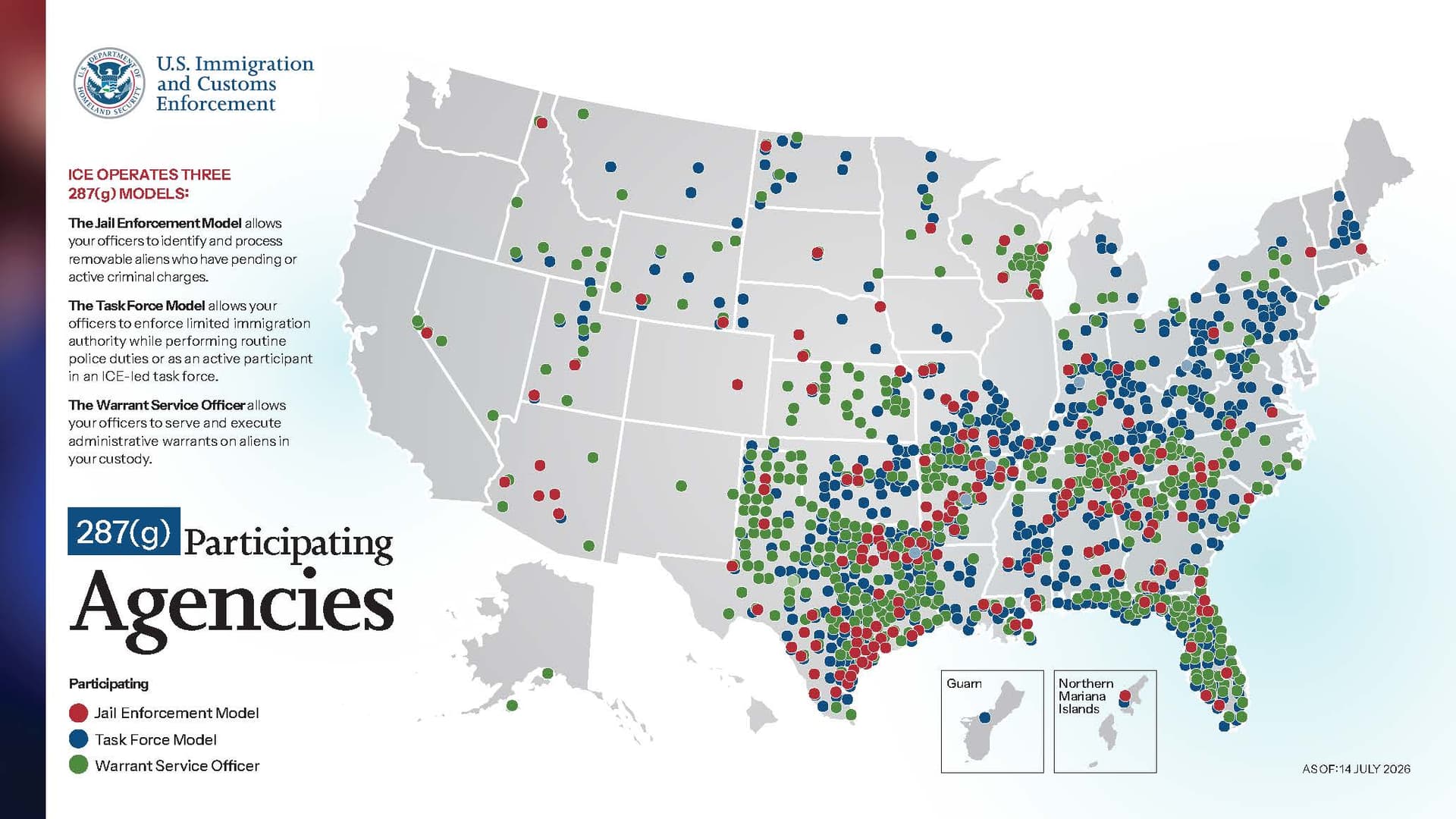
The question now is whether the order becomes a limited safety fix or the start of a deeper operational rethink inside an agency that still leans heavily on local partnerships. The 287(g) footprint shows ICE has built a broad enforcement structure that remains intact, even as it trims a tactic that can end in bloodshed. That tension between wider reach and tighter restraint will shape how officers handle moving vehicles in the months ahead.
This article was produced by Prism’s automated news system from verified source data, official records, and press releases, then run through automated quality and moderation checks before publishing. The system is built and supervised by the people who set the standards it runs under. Read our full AI policy.
Did this article answer your question?