Iconic Global Landmarks Power Down Their Lights for Earth Hour
The Empire State Building went dark alongside the Eiffel Tower for Earth Hour's 20th year; studies show one symbolic hour cuts Ontario's grid demand by 900 megawatt-hours.
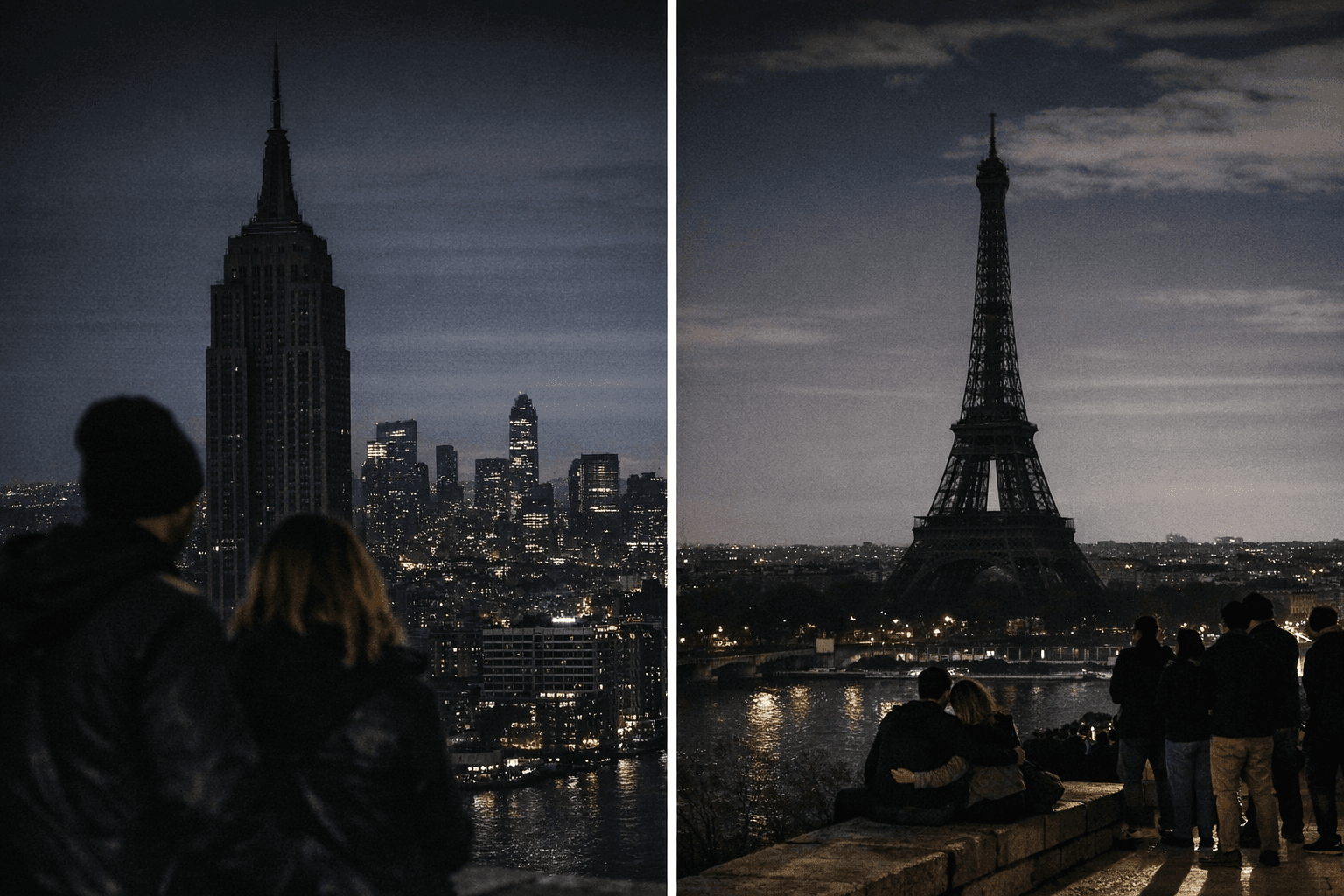
The Empire State Building's tower lights cut to black above Midtown Manhattan at 8:30 Saturday night, joining the Eiffel Tower, Rome's Colosseum, the Parthenon in Athens, and more than a dozen other global icons in an annual 60-minute switch-off that, on its 20th anniversary, forces a straightforward question: does turning off lights for one hour actually accomplish anything measurable?
The answer is complicated, and that complication is precisely the story.
A peer-reviewed analysis of 274 Earth Hour measurements across 10 countries found an average grid demand reduction of 4 percent during the switch-off window. In Ontario alone, residents used approximately 900 megawatt-hours less electrical energy during a prior Earth Hour observance. Toronto at one point recorded an 8.7 percent reduction in power consumption compared to a typical March Saturday night, a figure that represents a real, documentable dip in grid demand. Yet the researchers behind that same body of analysis were explicit that "the goal of Earth Hour is not to achieve measurable electricity savings," even as the events collectively show how coordinated behavior can produce documentable shifts in grid demand. The lights-off hour is a demonstration, not an energy policy.
That distinction shapes every statement WWF International has made about the campaign. "More people than ever need to join this year's Earth Hour to leverage the collective power of individuals and communities," said Kirsten Schuijt, director general of WWF International. In a fuller statement, Schuijt added: "It's crucial to get involved, if we want to raise awareness about the environmental challenges and bend the curve of biodiversity loss by 2030. Protecting our planet is a shared responsibility and it demands collective action from every corner of society."
Organizers framed Saturday's 8:30 to 9:30 p.m. window as an invitation rather than a mandate, urging supporters to "symbolically switch off and give an hour for Earth, spending 60 minutes doing something, anything, positive for our planet."
Earth Hour began in Sydney, Australia in 2007, when the World Wide Fund for Nature organized a single city's lights-out moment that drew 2.2 million homes and businesses. Saturday marked the campaign's 20th year, with participation now spanning more than 190 countries and territories. In the United States alone, polling from prior years found an estimated 90 million Americans participating, with landmarks from Mount Rushmore to Niagara Falls joining the switch-off at various points in the movement's history.
Saturday's U.S. participation included the Ferris wheel at Pacific Park on the Santa Monica Pier, which cut its lights beginning at 8:30 p.m. while keeping its rim safety lighting active, a logistical accommodation reflecting the real-world limits of a full blackout on a working amusement ride. The Space Needle in Seattle also participated, alongside the Empire State Building on the East Coast.
Globally, the list extended to the Sydney Opera House, Big Ben in London, Barcelona's Sagrada Família Basilica, and New Delhi's Akshardham temple, with the United Kingdom observance also encompassing the London Eye and 10 Downing Street.
The campaign's organizers describe Earth Hour as a "moment of unity that brings the world together, shines a spotlight on nature loss and the climate crisis, and inspires millions more to act and advocate for urgent change." Whether a 60-minute grid dip translates into the sustained behavioral shift the movement's architects envision has been the open question for all 20 of those years. The 900-megawatt-hour savings in one province on one night is real. Whether it outlasts the moment the lights come back on is where the harder accountability math begins.
This article was produced by Prism’s automated news system from verified source data, official records, and press releases, then run through automated quality and moderation checks before publishing. The system is built and supervised by the people who set the standards it runs under. Read our full AI policy.
Did this article answer your question?