Iconic WKRP Call Letters Returning to Cincinnati Airwaves After 48 Years
A North Carolina nonprofit struck a deal to bring WKRP to Cincinnati airwaves for the first time ever, 48 years after the CBS sitcom made the call letters famous.
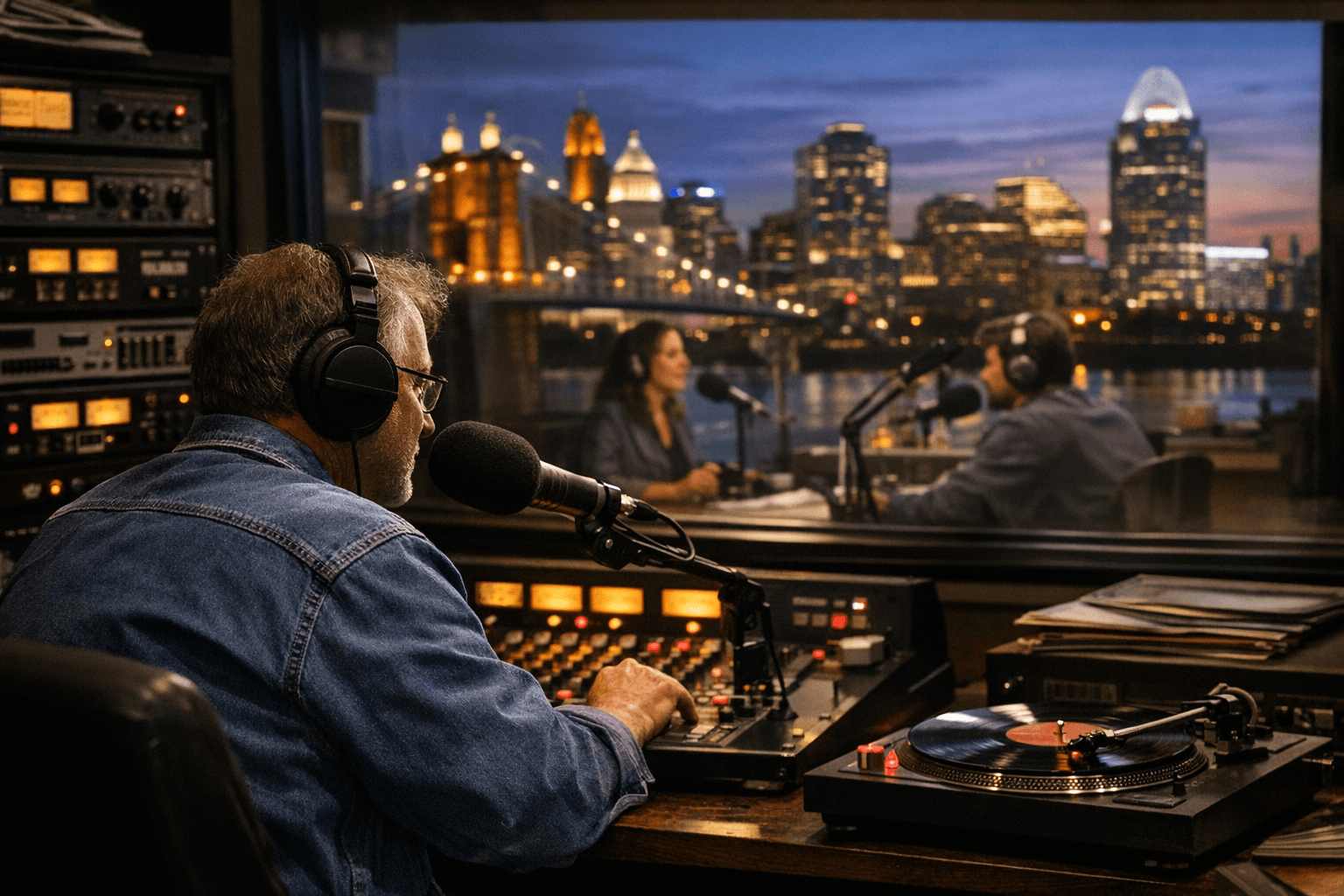
The call letters WKRP never actually belonged to Cincinnati. For 48 years, the name lived entirely in television reruns and the collective memory of fans who knew Les Nessman's turkey-drop disaster by heart. That is about to change.
D.P. McIntire, executive director of Oak City Media Inc., a Raleigh, North Carolina-based 501(c)(3) nonprofit, confirmed an agreement in principle with a Cincinnati-market station that would bring WKRP to the city's actual airwaves for the first time in any form. "I cannot, by contract, tell you when. I cannot tell you who. But I can tell you, direct to the camera, WKRP, after 48 years, is coming to Cincinnati," McIntire said in a videotaped statement to the Associated Press. "Book it! It's done!"
The mechanics of how this happened say as much about broadcast economics as they do about pop culture. Oak City Media acquired the WKRP call letters from the Federal Communications Commission in 2014, then launched a 100-watt low-power FM station, WKRP-LPFM at 101.9, in Raleigh the following year. Under FCC guidelines, a licensed station holds a vested right in its call sign and may share those letters with a broadcaster in another market, provided the two are not competing directly. That structure is what allowed Oak City Media to offer the WKRP identity to stations east of the Mississippi River while retaining its own Raleigh signal.
The auction was structured as a private competition among three finalists in each of three categories: television, AM radio, and full-power FM. Proceeds from the transaction are intended to fund Oak City Media's operations and to provide financial assistance to other low-power FM stations struggling to stay on air. McIntire described the goal plainly: helping stations "in need of funds to stay afloat." Nostalgia, in other words, is the revenue model.
McIntire said he first dreamed of running a station called WKRP at age 13, and he spent more than a decade building toward the moment. The timing carries its own irony: despite the show's title, no licensed broadcaster in the Cincinnati market had ever actually used the WKRP call letters before this deal. The closest the city came was in 2008, when low-power television outlet WBQC-TV rebranded itself "WKRP TV" without the hyphen, an informal homage that carried no official FCC call-sign designation.
The sitcom that created all this leverage ran on CBS from 1978 to 1982, launching the careers of Loni Anderson and Richard Sanders. Sanders played bumbling news reporter Les Nessman, who narrated the show's most enduring scene: a Thanksgiving promotion in which live turkeys were dropped from a helicopter over a parking lot. Characters Dr. Johnny Fever and Venus Flytrap turned a fictional Cincinnati rock station into one of television's most beloved workplace comedies.
A 1987 attempt by a Kentucky broadcaster to acquire the WKRP call letters for a Falmouth station collapsed over signal limitations and anxiety that the show's bumbling-station image might not translate favorably to a real market. Oak City Media's approach sidesteps that concern by controlling the brand's reintroduction through negotiated contract terms rather than leaving the identity open to any willing licensee.
McIntire has disclosed neither the partner station nor a launch date, and his contractual obligations prevent him from doing so. What the agreement confirms is that a city that spent four seasons watching fictional disc jockeys spin records on a fictional frequency is now one signed FCC application away from the real thing.
This article was produced by Prism’s automated news system from verified source data, official records, and press releases, then run through automated quality and moderation checks before publishing. The system is built and supervised by the people who set the standards it runs under. Read our full AI policy.
Did this article answer your question?