Idaho and Coeur d’Alene Tribe Reach $500M Water Rights Settlement
North Idaho water users won legal certainty after state and tribal leaders ceremonially signed a settlement in Boise March 5 that recognizes tribal rights, protects existing users, and seeks $500 million in federal funds.

Coeur d’Alene Reservation residents and thousands of water users across north Idaho gained a measure of certainty after state and tribal negotiators ceremonially signed a settlement in Boise on March 5, 2026 that recognizes federal reserved water rights, protects existing water users both within and outside the Reservation, and allows up to 10,000 acre-feet per year in future allocations; the agreement must still be approved by the Idaho Legislature during the 2026 session and authorized by Congress. Residents should note the Tribe will seek $500 million from Congress for water infrastructure while the state says it will not provide direct funding.
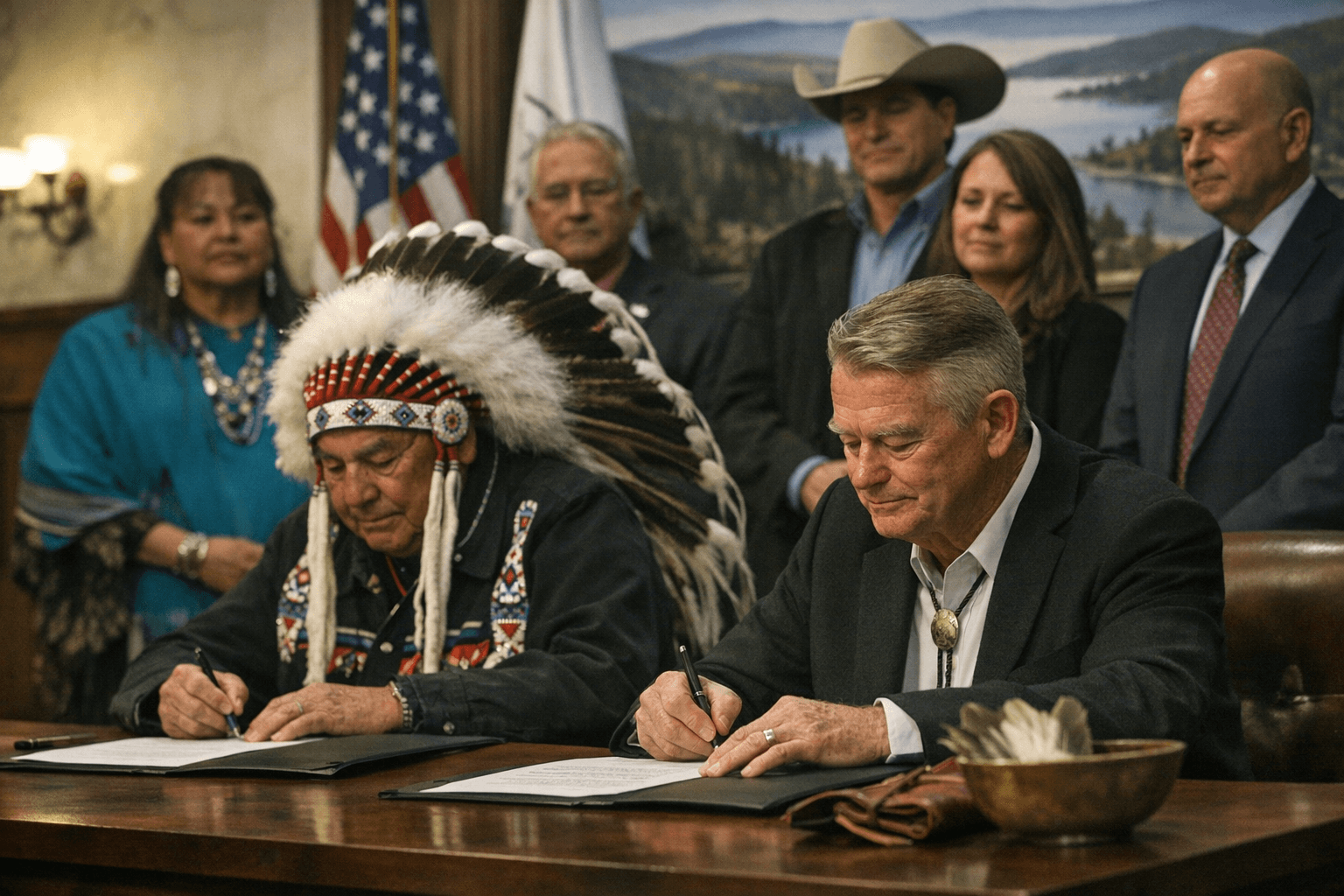
Governor Brad Little and Attorney General Raúl Labrador joined Coeur d’Alene Tribal Chairman Chief Allan and the Coeur d’Alene Tribal Council for the signing, with the federal government and more than 300 stakeholders also participating, including the cities of Coeur d’Alene and St. Maries and Benewah County. Governor Little said, “This historic water rights agreement delivers certainty for water users and lasting protection for Coeur d’Alene Lake and everyone who depends on it. After years of hard work, we are proud to stand alongside Chief Allan and tribal leaders to mark this milestone.”
The settlement recognizes specific quantities of federal reserved water rights for the Tribe while explicitly protecting existing water right holders on and off the Reservation. Kori Wood’s reporting notes the agreement “focuses on protecting existing water rights while allowing up to 10,000 acre-feet per year in future water rights allocations,” a provision officials say could support growth in north Idaho. Chief Allan recalled the late Tribal leader Felix Aripa, saying, “Water is life for all of us,” and added, “Through hard work and constant dedication, we’ve been able to reach an agreement that not only protects our Tribal homelands but ensures water reliability for everyone throughout North Idaho.”
The settlement contains a regulatory limitation stating water use under the agreement would not be subject to regulation under the Clean Water Act or the Endangered Species Act. Attorney General Labrador framed the deal as avoiding further litigation, saying, “This settlement is a massive win for all north Idaho families, businesses, and communities who depend on reliable water.” Labrador also told KREM that the Tribe will seek $500 million from Congress to implement the agreement and for water infrastructure improvements and other uses, and that “the State will not provide direct funding to the Tribe under the settlement, with no cost to taxpayers.”
Key procedural steps remain: the agreement must be approved by the Idaho Legislature during the 2026 session and authorized by Congress before federal appropriations would flow. KREM and other reports emphasize the settlement itself “stands regardless of whether or how much Congress appropriates,” but no source provides a breakdown of how the requested $500 million would be spent. The signing ceremony on March 5, 2026 closes more than a century of uncertainty dating to the 1873 Executive Order creating the Reservation and follows Idaho court rulings, including a 2019 Idaho Supreme Court decision recognizing implied federal reserved water rights for the Tribe.
Know something we missed? Have a correction or additional information?
Submit a Tip