IDF Says It Is Nearly Done Striking Iran's Military Industrial Base
Netanyahu ordered a 48-hour push to destroy Iran's arms industry; the IDF assessed up to 90% of Iran's weapons industry could be hit within days.

Up to 90% of Iran's weapons industry could be struck within days, the Israel Defense Forces assessed as waves of attacks continued against Tehran facilities and missile infrastructure across the country. The IDF said it was "almost done" targeting critical Iranian military sites and expected to complete strikes on nearly all of Iran's military industrial base in the near term.
The campaign intensified following a directive from Prime Minister Benjamin Netanyahu. Citing two senior Israeli officials, The New York Times reported on March 25 that Netanyahu ordered the IDF to "maximize its destruction of Iran's arms industry over the next 48 hours." The Critical Threats Project and the Institute for the Study of War recorded a measurable uptick in combined force strikes targeting Iranian defense industrial sites in the period following that order.
In Tehran, the IDF reported strikes on two facilities associated with Iran's naval cruise missile manufacturing program. One strike hit a building in the Shiyan neighborhood of eastern Tehran; a second targeted the Shahid Motahari Applied Scientific Education Center in Imam Khomeini Town, in northeastern Tehran. Some reporting placed the total number of struck naval cruise missile facilities in Tehran at three, a discrepancy that had not been independently verified as of this reporting.
The Imam Javad Missile Base, situated north of Shiraz in Fars Province, proved one of the campaign's most repeatedly struck installations. Commercial satellite imagery from March 14 showed that strikes had hit three tunnel entrances to underground facilities and five adjacent storage bunkers at the base. The site had already sustained significant damage during the earlier conflict known as the 12-Day War, when strikes destroyed its administrative support buildings and missile assembly hangar. The combined force likely hit Imam Javad again on March 25, according to the Institute for the Study of War, which cited anti-regime media video showing smoke rising near the Imam Javad Barracks. That conclusion rested on open-source video evidence, not satellite imagery.
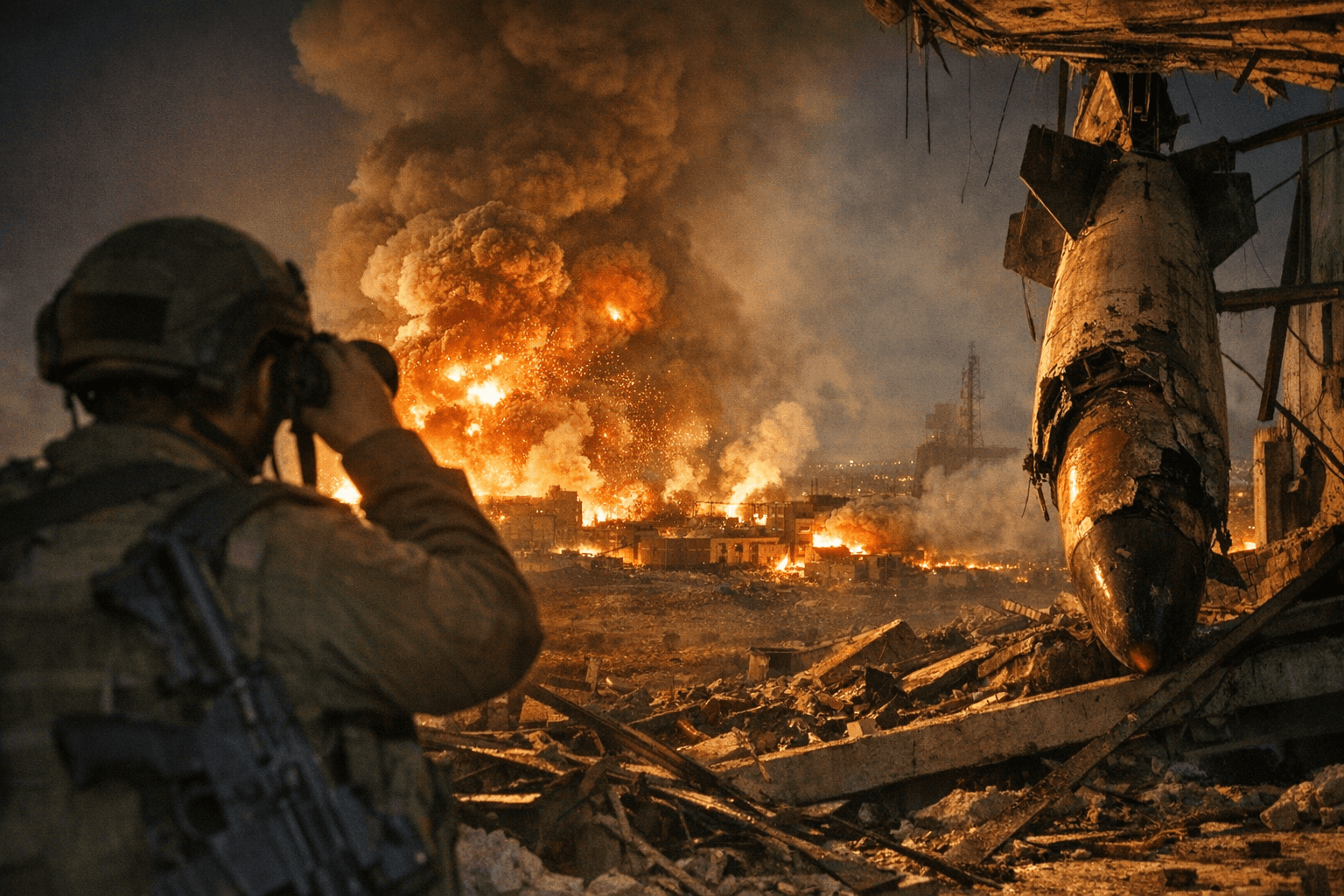
The Institute for the Study of War framed the campaign's purpose in operational terms, stating that the combined force "continued to strike Iranian ballistic missile infrastructure to degrade Iran's missile capabilities."
The strikes unfolded alongside wider regional pressure. Houthi forces fired a missile at Israel from Yemen during the same period, and the Trump administration delayed a previously announced deadline related to the Strait of Hormuz, developments that ran parallel to, but separate from, Israel's campaign against Iranian arms production.
Whether the IDF's near-completion assessment would hold remained an open question. The military had not publicly defined what finishing strikes on "almost all" of Iran's military industrial base would mean operationally, nor explained the basis for its 90% figure. The identity and composition of the "combined force" conducting the strikes, a phrase the Institute for the Study of War used consistently, also remained unspecified in official accounts.
This article was produced by Prism’s automated news system from verified source data, official records, and press releases, then run through automated quality and moderation checks before publishing. The system is built and supervised by the people who set the standards it runs under. Read our full AI policy.
Did this article answer your question?


