IMF raises global growth forecast to 3.3% as AI lifts activity
IMF raised 2026 global growth to 3.3%, citing AI and tech investment as offsets to trade shocks while warning gains are concentrated and risks remain.
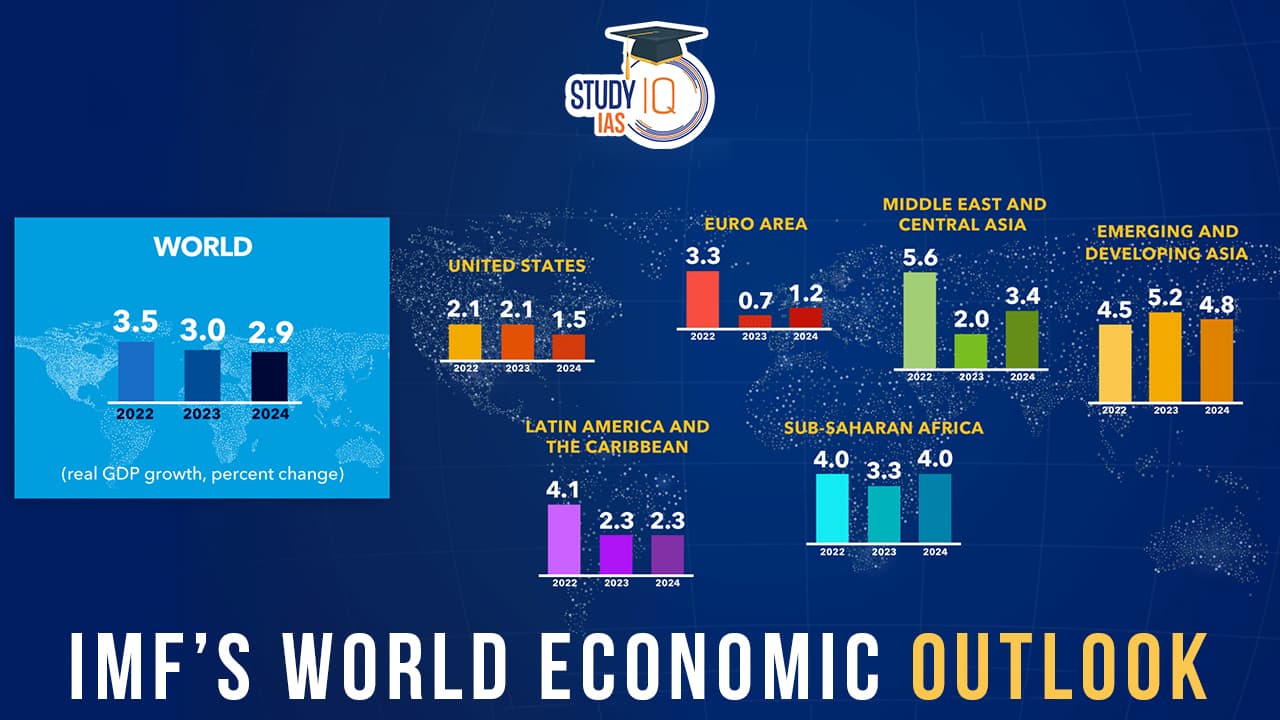
The International Monetary Fund raised its global growth forecast for 2026 to 3.3 percent in an update released Jan. 19, citing a surge in technology and artificial intelligence investment that helped offset trade-policy disruptions from 2025. The revision, up 0.2 percentage points from the IMF's October outlook, left the 2026 pace roughly the same as 2025 and reflected stronger activity concentrated in a limited set of sectors.
The IMF attributed much of the upward revision to spending on AI infrastructure, data centers, semiconductor capacity and associated measures. In the United States, the fund lifted its 2026 growth projection to 2.4 percent, a 0.3 percentage-point increase from October, saying the upgrade reflected a "big push" in AI infrastructure and related policies. The fund estimated that accelerated AI investment, together with targeted tax breaks and lower effective tariffs, added roughly 0.3 percentage points to US GDP growth in the first three quarters of 2025. The IMF also trimmed its US 2027 forecast by 0.1 point to 2.0 percent.
Regional forecasts showed a mixed picture. The euro area was projected to grow 1.3 percent in 2026, while Spain's outlook was upgraded by 0.3 percentage points to 2.3 percent. The United Kingdom's forecast remained unchanged at 1.3 percent. China and India were described as relatively strong relative to other emerging markets and, together with the United States, accounted for most of the upward revision to global growth. Latin America's regional growth was forecast at 2.2 percent, with Mexico unchanged at 1.5 percent and Brazil projected to expand 1.6 percent.
The IMF quantified the upside from AI and broader tech investment: if spending translated into rapid adoption and productivity gains, AI could raise global growth by as much as 0.3 percentage points in 2026, and between 0.1 and 0.8 percentage points per year over the medium term depending on adoption speed and countries' "AI readiness." The fund cautioned that the benefits so far were concentrated geographically and sectorally, noting the positive effects had come chiefly from North America and Asia. IMF Chief Economist Pierre-Olivier Gourinchas said the developments amounted to "tailwinds from the AI and tech investment boom" that helped offset last year's shocks.

Policymakers face a narrow path. The IMF warned that resilience driven by a few sectors left the global expansion vulnerable if gains did not broaden to manufacturing and services more widely. Downside risks identified included a reappraisal of market expectations around AI productivity and profitability that could trigger corrections in financial markets, renewed trade tensions or tariff actions, and escalation of geopolitical conflicts. A near-term legal uncertainty in the United States, the pending Supreme Court review of former President Donald Trump's use of emergency powers to impose broad tariffs, was cited as a source of potential unpredictability in trade policy.
The WEO update urged governments to rebuild fiscal buffers, preserve price and financial stability, reduce policy uncertainty, safeguard central bank independence and pursue structural reforms to widen the base of growth. Absent those measures, the IMF said, the current upswing could prove narrow and transient even as new technologies lift output in key markets.
This article was produced by Prism’s automated news system from verified source data, official records, and press releases, then run through automated quality and moderation checks before publishing. The system is built and supervised by the people who set the standards it runs under. Read our full AI policy.
Did this article answer your question?

