IMF to Release April 2026 World Economic Outlook Amid Trade and AI Uncertainty
The IMF released its April 2026 WEO analytical chapters today on defense spending and conflict economics, ahead of the full global forecast and press briefing on April 14.
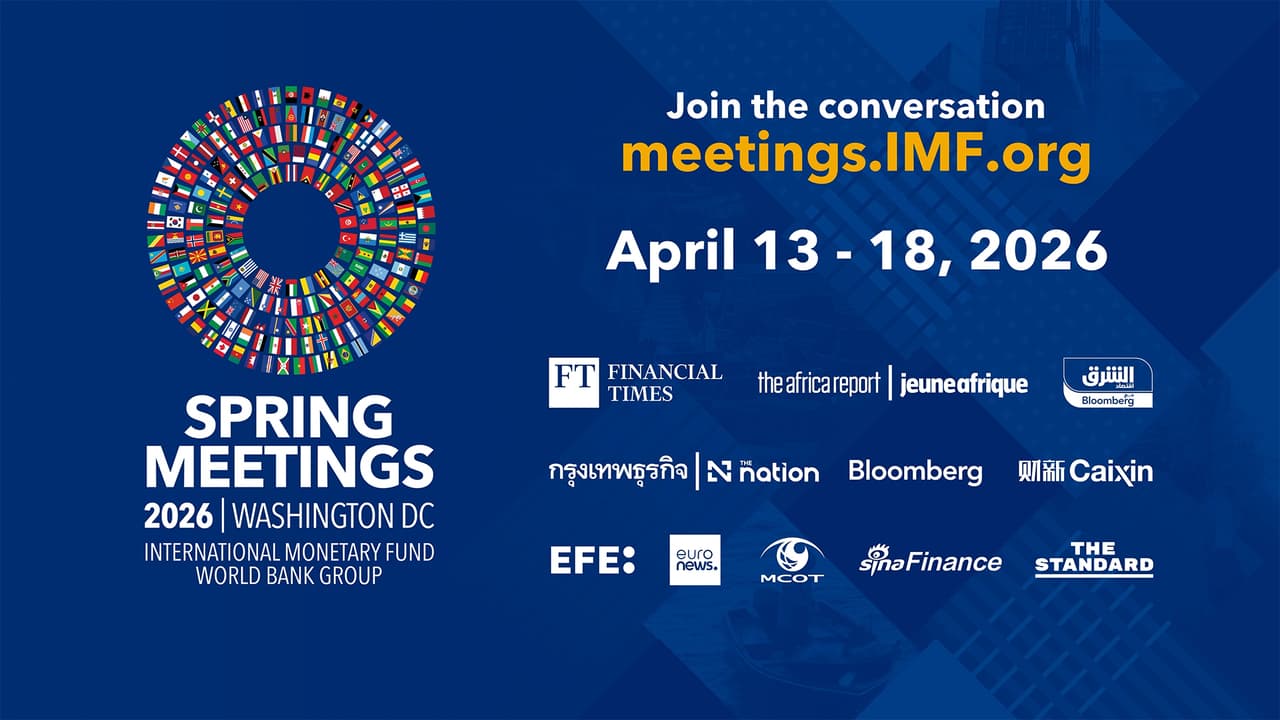
The International Monetary Fund released two analytical chapters from its April 2026 World Economic Outlook this morning, opening a two-stage disclosure that ends with the fund's complete global forecast and a live press briefing on April 14, one day into the Spring Meetings in Washington.
Chapters 2 and 3, published at 9 a.m. Eastern Time and accompanied by a panel discussion, focus on "The Macroeconomics of Defense Spending, Conflicts, and Recovery," a title that underscores how deeply military expenditure and geopolitical disruption have migrated from footnotes into core economic modeling. The Spring Meetings run Monday, April 13 through Saturday, April 18, at IMF and World Bank Group headquarters in Washington.
The fund's baseline projections show global growth holding at 3.3 percent for 2026 and easing to 3.2 percent for 2027, both figures representing a slight upward revision from the October 2025 WEO. The January 2026 WEO Update attributed that stability to a precarious balance: headwinds from shifting trade policies offset by tailwinds from surging technology and AI investment, more concentrated in North America and Asia than elsewhere.
Inflation is on a slower glide path than central banks in advanced economies would prefer. Global headline inflation is projected at 3.8 percent for 2026, down from an estimated 4.1 percent in 2025, declining further to 3.4 percent in 2027. Tariff effects have already pushed the 2025 advanced-economy inflation forecast higher, leaving monetary policymakers less room to ease even as growth risks accumulate.

The analytical chapters typically address topics such as fiscal stances, inflation and monetary policy, and structural reform priorities, arriving ahead of the consolidated report to give market participants and central banks an early read on near-term data revisions and scenario analysis that can move exchange rates and bond yields. A downward revision to global growth in the April 14 main chapter could harden central bank language heading into the second quarter; a more benign read on inflation persistence might ease pressure on rate paths in emerging markets carrying heavy dollar-denominated debt loads.
IMF policy recommendations regularly feed into G20 deliberations and can shape conditionality around financing programs for vulnerable countries, which gives the April 14 press briefing weight well beyond a data release. Reporters pressing IMF officials that day should focus on how the fund quantifies the fiscal cost of sustained defense buildups, whether its updated current-account projections reflect the full drag of recent trade frictions, and what scenarios the fund has stress-tested for AI-driven productivity gains failing to materialize at the pace embedded in the baseline. The six-day gap between today's chapter release and the full WEO is a narrow window for markets and finance ministries to reconcile the analytical findings before the consolidated numbers set expectations for the rest of 2026.
This article was produced by Prism’s automated news system from verified source data, official records, and press releases, then run through automated quality and moderation checks before publishing. The system is built and supervised by the people who set the standards it runs under. Read our full AI policy.
Did this article answer your question?