Moolec Science Grows Beef Protein Inside Pea Seeds in Molecular Farming Breakthrough
Moolec Science produced bovine myoglobin inside pea seeds after 28 months of research, a first that could reshape how heme proteins are made for alternative meat.
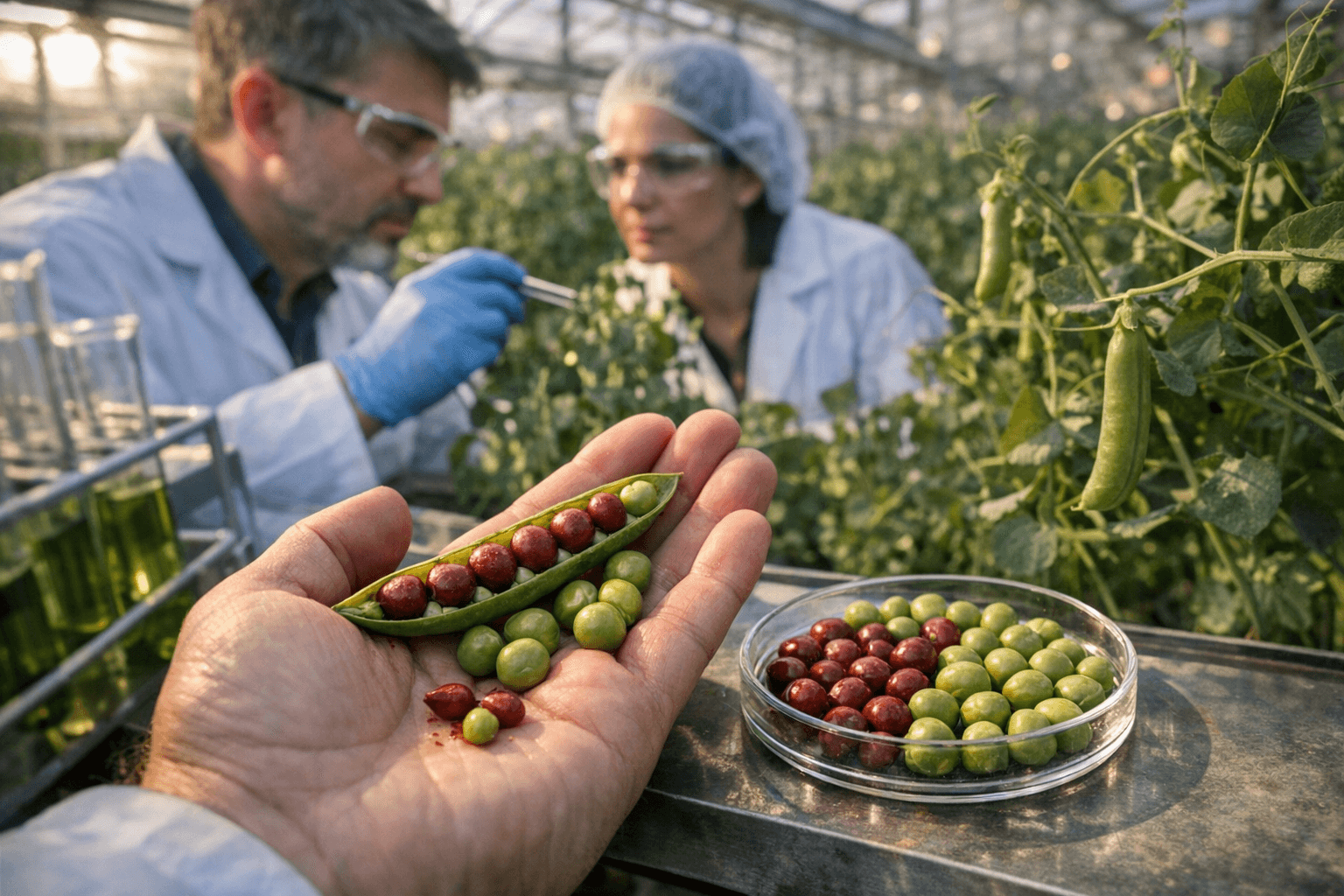
A NASDAQ-listed agricultural biotech company said it had successfully grown a beef protein inside the seeds of the common pea, a feat researchers and food companies have long pursued as a potential shortcut to producing meat-like ingredients at agricultural scale.
Moolec Science, traded on NASDAQ under the ticker MLEC, announced the achievement on April 7, saying sponsored researchers had for the first time expressed bovine myoglobin, a heme-containing protein responsible for the color and savory characteristics of red meat, inside Pisum sativum, the familiar garden pea. The company described it as a "significant scientific breakthrough" and said the work was carried out under a sponsored research arrangement with a leading U.S. academic institution, which it did not name publicly.
The project ran for approximately 28 months and, according to Moolec, produced stable expression of bovine myoglobin across multiple plant generations, a result the company said demonstrates reproducibility and genetic durability. The team deployed proprietary genetic constructs in a legume crop for the first time, expanding the platform beyond the crops in which Moolec had previously worked. The company identified three core technical accomplishments: heritable, stable protein expression; successful use of its genetic toolkit in a legume; and the validation of pea seeds as a production system for high-value recombinant proteins.
Peas carry particular commercial logic as a host crop. They are protein-dense, globally traded and embedded in established agricultural supply chains, which Moolec said could simplify purification and processing compared with other plant-based production systems. The company framed the milestone as validation of both its patent portfolio and its capacity to scale molecular farming across different crop types and protein categories.
CEO Alejandro Antalich said in the announcement: "This is not just a scientific milestone; it is a clear signal of the scalability and versatility of our platform. Successfully expressing a heme protein in pea is a powerful validation of our ability to expand our technology across crops and product categories."
The commercial significance hinges on questions the press release left unanswered. Expression yields per hectare, purification costs, containment and segregation of genetically engineered crops in commodity supply chains, and the regulatory jurisdictions Moolec intends to pursue have not yet been disclosed. Public acceptance and labeling requirements in major markets add further uncertainty, particularly given that animal-derived proteins would be present in seeds entering existing agricultural channels.
Molecular farming, the broader field in which Moolec operates, has attracted sustained research investment because it promises lower-cost production platforms for proteins used across food, diagnostics, therapeutics and industrial applications. Independent peer-reviewed validation, replication outside the sponsoring institution and regulatory approval will ultimately determine whether Tuesday's announcement translates into commercial products or near-term revenue for investors.
This article was produced by Prism’s automated news system from verified source data, official records, and press releases, then run through automated quality and moderation checks before publishing. The system is built and supervised by the people who set the standards it runs under. Read our full AI policy.
Did this article answer your question?