Immigrant son’s piano teaching method is winning national competitions
A 32-year-old son of Iranian immigrants says a looser piano curriculum has lifted students to four state honors and a national title.

Payam Khastkhodaei has turned a personal frustration into a business claim that is now drawing national attention: the son of Iranian immigrants says a method born from his own loss of interest in piano has helped his students win four of five state honors in PTA Reflections and a national title among roughly 300,000 participants.
The 32-year-old, who teaches through Payam Music, has built his pitch around a direct challenge to the old model of piano instruction. Instead of centering lessons on endless scales and sheet-music drills, the Payam Method, as the company describes it, blends student choice, customized pacing, mentorship, composition and improvisation. Students can choose the songs they want to learn, and the curriculum can be adapted to classical music or other genres. The company says the goal is not just short-term performance, but confidence and a lifelong relationship with the instrument.
Khastkhodaei says the approach was shaped first by his own experience. As a child, he lost his passion for piano. Later, while in university, he studied language and developmental psychology and developed a different philosophy about how children learn. That background matters because the method is built around motivation as much as technique. In a field where many students quit after a few years, Payam Music argues that giving children some control over repertoire and pace keeps them engaged long enough to develop real fluency.
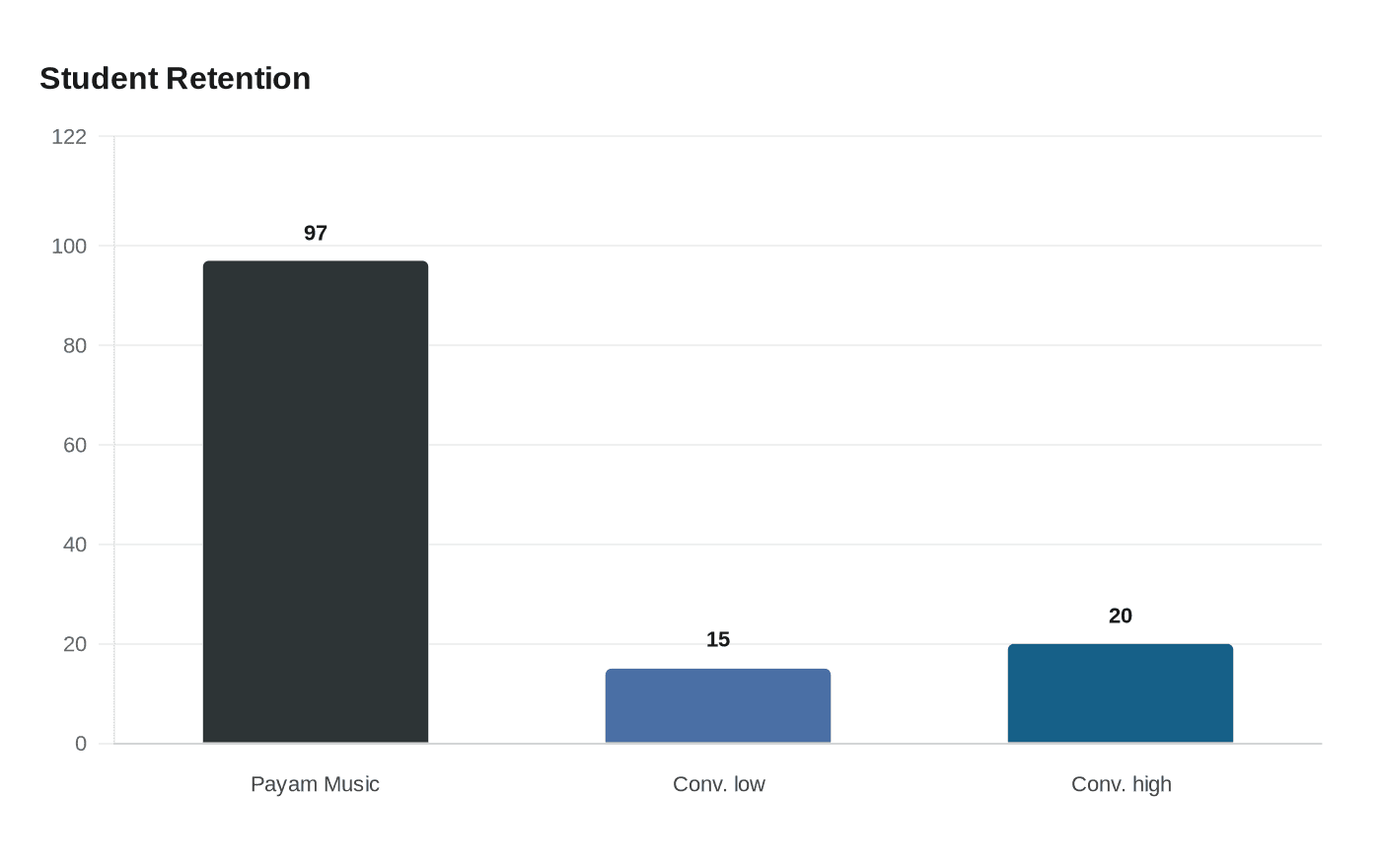
The scale of the operation helps explain why the method has become a talking point beyond one studio. A profile of Khastkhodaei says he has nearly 500 students. Payam Music says its students learn piano three times faster than in traditional lessons, and that 97% continue beyond their first year, compared with 15% to 20% in conventional programs. Those are company claims, but they point to the central test of the Payam Method: whether a more flexible, psychology-informed approach can improve both retention and results in a discipline long defined by repetition.
CBS News and 60 Minutes profiled Khastkhodaei in a segment titled The Payam Method that aired Sunday, May 24, 2026. The broadcast said his students were sweeping national competitions, and described him as a teacher whose method had also won over a legendary tech innovator and an Oscar-winning composer. For now, the sharper question is not whether Payam Music has produced trophy winners, but whether its mix of discipline, choice and cultural fit can be replicated beyond one charismatic founder.
This article was produced by Prism’s automated news system from verified source data, official records, and press releases, then run through automated quality and moderation checks before publishing. The system is built and supervised by the people who set the standards it runs under. Read our full AI policy.
Did this article answer your question?