IMO urges evacuation of 20,000 seafarers trapped in Persian Gulf
About 20,000 seafarers are stuck on 2,000 ships in the Persian Gulf, where missile attacks and GPS jamming have turned a shipping lane into a humanitarian trap.
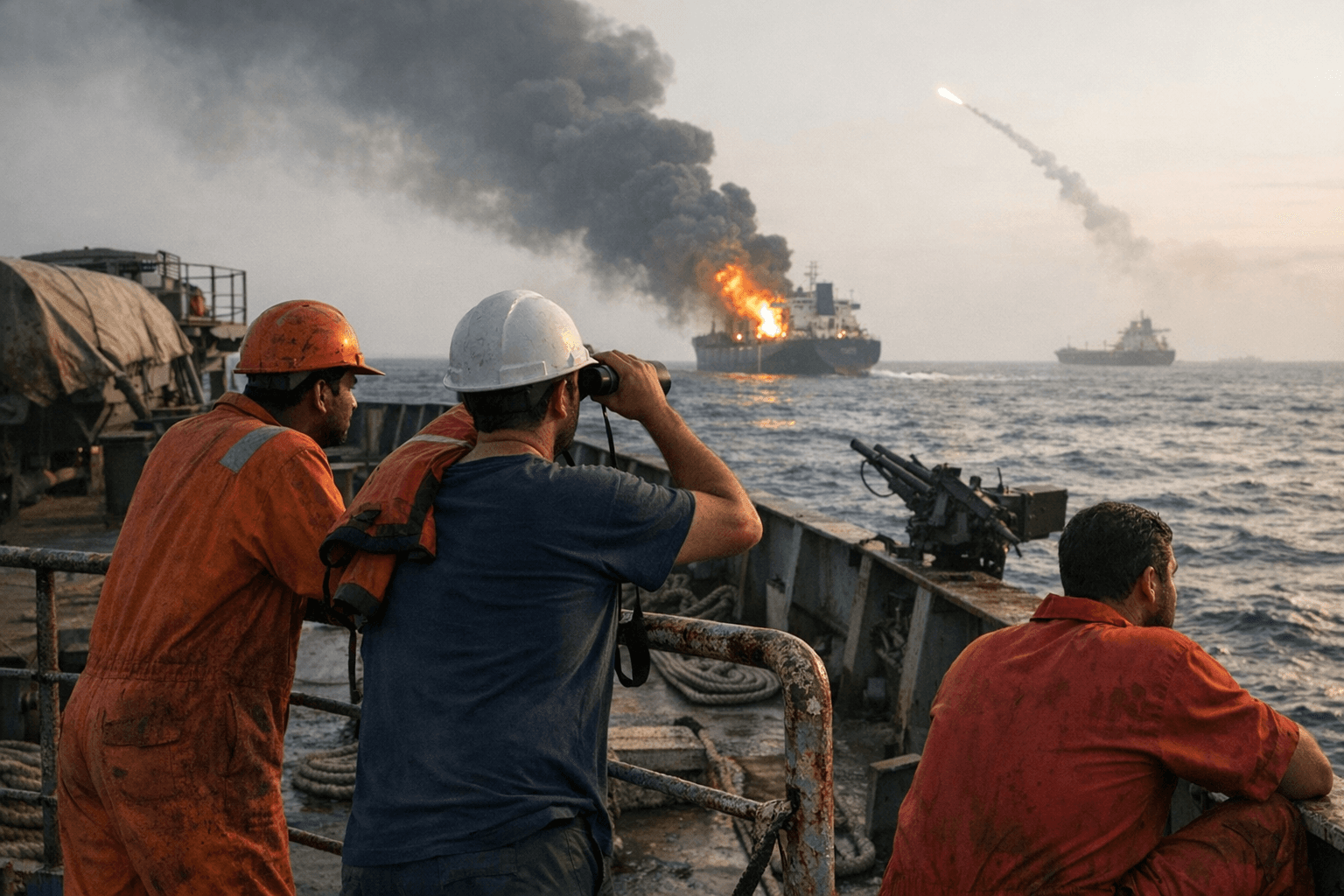
The most urgent crisis in the Persian Gulf is not the movement of oil or warships but the confinement of people who cannot leave. About 20,000 civilian seafarers remain aboard roughly 2,000 vessels, trapped in waters where the International Maritime Organization says commercial shipping has come under repeated attack and escape routes remain unclear.
The IMO said it had confirmed 21 attacks on commercial ships since February 28, 2026, leaving 10 seafarers dead and several others injured. On April 2, IMO Secretary-General Arsenio Dominguez urged states to back diplomatic efforts to evacuate the crews and to establish humanitarian corridors for urgent assistance. The organization described the situation as unprecedented in the post-Second World War era, a measure of how quickly a commercial route has become a human disaster.
For the crews, the danger is immediate and personal. Captain Raman Kapoor said his crude oil tanker had been anchored in the northern Persian Gulf since the war began on February 28 and that he and his crew had seen missiles and explosions nearby. “There is no safe place here,” he said. His account captures the central fact of the crisis: the people keeping global trade moving are now stranded in harm’s way, with no clear exit if the fighting intensifies.
The risk extends beyond the vessels themselves. Navigation across the Strait of Hormuz, the Gulf of Oman and the Arabian Gulf has been complicated by GPS and GNSS jamming and spoofing, which have created false vessel tracks and intermittent signal loss. That interference has added another layer of uncertainty for ships already trying to avoid missiles, explosions and the threat of further attacks.
The shipping chokepoint matters far beyond the region. The U.S. Energy Information Administration said about one-fifth of global liquefied natural gas trade transited the Strait of Hormuz in 2024, mainly from Qatar. It said flows through the strait in 2024 and the first quarter of 2025 accounted for more than one-quarter of total global seaborne oil trade and about one-fifth of global oil and petroleum product consumption.
The IMO Council met on March 18 and 19 to discuss the crisis and called for a safe maritime framework to facilitate evacuation of merchant ships. The United Nations has also formed a dedicated task force to develop technical mechanisms for humanitarian needs in the Strait of Hormuz. Some reports say about 38 Indian ships, with around 1,100 sailors, are among the stranded vessels, underscoring how widely the crisis has spread across national flags while the people aboard wait for a way out.
This article was produced by Prism’s automated news system from verified source data, official records, and press releases, then run through automated quality and moderation checks before publishing. The system is built and supervised by the people who set the standards it runs under. Read our full AI policy.
Did this article answer your question?