In eastern Congo, radio becomes a lifeline in Ebola fight
Radio in Bunia turned into Ebola’s other front line, carrying facts into neighborhoods where rumors spread faster than the virus.

In eastern Congo, the fight against Ebola was also a fight over trust. In Bunia, journalist Vérité Johnson turned Radio Télévision Mont Bleu into a daily public-health lifeline, using a 45-minute broadcast to explain the disease, answer listener questions and bring in health specialists as fear and rumor raced through Ituri Province.
The need was urgent. Congolese authorities announced the outbreak on May 15, 2026, and Africa Centres for Disease Control and Prevention said preliminary testing found Ebola virus in 13 of 20 samples, with Bundibugyo virus detected in the Democratic Republic of the Congo outbreak. At that point, Africa CDC reported about 246 suspected cases and 65 deaths in the country. The outbreak was later confirmed as Congo’s 17th since Ebola was first identified there in 1976, and the country’s second involving Bundibugyo virus.
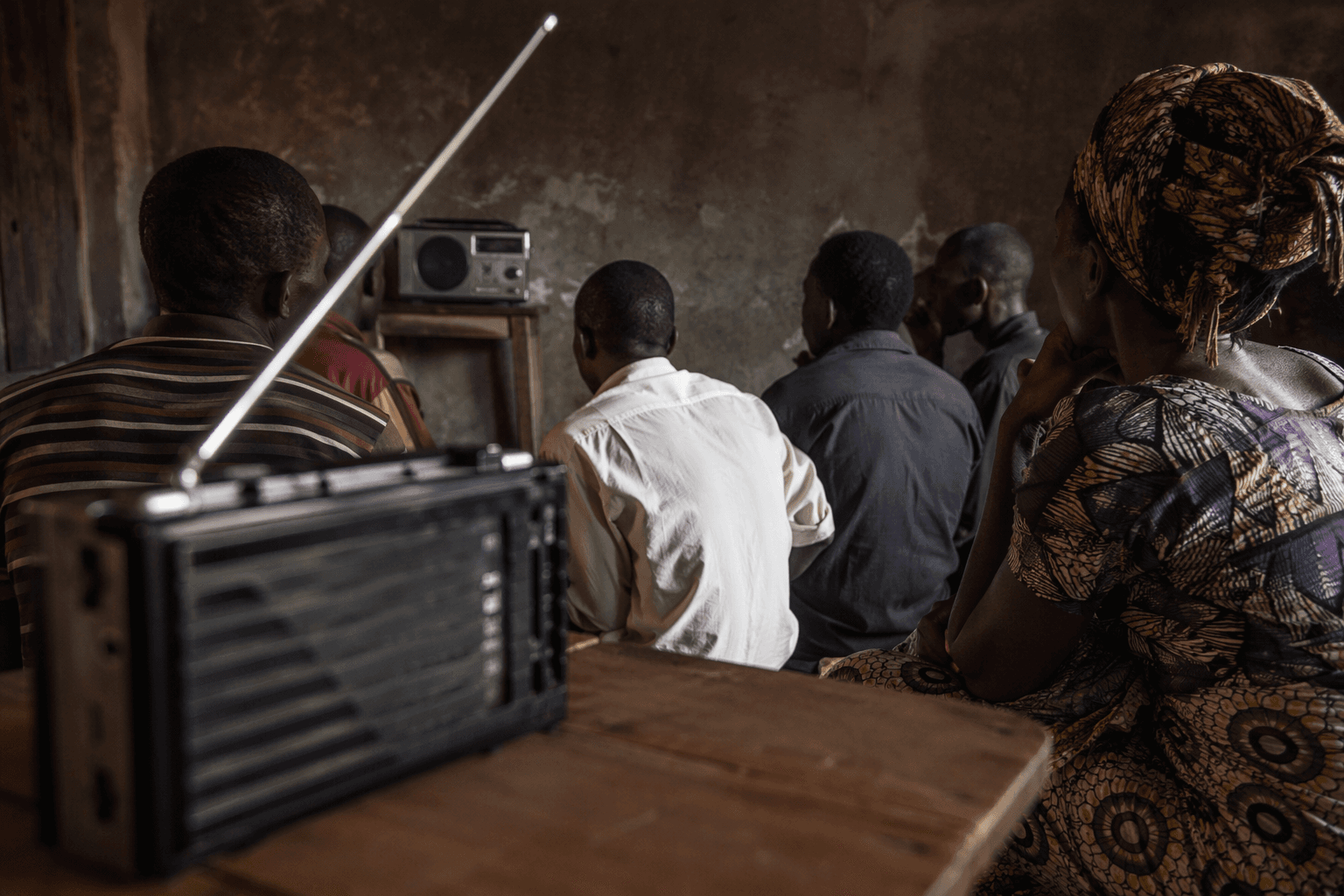
The virus spread in a setting already shaped by fear and disbelief. Some residents dismissed the outbreak as a Western conspiracy, while local voices in Bunia described rumors about a “mystical coffin” that helped empty neighborhoods during earlier waves of deaths. Johnson said there was still “a layer of resistance within the population,” which is why the station kept returning to the same message: repeat the facts, answer the rumors quickly and keep the information local.
That approach mattered because the outbreak began moving before many communities understood what they were facing. The International Federation of Red Cross and Red Crescent Societies said three volunteers from the Mongbwalu branch in Djugu Territory were believed to have been exposed while doing dead-body management on March 27, 2026, before Ebola had been recognized. Africa CDC said insecurity, mining-related mobility, gaps in contact listing and the proximity to Uganda and South Sudan were all complicating response efforts.
By May 29, the World Health Organization said the outbreak had spread beyond Ituri into North Kivu and South Kivu, with 906 suspected cases and 223 suspected deaths in the DRC and 134 confirmed cases and 18 confirmed deaths across the DRC and Uganda. The situation kept worsening in the days that followed, with later DRC ministry reporting summarized by the Harvard Humanitarian Initiative showing 381 confirmed cases and 64 deaths in the country by June 3.
On June 5, WHO and Africa CDC launched a six-month continental preparedness and response plan worth US$518 million, covering June through November and focusing on community engagement, surveillance, laboratory testing, infection prevention and control, logistics and essential health services. Officials said no licensed vaccines or therapeutics were specifically approved for Bundibugyo Ebola, making prevention, isolation and public trust even more important. The U.S. Centers for Disease Control and Prevention said the risk to the American public remained low and that Ebola spreads through direct contact with bodily fluids, not casual contact or air. In eastern Congo, that medical truth depended on an information system strong enough to reach people before rumor did.
This article was produced by Prism’s automated news system from verified source data, official records, and press releases, then run through automated quality and moderation checks before publishing. The system is built and supervised by the people who set the standards it runs under. Read our full AI policy.
Did this article answer your question?