India Court Ruling Poses Major Threat to Women's Religious Freedoms
India's Supreme Court opened hearings to potentially overturn a landmark 2018 ruling that gave women of all ages access to the Sabarimala temple.
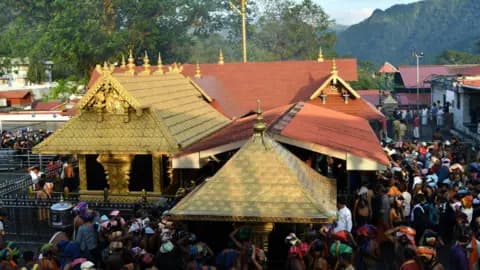
A nine-judge Constitution Bench of India's Supreme Court convened on Tuesday to begin reviewing one of the most consequential gender and religious freedom cases in the country's post-independence history, opening proceedings that experts warn could strip women across multiple faiths of hard-won rights to worship freely.
Eight years after a five-judge bench divided 4:1 to permit women of all ages to enter the Sabarimala temple, the matter returned to court on April 7, 2026, before a nine-judge bench in what legal observers are calling a pivotal constitutional moment.
The bench, headed by Chief Justice of India Surya Kant and comprising Justices Joymalya Bagchi, B.V. Nagarathna, R. Mahadevan, M.M. Sundresh, Ahsanuddin Amanullah, Aravind Kumar, A.G. Masih, and Prasanna B. Varale, was constituted to re-examine the long-pending Sabarimala temple entry matter along with a batch of connected cases raising larger constitutional questions on the scope and ambit of religious freedom practised by multiple faiths.
The original 2018 ruling had struck down the centuries-old tradition barring women of menstruating age from entering the Lord Ayyappa temple in Pathanamthitta, Kerala. That 4:1 majority decision prompted a fierce backlash. More than 50 review petitions were filed by devotees, religious groups, and organisations arguing that the court interfered with essential religious practices, with Lord Ayyappa devotees claiming they form a separate religious denomination.
The stakes extend far beyond a single hill shrine. Tagged to the review are 66 matters, including petitions challenging the restriction on Muslim women entering mosques and dargahs, the rights of Parsi women who marry outside their community to access fire temples, the validity of excommunication among Dawoodi Bohras, and a 2017 petition seeking a ban on female genital mutilation.
The bench will consider the balance between individual fundamental rights, particularly equality, dignity, and non-discrimination under Articles 14 and 15, and the collective rights of religious denominations under Articles 25 and 26, as well as the permissible limits of exclusionary practices in religious spaces.
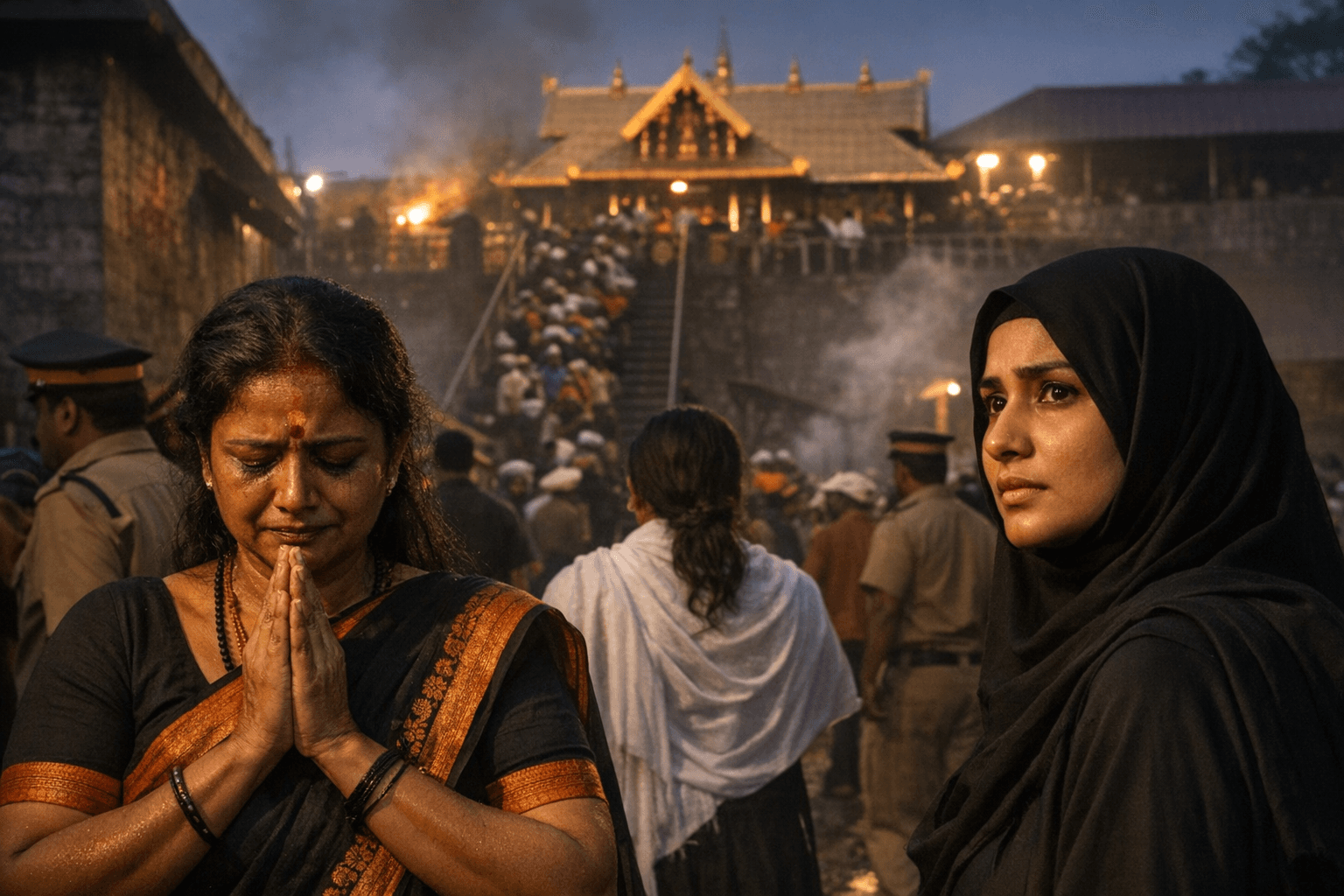
Seven distinct constitutional questions frame the proceedings. Among them is a procedurally pointed question: whether a person with no connection to a religious denomination can challenge that denomination's practices through a public interest litigation. The original 2006 petition was filed by the Indian Young Lawyers Association, whose members are not Ayyappa devotees, and the answer will shape PIL standing in religious freedom litigation for years.
The hearing schedule allots three days to each side: review petitioners, those seeking to restore the traditional restriction on women aged 10 to 50, will argue from April 7 through April 9, while parties opposing the review will present arguments April 14 through 16. Rejoinder submissions are listed for April 21, followed by concluding arguments from the amicus curiae on April 22. The court emphasised that all parties must strictly adhere to the schedule.
The hearing opened two days before Kerala polls to elect a new government, making it a political flashpoint in addition to a constitutional one. In a tactical move ahead of the elections, the Kerala government requested to be listed alongside those seeking to uphold Sabarimala traditions, shifting from its previous position.
The review process itself, legal scholars note, represents a direct threat to the protections women gained in 2018. Should the nine-judge bench overturn the earlier verdict, the traditional ban barring women of menstruating age from Sabarimala would be effectively restored, and the precedent could reverberate across the 66 connected cases involving Muslim, Parsi, and Dawoodi Bohra women. The court's eventual ruling will set the constitutional boundary between India's guarantee of equality and the state's deference to religious custom.
This article was produced by Prism’s automated news system from verified source data, official records, and press releases, then run through automated quality and moderation checks before publishing. The system is built and supervised by the people who set the standards it runs under. Read our full AI policy.
Did this article answer your question?


