India keeps buying Russian oil despite U.S. sanctions waivers lapse
India said it kept buying Russian crude before, during and after U.S. waiver periods, underscoring how discounted oil and supply security still trump sanctions politics.

India’s Russian oil purchases continued despite the lapse of a U.S. sanctions waiver, with a senior petroleum ministry official saying the country had been buying before, during and after the waiver period. The message from New Delhi was plain: India’s refiners were following commercial logic, not Washington’s calendar.
Sujata Sharma, a joint secretary in the Ministry of Petroleum and Natural Gas, said India had kept buying Russian oil through every phase of the waiver and that there was no crude shortage. Her remarks reflected a broader policy that has made price, availability and supply security the main drivers of India’s import choices, even as Western governments have tried to tighten pressure on Moscow over the war in Ukraine.

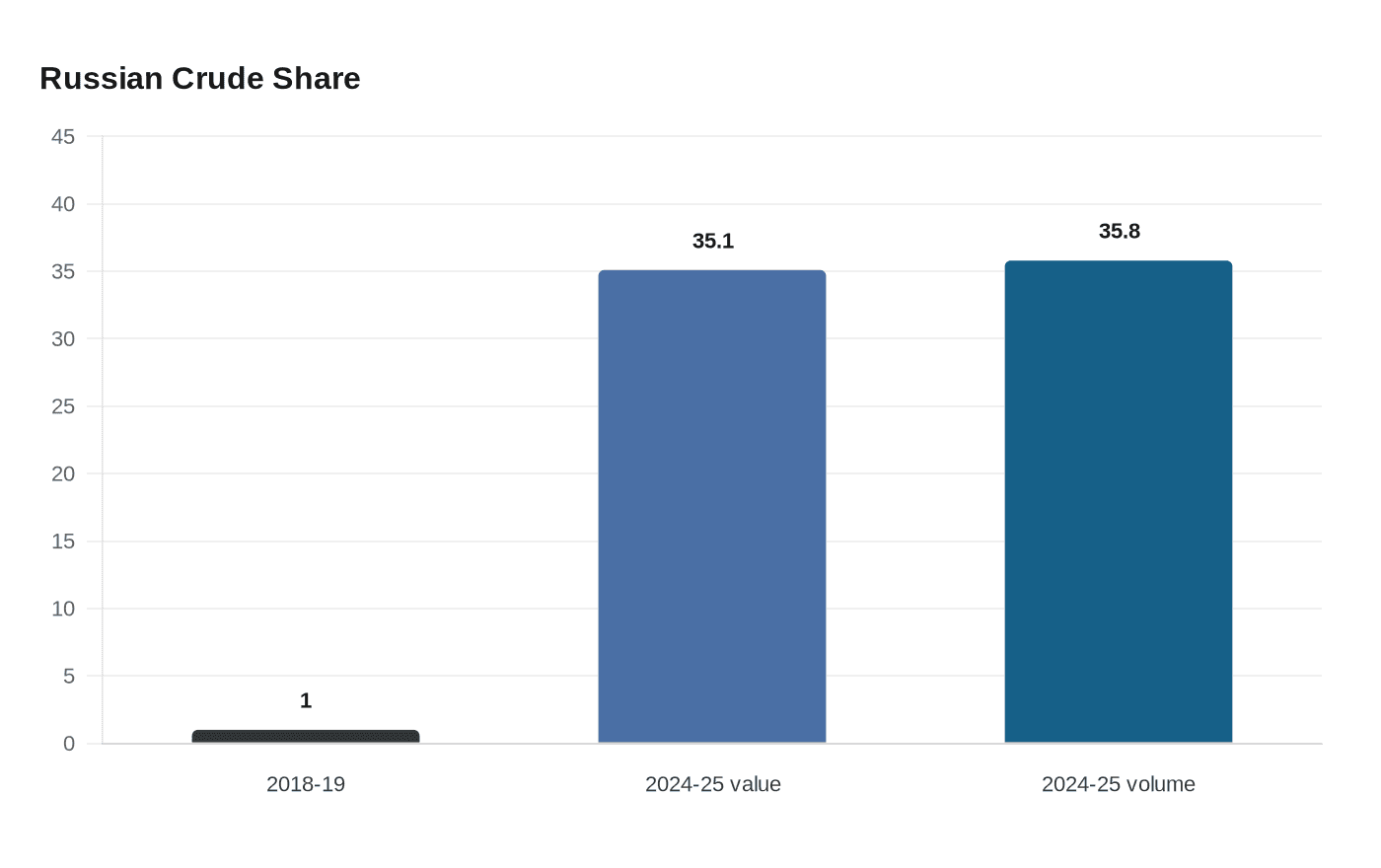
The numbers show how far that shift has gone. Reuters reported in April 2025 that Russia supplied 36% of India’s oil imports in fiscal year 2024-25, making it India’s top oil supplier for a third straight year. CPR India said Russia’s share of India’s petroleum crude imports rose from just 1% in 2018-19 to 35.1% by value and 35.8% by volume in 2024-25. In practical terms, a trade that was negligible before the 2022 invasion has become central to how India feeds its economy.
India’s reliance on foreign crude gives those choices added weight. The International Energy Agency has said India’s current stockholding levels amount to about 66 days of net-import cover, while strategic petroleum reserve stocks total 26 million barrels, equal to seven days. That cushion helps explain why officials in New Delhi can afford to take a hard line on commercial flexibility, even when tensions in West Asia or shipping disruptions threaten other supply routes.
The latest waiver drama did little to change the underlying market. Reuters reported on April 21, 2026, that Russian oil sales to India were expected to stay near record highs in April and May after a new U.S. sanctions waiver, with refiners already having secured much of their supply through non-sanctioned entities and vessels. Then, on May 16, 2026, the U.S. Treasury Department allowed the waiver on Russian seaborne oil to lapse. For India, the signal was that strategic autonomy and refinery economics still outweighed sanctions pressure, and that discounted Russian crude remained too useful to give up.
Know something we missed? Have a correction or additional information?
Submit a Tip