India Moves to Lift Five-Year Ban on Chinese Bidders for Public Contracts
India’s finance ministry is preparing to remove restrictions that have barred many Chinese firms from competing for government contracts since 2020, according to government sources. The potential rollback aims to revive competition, accelerate delayed projects in power and infrastructure, and recalibrate economic ties with China, but it must still clear approval from the prime minister’s office.
India’s finance ministry is planning to scrap curbs put in place in 2020 that limited companies from countries sharing land borders with India from bidding for government procurement, two government sources said. The move comes as diplomatic and border tensions ease and several ministries press for exemptions to avoid project delays.
The 2020 measures required firms from such countries to register with an Indian government committee and obtain what officials described as "additional registration and security clearances" before participating in public procurement. Chinese companies were the most affected, effectively reducing the pool of qualified bidders across large infrastructure, power transmission and renewable energy projects.
A second government source said "several ministries have requested exemptions to overcome the constraints that could derail projects in their sectors." Officials and advisers argue that lifting the curbs would restore competition in procurement, lower costs and speed execution of capital projects that have been postponed or slowed by limited supplier choice. A final decision is understood to rest with Prime Minister Narendra Modi’s office.
Statistical evidence underscores the economic impact of the 2020 restrictions. Independent analysis cited by government advisers shows that the value of new projects awarded to Chinese bidders fell 27 percent year on year to $1.67 billion in 2021, according to a 2024 Observer Research Foundation report. Indian commentators have also suggested the 2020 measures effectively sidelined bidders for a pipeline of government contracts estimated at $700 to $750 billion.
Markets reacted swiftly to the prospect of a rollback. Shares of Bharat Heavy Electricals Limited hit their 10 percent lower circuit limit, trading at Rs 273.20 around 3 p.m. on Jan. 8, 2026. Other capital goods and infrastructure names moved lower, with Siemens down about 4 percent, Hitachi Energy and ABB India off roughly 4 to 4.5 percent, and Larsen & Toubro nearly 3 percent. Analysts noted Chinese firms such as CRRC are significant competitors in rail equipment tenders and other segments of the infrastructure supply chain.
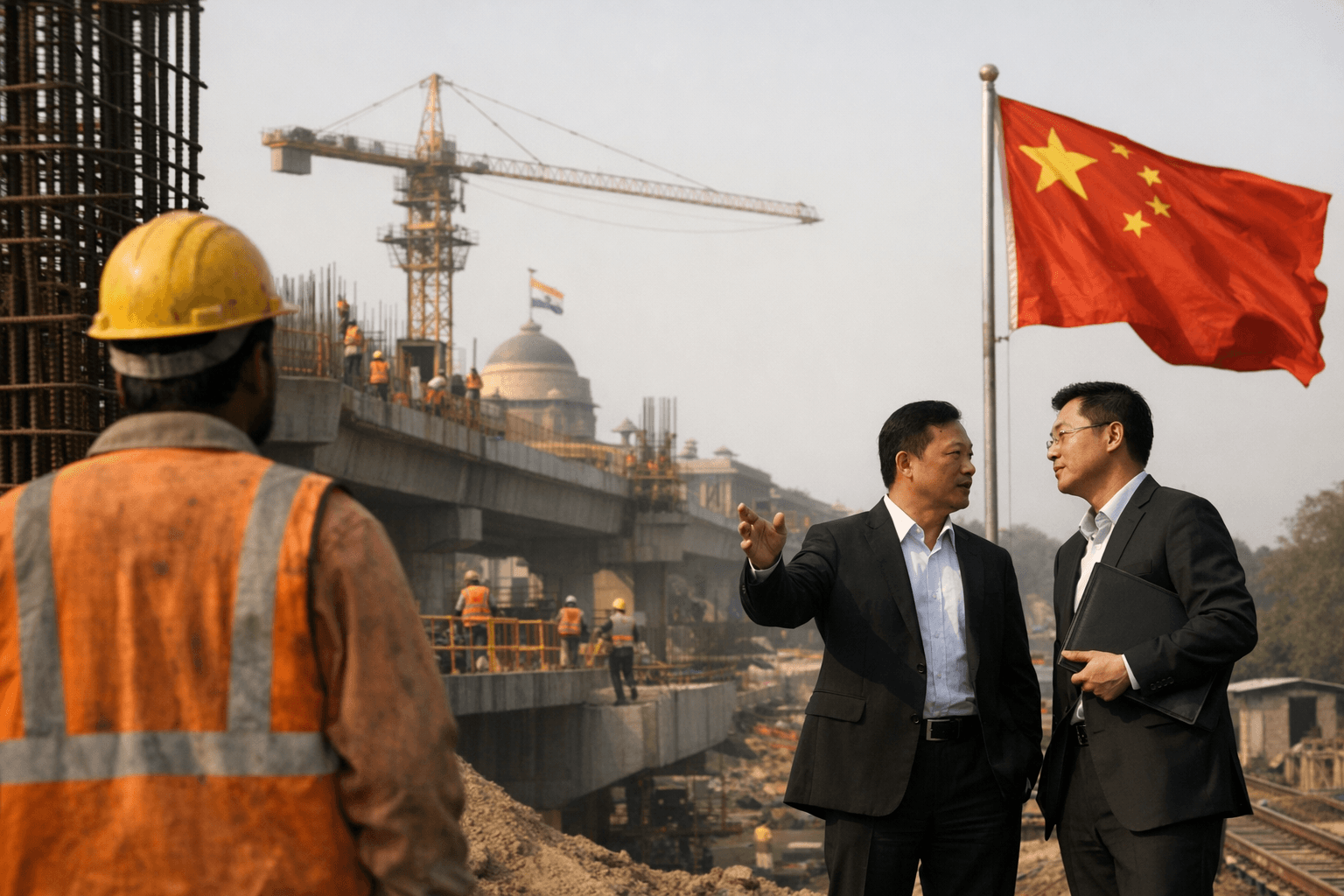
Policy tradeoffs are clear. Reintroducing Chinese bidders could reduce procurement costs and expand the supply base for complex equipment and project execution, potentially accelerating India’s large-scale electrification and renewable targets. At the same time, domestic manufacturers that gained contracts in the absence of Chinese competition stand to lose market share, and policymakers will need to recalibrate national security screening and risk mitigation mechanisms.
The proposal is described by officials as part of a broader reset of commercial ties with China rather than a full policy reversal. Any change would likely be targeted by sector and procurement value to balance immediate project needs against longer-term strategic considerations. Procedural steps remain, and without formal government notification the plan stays at the approval stage.
Investors and industry groups will watch closely. If approved, the move could unlock stalled capital spending and alter competitive dynamics across heavy industry and infrastructure, while testing how economic pragmatism is balanced with geopolitical caution in the coming phase of India-China relations.
This article was produced by Prism’s automated news system from verified source data, official records, and press releases, then run through automated quality and moderation checks before publishing. The system is built and supervised by the people who set the standards it runs under. Read our full AI policy.
Did this article answer your question?

