India, New Zealand sign free trade deal to deepen economic ties
India and New Zealand signed a pact that makes more than half of New Zealand exports duty-free immediately, as both seek wider Indo-Pacific trade options.
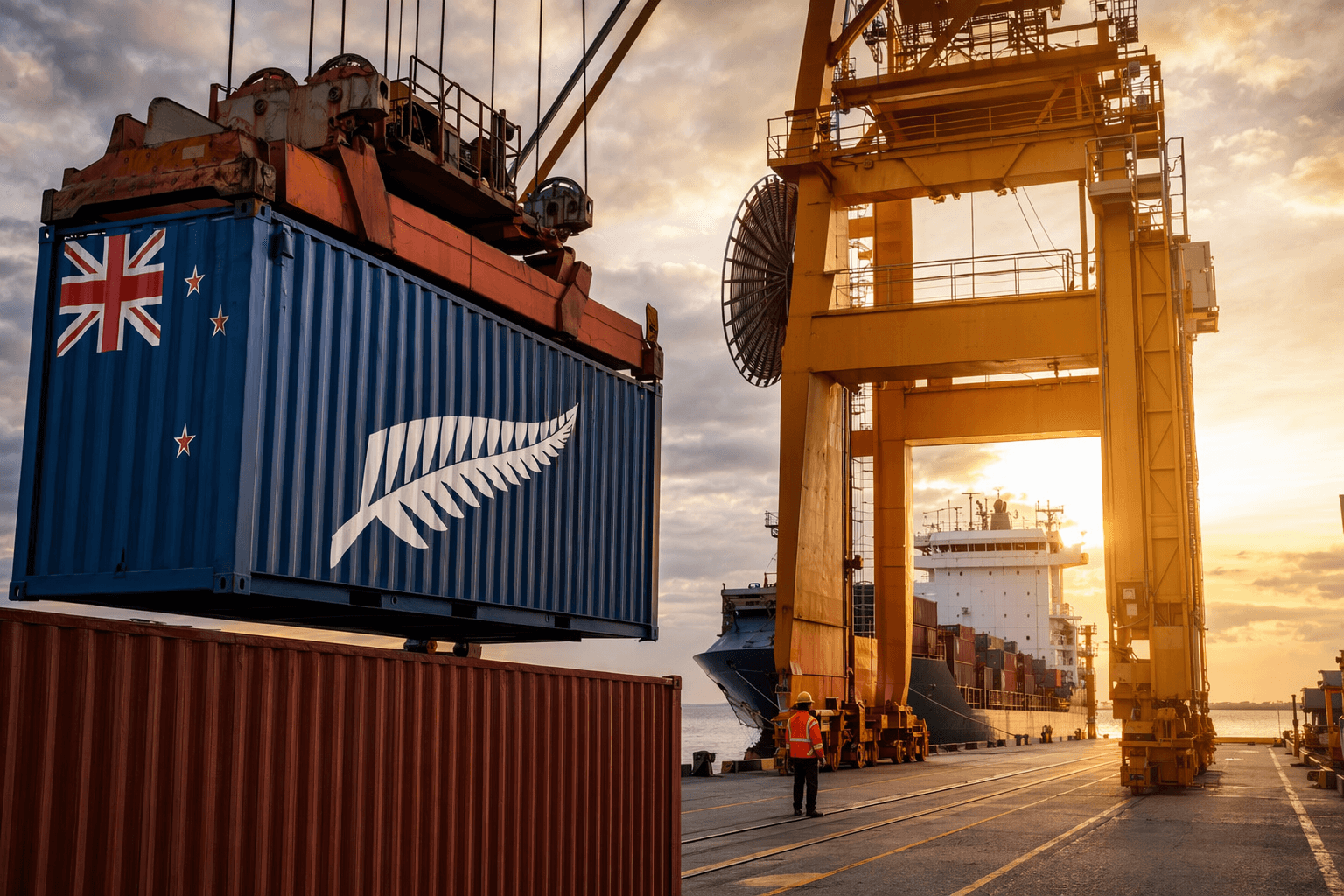
India and New Zealand signed a free trade agreement in New Delhi that is designed to do more than trim tariffs. The deal gives New Zealand exporters a faster path into one of Asia’s biggest consumer markets, while giving India another way to widen its trade links beyond traditional partners as global supply chains remain under strain.
The agreement was signed on April 27 by Indian Commerce Minister Piyush Goyal and New Zealand Trade Minister Todd McClay, after negotiations were formally launched on March 16, 2025 and concluded in December 2025 after five formal rounds. India’s Commerce Ministry has described it as one of India’s fastest-concluded trade pacts, and both governments have framed it as part of a wider push to make bilateral trade more predictable.

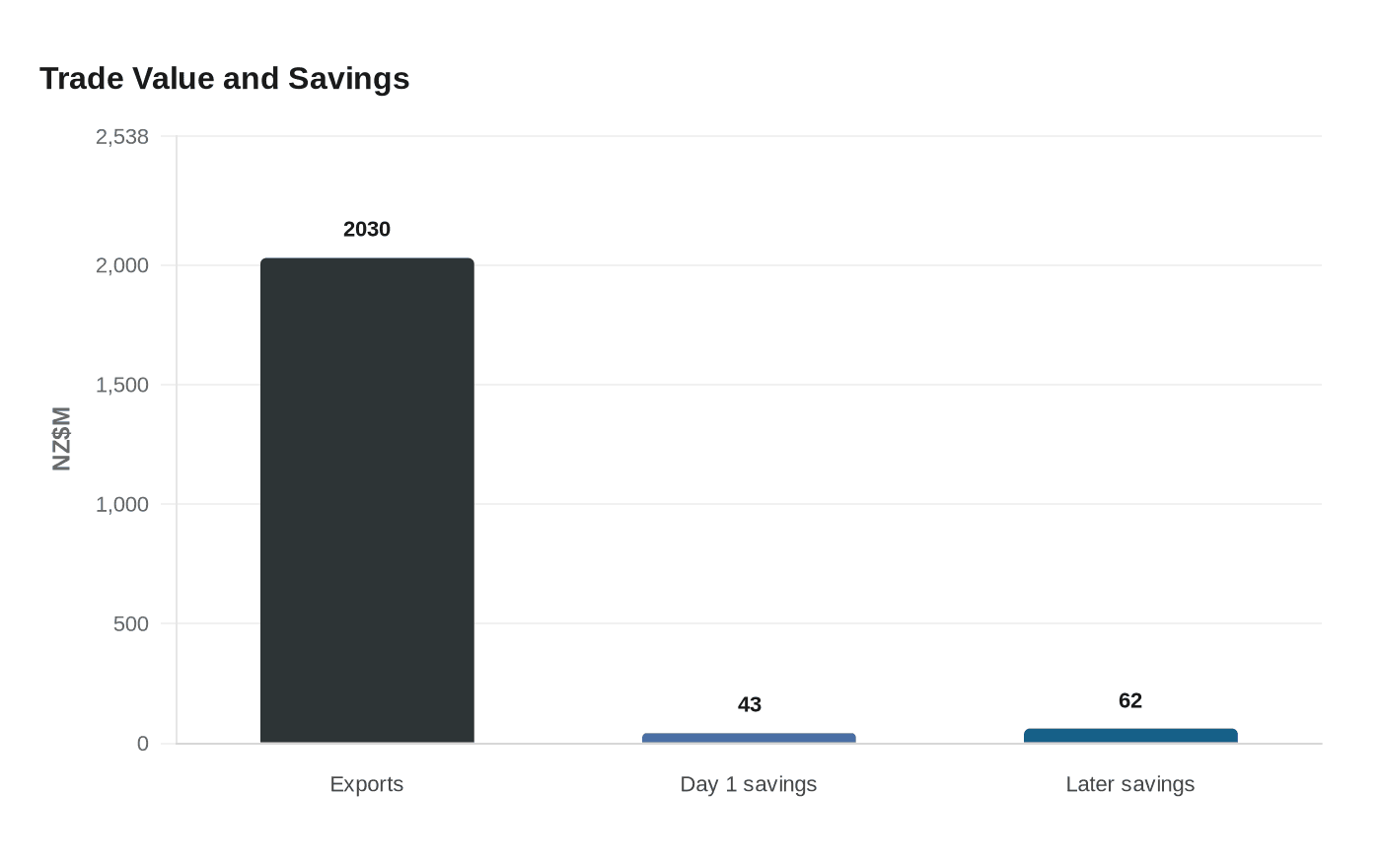
New Zealand sees the deal as a direct commercial win. India was its 11th largest goods and services export market in the year ended December 2025, with exports totaling NZ$2.03 billion. Wellington said 95% of current exports will face tariff-free or sharply reduced access under the pact, with more than half duty-free from day one and more than 80% tariff-free once the agreement is fully phased in. At current trade levels, New Zealand estimates tariff savings of $43 million on day one, rising to $62 million.
The first gains are likely to flow to exporters in sectors that already have a clear route into Indian demand. New Zealand has highlighted immediate tariff elimination on sheep meat, wool, coal and more than 95% of forestry and wood exports, along with phased cuts for apples, kiwifruit, cherries, avocados, persimmons, blueberries, wine and mānuka honey. Reuters also reported that the deal lowers tariffs on fruit such as kiwifruit and apples and expands access for skilled workers. New Zealand’s foreign ministry said India Customs will release goods within 48 hours, and within 24 hours for perishables and express consignments, a practical change that could matter for food exporters and freight-sensitive shipments.
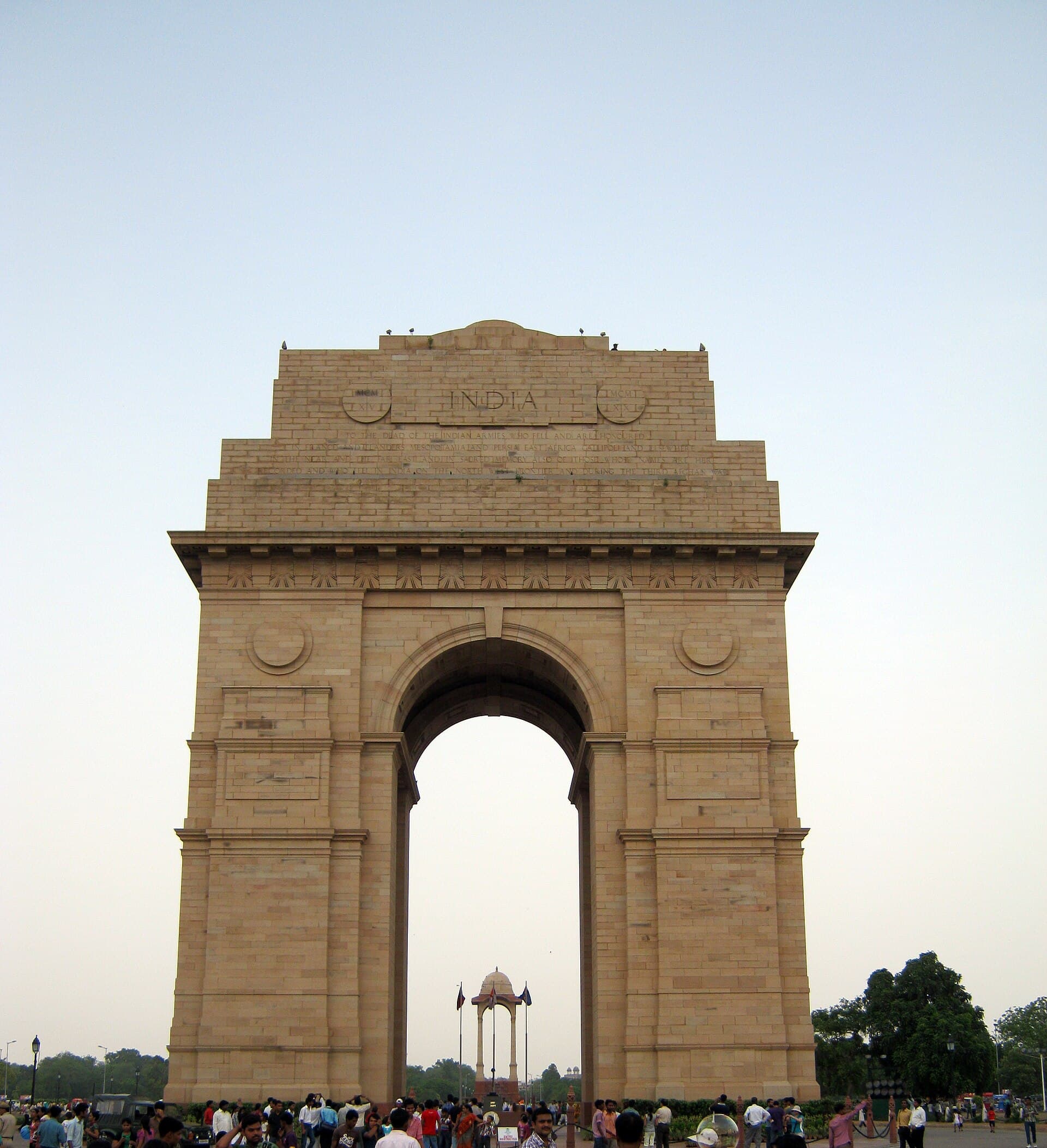
The strategic logic runs both ways. New Zealand’s government said India is a priority because of its scale, growing influence and regional importance, and because the pact supports a target of doubling export value in 10 years. Officials also pointed to India’s 300,000-strong diaspora in New Zealand as a “living bridge” linking business, education and culture. For India, the agreement expands market access, services trade, mobility pathways and long-term investment opportunities at a moment when many countries are rethinking dependence on narrower trade lanes.
The politics of the deal are already visible at home in New Zealand. McClay led a cross-party delegation and more than 30 business representatives to New Delhi for the signing, but Labour leader Chris Hipkins accused the government of “playing politics” with trade policy and said the deal lacked majority support in Parliament. Even so, the agreement now moves into the domestic scrutiny phase, where its real limits and benefits will be tested against the promises made in New Delhi.
This article was produced by Prism’s automated news system from verified source data, official records, and press releases, then run through automated quality and moderation checks before publishing. The system is built and supervised by the people who set the standards it runs under. Read our full AI policy.
Did this article answer your question?

