India regulator warns Tata iPhone parts plant over groundwater pollution
Tamil Nadu regulators said Tata’s iPhone parts plant polluted farm groundwater and warned of a shutdown unless the company answers. Farmers near Hosur say the water is already contaminated.

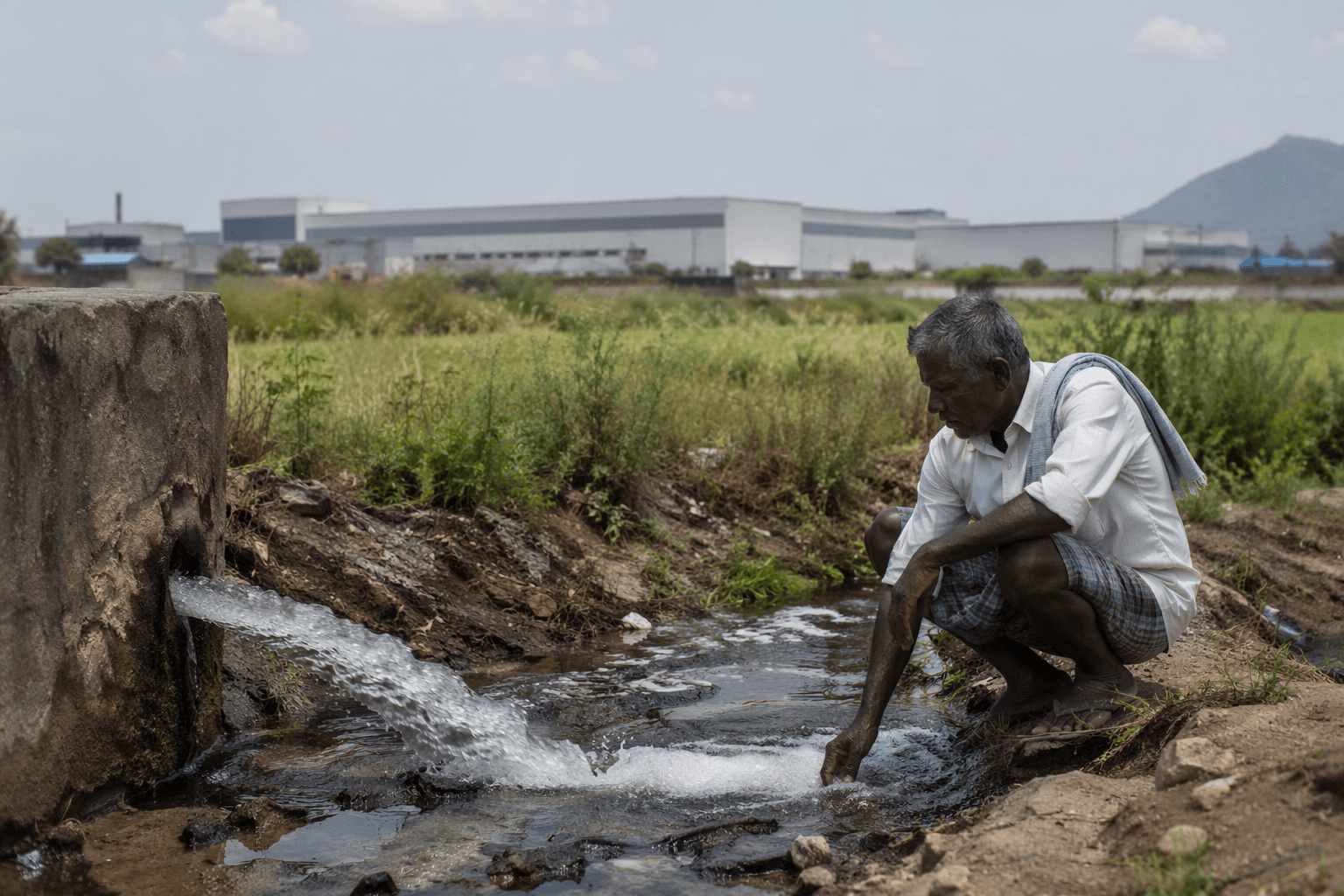
Apple’s drive to diversify away from China is colliding with a much older Indian reality: farms, wells and pollution enforcement. In Hosur, in southern Tamil Nadu, state regulators alleged that wastewater from Tata Electronics’ iPhone components plant contaminated groundwater used by nearby agricultural land and warned that the factory could face a forced shutdown if Tata did not give a satisfactory explanation.
The Tamil Nadu Pollution Control Board said inspectors visited the site five times between December 2025 and May 2026 after repeated complaints from farmers. In a notice dated May 25, 2026, the board alleged that wastewater had been discharged into a rainwater harvesting pond inside the facility and that the pond overflowed into adjacent agricultural lands, contaminating wells used by local farm owners.
The dispute lands at a sensitive moment for India’s electronics push. Tata Electronics is one of Apple’s most important manufacturing partners in South Asia and, by Reuters’ previous reporting, the second-biggest supplier to Apple in the region after Foxconn. Apple began making iPhones in India in 2017, and in February 2026 it said it was expanding its Supplier Employee Development Fund in India and launching new training courses with Tata Electronics at more than 25 supplier sites.
The Hosur plant itself has become a symbol of that broader strategy. Tata announced the project in 2020 as a 5,000 crore investment, with 500 acres allotted by the Tamil Nadu Industrial Development Corporation. Later reports said the unit employed more than 15,000 people and that Tata had been planning a major expansion that could lift headcount to roughly 25,000 to 28,000 workers.
Tata told Reuters that it had commissioned an independent analysis by an accredited laboratory and that the study found the company was in full compliance with regulatory norms. That response sets up a direct conflict between a fast-growing manufacturing asset and a local allegation of environmental harm that could slow production or trigger a shutdown.
For farmers near Hosur, the question is immediate: whether the wells are safe, whether the contamination has spread, and whether regulators will force a fix before more land is affected. For Tata and Apple, the case is also a test of whether supply-chain expansion can keep pace with pollution controls, community oversight and the credibility of India’s bid to become a global electronics hub.
This article was produced by Prism’s automated news system from verified source data, official records, and press releases, then run through automated quality and moderation checks before publishing. The system is built and supervised by the people who set the standards it runs under. Read our full AI policy.
Know something we missed? Have a correction or additional information?
Submit a Tip

