Kalshi, Crypto.com and Polymarket sue Kentucky over prediction market tax
Kalshi, Crypto.com and Polymarket are suing Kentucky over a first-in-the-nation tax, putting state power over prediction markets on trial.

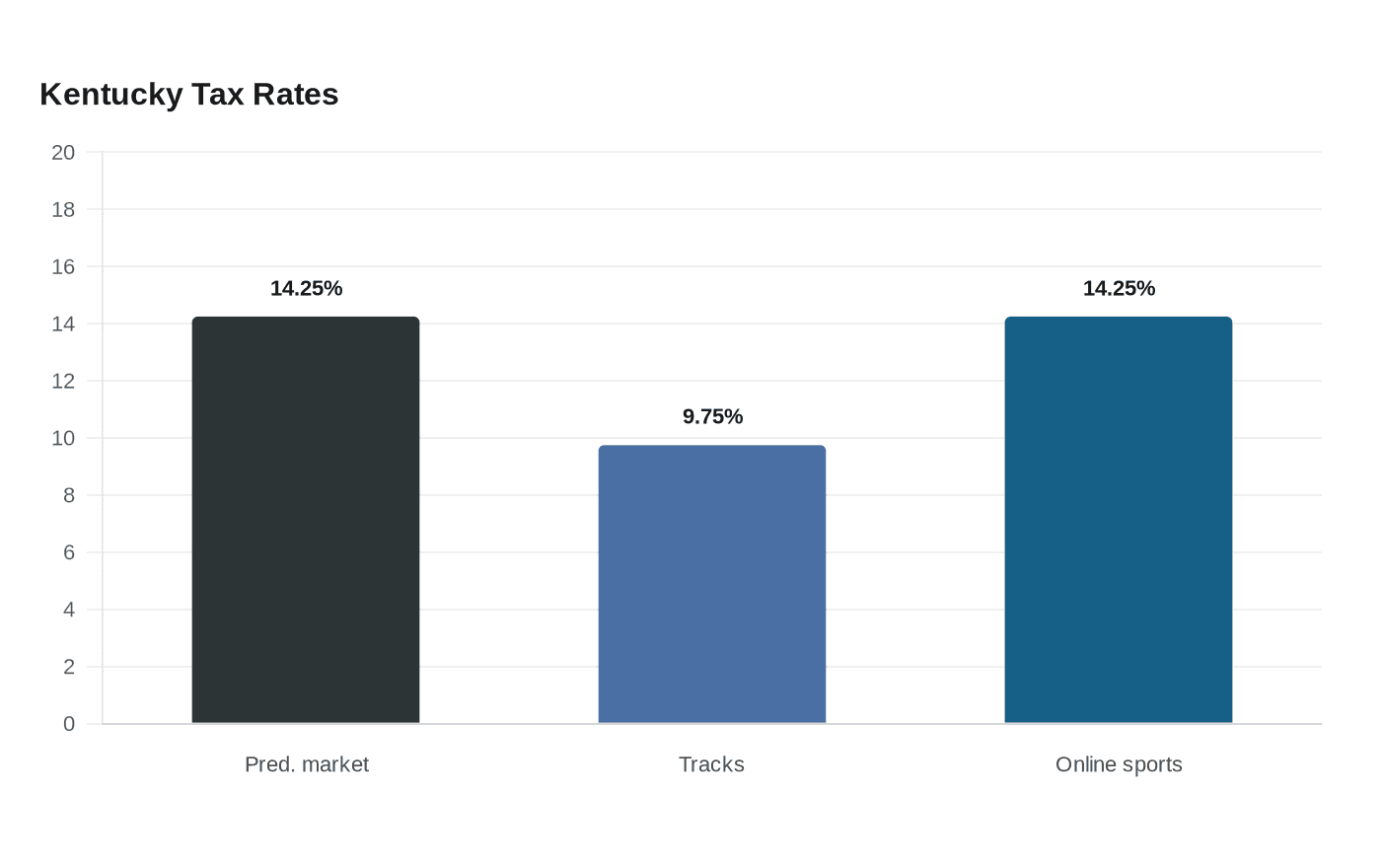
A coalition led by Kalshi, Crypto.com and Polymarket has challenged Kentucky’s new 14.25% tax on prediction-market transaction fees, turning a state revenue fight into an early national test of who gets to regulate and tax fast-growing event-contract platforms. The lawsuit, filed under the name Coalition for Fair Markets, says Kentucky’s levy is discriminatory, unconstitutional and preempted by federal law.
The case reaches far beyond Frankfort. Prediction markets sit at the intersection of trading, betting and financial speculation, and the legal battle could shape whether states treat them like gambling, like finance, or as a category of their own. If the coalition wins, Kentucky could lose a policy experiment before it takes effect. If the state prevails, other states may be emboldened to impose similar taxes or fees on operators that have expanded quickly around politics, sports and entertainment.

Kentucky lawmakers approved the tax in April through House Bill 757, which the Kentucky Legislative Research Commission says was delivered to the Secretary of State on April 14, 2026, as Acts Chapter 161. The prediction-markets excise tax is set to take effect on January 1, 2027. Kentucky already taxes other wagering activity, including a 9.75% excise tax on wagers placed at licensed tracks and a 14.25% excise tax on online sports wagers, a comparison the plaintiffs are likely to use to argue that prediction markets are being singled out for different treatment.
Kentucky Attorney General Russell Coleman has said his office will defend the statutes and the state’s sports-betting laws. On May 11, 2026, Coleman said Kentucky has jurisdiction to regulate sports betting on prediction-market platforms like Kalshi and Polymarket, arguing that they let users place wagers on game winners, point spreads and player statistics while sidestepping consumer protections and tax requirements under state gambling law.
The dispute comes as federal regulators are also moving. The Commodity Futures Trading Commission issued an advance notice of proposed rulemaking on prediction markets in March 2026, then on June 10 proposed rules on whether certain contracts are contrary to the public interest. Enforcement concerns have also sharpened after incidents involving alleged misuse of nonpublic information on prediction-market platforms, including a case involving former Rep. George Santos and another in which a U.S. Army soldier was charged in connection with Polymarket trading.
For Kentucky, the lawsuit is about more than a projected tax stream. It is a direct challenge to how much room states have to tax hybrid digital markets that borrow from both Wall Street and Las Vegas, and the answer could help define the business model for prediction markets nationwide.
This article was produced by Prism’s automated news system from verified source data, official records, and press releases, then run through automated quality and moderation checks before publishing. The system is built and supervised by the people who set the standards it runs under. Read our full AI policy.
Know something we missed? Have a correction or additional information?
Submit a Tip