India Restores Ancient Royal Kitchen That Has Never Stopped Serving Food
Sailana Palace in Madhya Pradesh has been renovated and reopened for visitors, as India's royal families open centuries of guarded culinary secrets to the public.
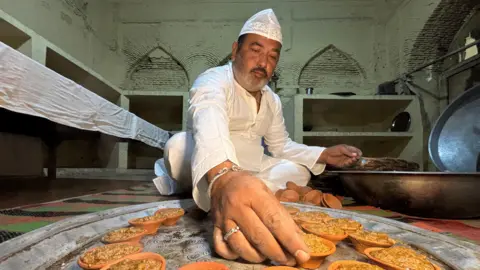
At 94, Rani Laxmi Chundawat can still describe a royal breakfast with the precision of someone who ate at one: a minimum of 10 dishes, every morning, prepared in the personal kitchen of each king by at least 10 cooks whose caste was bound to their region. In Marwar, those cooks came from the Wahri caste. In Mewar, the Bhoi. Each king was allotted a personal ration of mewa, or dry fruits, and rotis weighed to a specific portion per meal. Her own father, the rawat of Deogarh, received a sawa ser ki roti, served to him first and then distributed among his retainers and their families.
That world has largely disappeared. But in Madhya Pradesh, one royal family is working to preserve what remains of it.
Vikram Singh, the current head of the Sailana family that once ruled the Malwa region, spent the past year hosting food festivals in collaboration with luxury hotels alongside his daughter, Shailaja Katoch. His daughter-in-law, Jayathmika Lakshmi, 26, said the family had recently renovated and reopened Sailana Palace for visitors. "We hope to make it a culinary destination where tourists can come experience our food," she said.
The Sailana effort is part of a broader reckoning across India's former royal households. For centuries, the culinary stories and secrets of royal kitchens were closely guarded. Over the past few years, younger generations of these families began opening up the recipe books, taking their secrets to the world through cookbooks, Instagram and YouTube channels, and curated dining experiences. Rajasthan's erstwhile royals were among the first to do so, and others followed. The past year alone saw books published showcasing the royal cuisines of Gondal, Awadh and Patiala.
Yet what is being recovered represents only a portion of what once existed. Thakur Man Singh of Kanota was direct about the losses. "Ninety percent [of the meats our forefathers ate] was game, which is no longer legal," he said. "Copious quantities of dry fruits, ghee and butter went into those dishes, all doctors frown on them now. The purity of food-flavouring ittars like the oils of chameli or juhi is suspect. No wonder then that most of the old foods, along with the techniques, are slowly dying out."
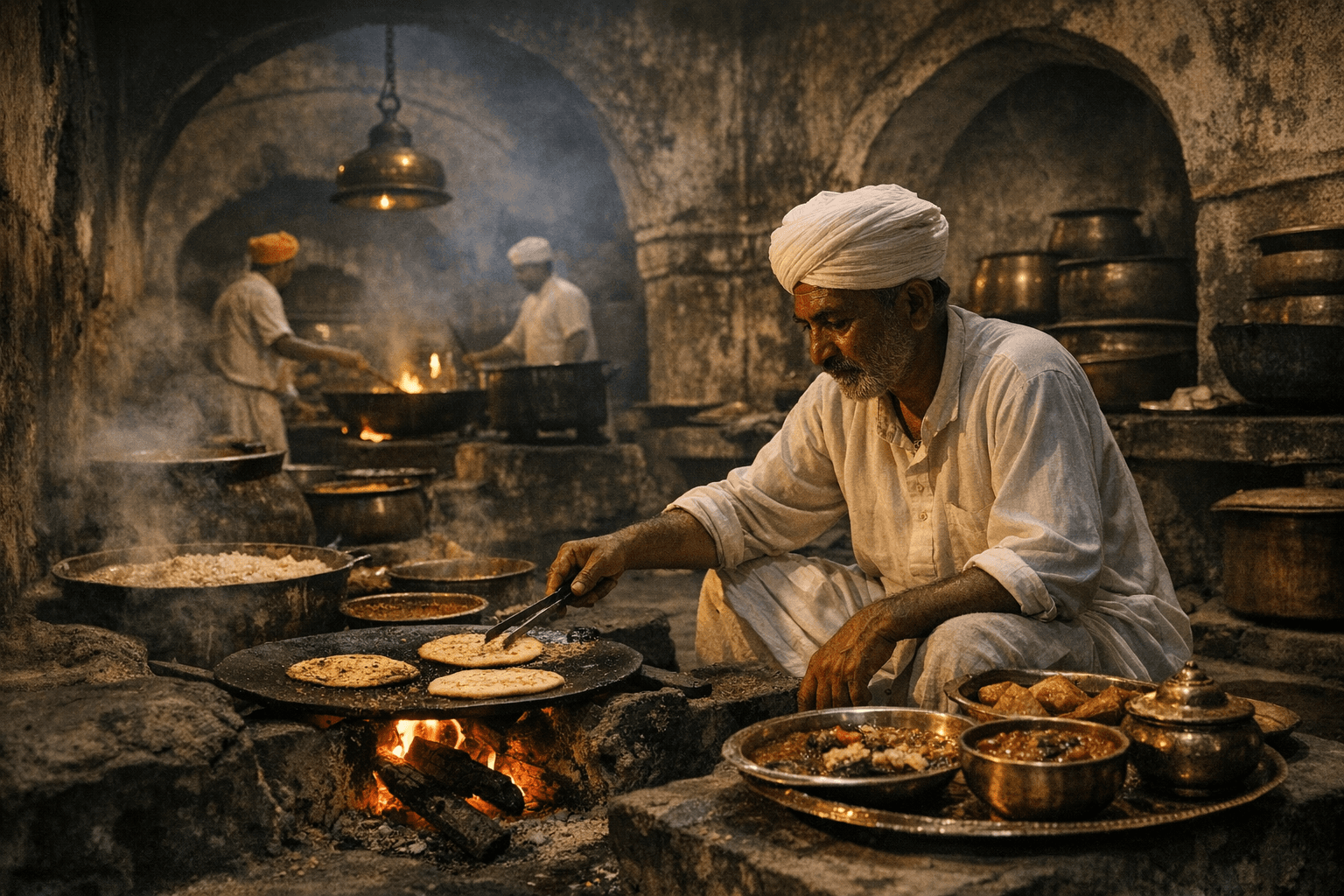
Among those fading preparations is Soor ka Saanth, a pig-fat dish in which squarish pieces of fat are soaked for two to three days in a mitti ka ghada, a clay pot typically reserved for drinking water, filled with khatti chach, or sour buttermilk, with the liquid changed each day. The fat is then cooked with ginger, nigella and mustard seeds into a preparation that keeps, like a pickle, for a long time. "There are no takers for such fattening food nowadays," Thakur Man Singh noted.
Not every royal dish has retreated from public life. Laal Maas, once served at royal tables alongside keema samosas and phita hua meetha dahi and considered a test of a cook's superior expertise, is today a staple in most North Indian restaurants. Its journey from palace kitchen to neighborhood menu is the rare exception.
The culinary lineage these families are working to preserve traces back to the Mughal Empire, which ruled from 1526 to 1857 and introduced dry fruits, saffron, cream and rich gravies to the subcontinent, a transformation whose influence persists in the spices and cooking styles of Indian cuisine today.
At Sailana Palace, the kitchen that once served only royalty is, after centuries, open to anyone who arrives hungry.
This article was produced by Prism’s automated news system from verified source data, official records, and press releases, then run through automated quality and moderation checks before publishing. The system is built and supervised by the people who set the standards it runs under. Read our full AI policy.
Did this article answer your question?