India waives excise duty on higher ethanol-blended petrol
India scrapped excise duty on petrol blended with 22% to 30% ethanol, but regular pump prices stayed unchanged as the policy targets fuel suppliers more than drivers.
India has waived excise duty on petrol blended with 22% to 30% ethanol, a clear signal that New Delhi wants to push the fuel mix beyond today’s E20 target and deepen its bet on homegrown biofuels. The exemption covers E22, E25, E27 and E30, and it is designed to reduce dependence on imported crude oil while making higher-blend petrol more attractive for refiners and fuel suppliers.
The immediate payoff for consumers looked limited. Regular petrol prices at retail outlets did not change in major cities on June 11, and the tax relief did not amount to a broad pump-price cut for motorists. Instead, the move appears aimed at the supply chain, where higher ethanol blends can now compete on a more favorable tax footing.
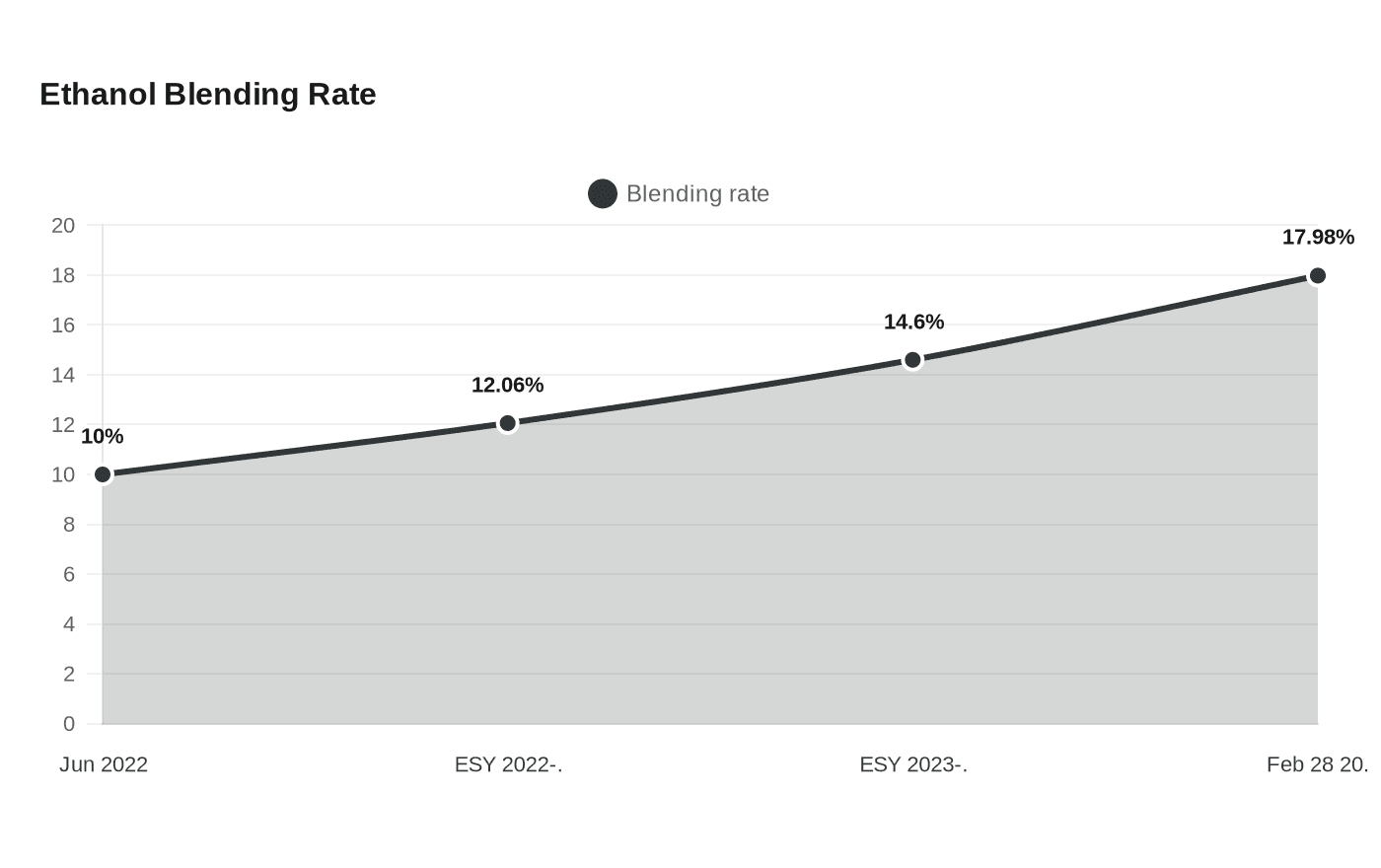
That matters because India has spent years building the policy and industrial scaffolding for this transition. The National Policy on Biofuels, amended in 2022, brought forward the 20% blending target to the Ethanol Supply Year 2025-26 from 2030. Public-sector oil marketing companies hit 10% blending in June 2022, then rose to 12.06% in ESY 2022-23, about 14.6% in ESY 2023-24 and 17.98% by February 28, 2025.

The government says that progress has already delivered sizable gains. Through July 2025, ethanol blending had saved more than Rs. 1.44 lakh crore in foreign exchange, substituted about 245 lakh metric tonnes of crude oil and cut carbon dioxide emissions by about 736 lakh metric tonnes. Farmers, meanwhile, received more than Rs. 1.25 lakh crore through the programme, a key reason the biofuel push has political support in rural India.
But the trade-offs are real. Higher blending depends on steady agricultural feedstock, and the state has already approved 52 lakh metric tonnes of surplus Food Corporation of India rice for ethanol production and allowed diversion of 40 lakh metric tonnes of sugar. That keeps alive the food-versus-fuel debate, especially in a country where edible crops can face competing demands from consumers, industry and fuel producers.
Technical readiness is another hurdle. The Bureau of Indian Standards notified specifications for E22, E25, E27 and E30 in May 2026, which helps explain why the tax waiver is now workable. India has also begun rolling out E85-compatible vehicle prototypes, suggesting the policy is moving toward a broader market for flex-fuel engines. Still, vehicles that are not designed or certified for higher blends may not benefit immediately, and motorists are unlikely to see cheaper fuel unless the lower tax is passed through the system.
The excise-duty waiver is therefore less a consumer windfall than a structural nudge. It rewards the firms that can supply higher-blend fuel, supports ethanol producers and farmers, and edges India closer to a domestic biofuel market that policymakers see as both an energy-security buffer and an industrial growth strategy.
This article was produced by Prism’s automated news system from verified source data, official records, and press releases, then run through automated quality and moderation checks before publishing. The system is built and supervised by the people who set the standards it runs under. Read our full AI policy.
Did this article answer your question?