Indian TB vaccine trial shows safety, partial protection, but no infection block
Two TB vaccines proved safe in a 12,717-person Indian trial, but neither stopped infection; VPM1002 cut extrapulmonary disease by 50.4%.
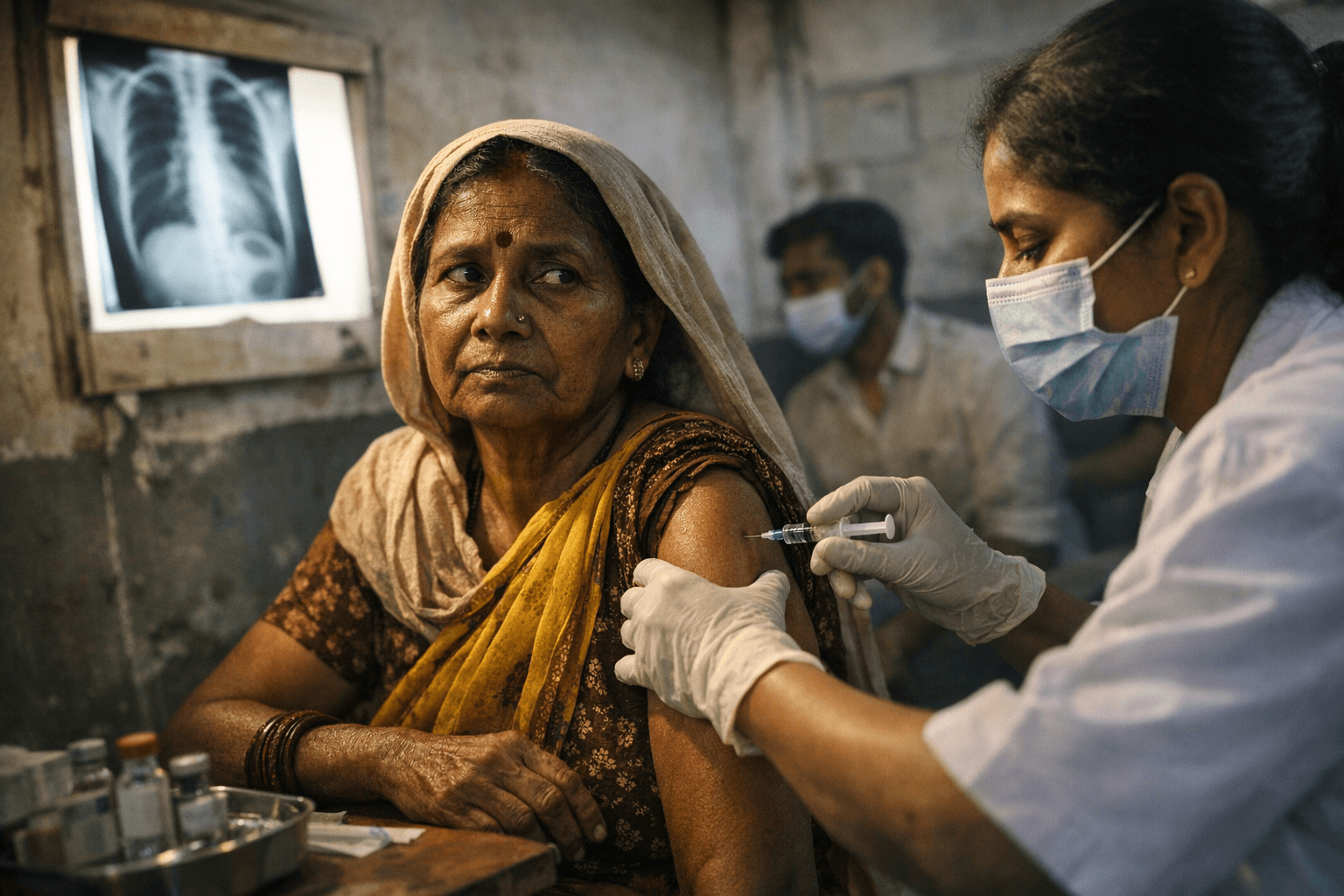
Two experimental tuberculosis vaccines, VPM1002 and Immuvac, made it through a large Indian phase 3 trial with encouraging safety results and some protection against disease, but they did not deliver the field’s most sought-after result: blocking infection itself. The PreVenTB study enrolled 12,717 healthy household contacts age 6 and older at 18 sites across six Indian states, randomizing them 1:1:1 to VPM1002, Immuvac or placebo and following them for 38 months. The findings were published April 9 in The BMJ.
What the trial did show was meaningful, if limited. Both candidates reduced the risk that latent tuberculosis would progress to active disease, and VPM1002 cut microbiologically confirmed extrapulmonary TB by 50.4% compared with the control group. But neither vaccine showed strong protection against pulmonary TB, the lung form that drives person-to-person spread. Neither prevented infection, underscoring the gap between a vaccine that can blunt severe disease and one that can interrupt transmission.
That distinction matters in a disease that remains one of the world’s most lethal infectious threats. The World Health Organization says 1.23 million people died of TB in 2024, including 150,000 people with HIV, and 10.7 million fell ill. WHO estimates that about a quarter of the global population has been infected with TB bacteria, while only a minority will ever develop disease. Drug-resistant TB remains especially hard to contain, with only about 2 in 5 people with drug-resistant disease accessing treatment in 2024.
The trial also fits into a long history of frustration in TB vaccine development. BCG, first developed in 1921, remains the only licensed TB vaccine, but its protection in adolescents and adults has been limited and inconsistent. That is a major problem because older children and adults account for much of ongoing transmission, and TB bacteria spread through the air when infected people cough, sneeze or spit.
The Indian results now sit beside a broader pipeline that has begun to show more promise against pulmonary disease. WHO says the M72/AS01E candidate showed 50% efficacy in a phase 2b study among HIV-negative adults with latent TB infection. The Bill & Melinda Gates Medical Research Institute said the phase 3 M72 trial reached full enrollment in April 2025 with about 20,000 participants across 54 sites in five countries, and ClinicalTrials.gov lists it as active, not recruiting, with completion estimated for April 2028. MTBVAC is also advancing in newborns in high-burden settings.
The PreVenTB trial did not produce the breakthrough of an infection-blocking TB vaccine. It did, however, add evidence that better tools are possible, and that the next hurdle is not simply whether a vaccine is safe, but whether it can stop the lung disease that keeps TB spreading.
This article was produced by Prism’s automated news system from verified source data, official records, and press releases, then run through automated quality and moderation checks before publishing. The system is built and supervised by the people who set the standards it runs under. Read our full AI policy.
Did this article answer your question?