India’s food irradiation dream stalls as export gains stay limited
India has built food-irradiation capacity for decades, but tiny export volumes, high setup costs and sparse certified plants still keep the model from scaling.
A promising fix that still reaches too few farms
Food irradiation was meant to solve one of Indian agriculture’s most stubborn problems: the huge share of fruits, vegetables, spices and other perishables that never make it cleanly from harvest to market. With post-harvest losses still running at roughly 30% to 40%, the logic is straightforward. If a treatment can suppress pests and microbes, extend shelf life and help exporters meet quarantine rules, then less produce should spoil and more should travel farther.
Yet the gap between that policy promise and commercial reality remains wide. India produced about 22.8 million metric tonnes of mangoes in FY2024-25, but exports are only around 30,000 tonnes a year. The country is also the world’s largest producer of spices and the second-largest producer of fruits and vegetables, which makes the modest export footprint of irradiation all the more striking.
How the technology works, and why it still matters
Food irradiation uses gamma rays, electron beams or X-rays to preserve food. It does not make food radioactive. Instead, it is a cold treatment that can reduce spoilage organisms and quarantine pests while preserving the product’s basic quality better than many heat-based methods.
That matters well beyond mangoes. A 2022 ministerial reply said onion and potato can last around eight months under optimized storage after irradiation, while grains and spices can maintain quality for around a year. In a country where supply chains often break down between farmgate, packhouse and port, those gains can be commercially valuable. They also explain why irradiation has remained part of India’s export strategy even as adoption has stalled.
Capacity exists, but it is thin and uneven
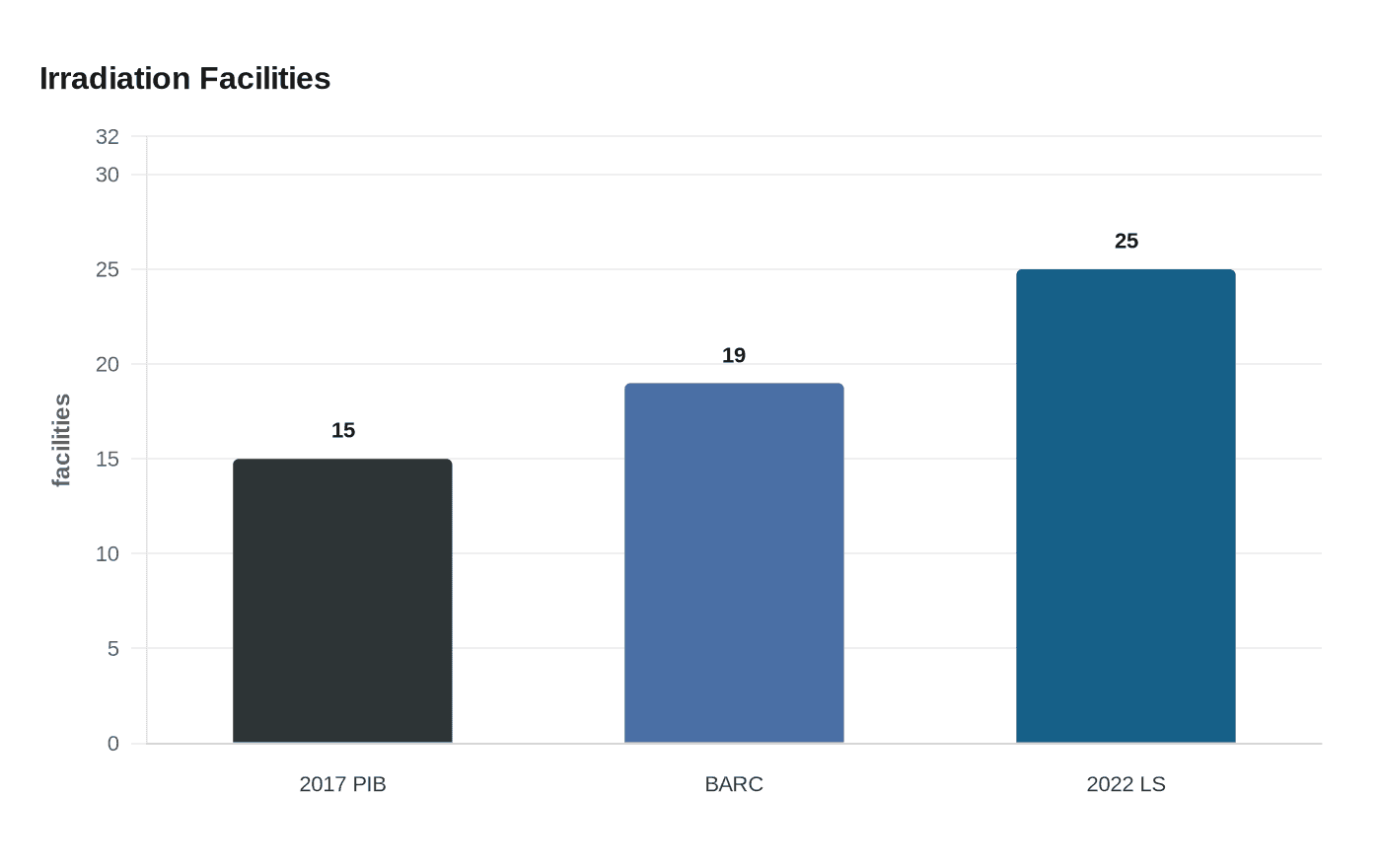
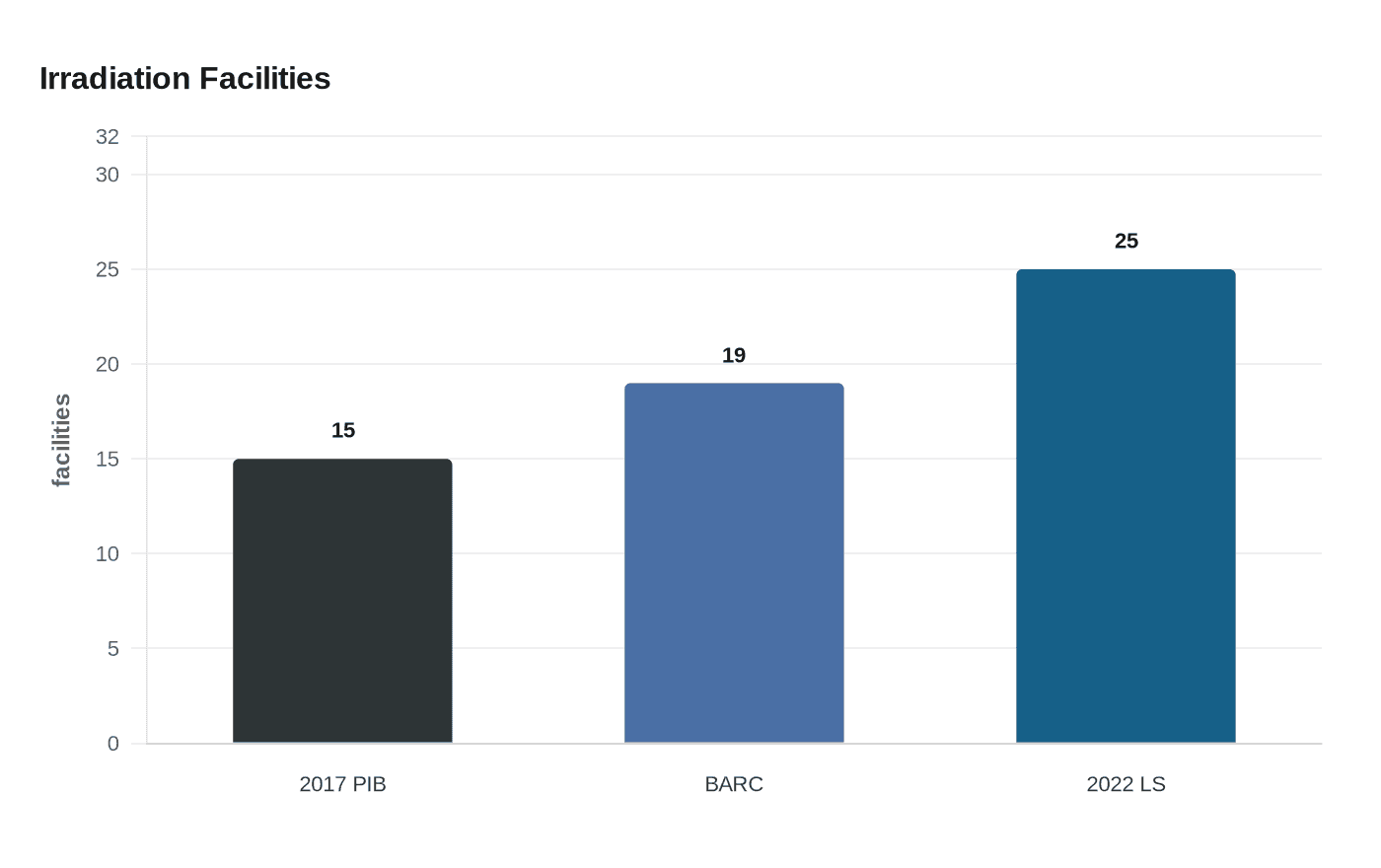
India’s irradiation network is no longer experimental. The first technology demonstration unit at Vashi, in Navi Mumbai, was commissioned in 2000, and the Lasalgaon KRUSHAK facility followed in 2002. Official counts vary depending on what is included: a 2017 Press Information Bureau release said 15 irradiation plants were functional, the Bhabha Atomic Research Centre says India has 19 facilities for radiation processing of food, and a 2022 Lok Sabha reply put the number of operational facilities at 25 across private, semi-government and government sectors.
Even with those different tallies, the real point is the same: the network remains small relative to India’s horticulture scale. Only four facilities are certified for exports, which is a narrow base for a country that wants irradiation to become a mainstream export enabler.
The busiest plant, operated by the Maharashtra State Agricultural Marketing Board in Vashi, shows both the promise and the constraint. It can process about five tonnes of Alphonso mangoes a day and is already running at or near capacity during the April-to-June export window. Demand exists, but it is concentrated in a brief seasonal slice rather than spread across the year.
The economics are the main brake
The commercial case is harder than the policy case. A 2017 PIB release estimated that setting up an irradiation facility costs about Rs. 15-20 crore, excluding land, and takes roughly two to three years. That is before the operator has built the logistics, compliance systems and customer relationships needed to keep the plant busy.
Processing costs also add friction. The same release said irradiation typically adds about 5% to 10% to processing costs, with low-dose treatments running around Rs. 0.5 to 1.0 per kg and high-dose spice decontamination rising to Rs. 5 to 10 per kg. For exporters, that creates an awkward decision: absorb the charge, pass it back to farmers or packers, or wait until volumes justify the expense. For farmers, it means another post-harvest service that may improve market access but still looks like an added cost unless buyers are willing to pay for it.
That is the central blockage in the model. Facilities are too few, often too far from production zones, and not dense enough to give growers and exporters the convenience they need. Where infrastructure is distant, the product has to move to the treatment site, then to grading, packing and shipping, all before the season has even peaked.
Exports show what works when the system is aligned
There are, however, concrete signs that the model works when the market, regulator and logistics line up. India has been exporting radiation-processed mangoes to the United States since 2007, and exports to Australia and Malaysia have also started. BARC’s technical material says the KRUSHAK facility at Lasalgaon became the first cobalt-60 gamma irradiation facility outside the US certified by USDA-APHIS for phytosanitary treatment of mango, a landmark that showed Indian systems could meet some of the toughest market requirements.
The export pipeline got another push in 2023, when APEDA invited USDA-APHIS inspectors for preclearance at irradiation facilities in Vashi, Nashik, Bangalore and Ahmedabad. India exported 2,043.60 metric tonnes of mangoes to the USA in the first five months of FY2023-24, and a PIB release said India exported mangoes worth USD 47.98 million in April-August 2023-24. BARC has also said sea-route shipment protocols for radiation-processed mangoes to the USA improved exporter revenues, a reminder that logistics innovation can turn a niche treatment into a practical business tool.
Why the policy debate is bigger than shelf life
Food irradiation sits inside India’s broader plant-biosecurity framework. The National Institute of Plant Health Management says plant quarantine regulation is designed to prevent exotic pests from entering India and to improve export market access. That makes irradiation more than a shelf-life tool. It is part of the compliance stack that determines whether Indian produce can cross borders at all.
The question now is not whether the technology works. It is whether India can build enough capacity, close enough to farms, at a cost structure that exporters can live with. Until that happens, irradiation will remain a useful but limited piece of the export story, while much of the country’s farm output continues to lose value before it ever reaches the market.
This article was produced by Prism’s automated news system from verified source data, official records, and press releases, then run through automated quality and moderation checks before publishing. The system is built and supervised by the people who set the standards it runs under. Read our full AI policy.
Did this article answer your question?
%3Amax_bytes(150000)%3Astrip_icc()%2FCertificate-of-deposit-2301f2164ceb4e91b100cb92aa6f868a.jpg&w=1920&q=75)