India’s heat wave strains essential workers, Delhi mandates rest breaks
Delhi’s new rest-break order exposes a harsher bargain for workers: under record heat, losing hours can mean losing wages, while climate change deepens the danger.
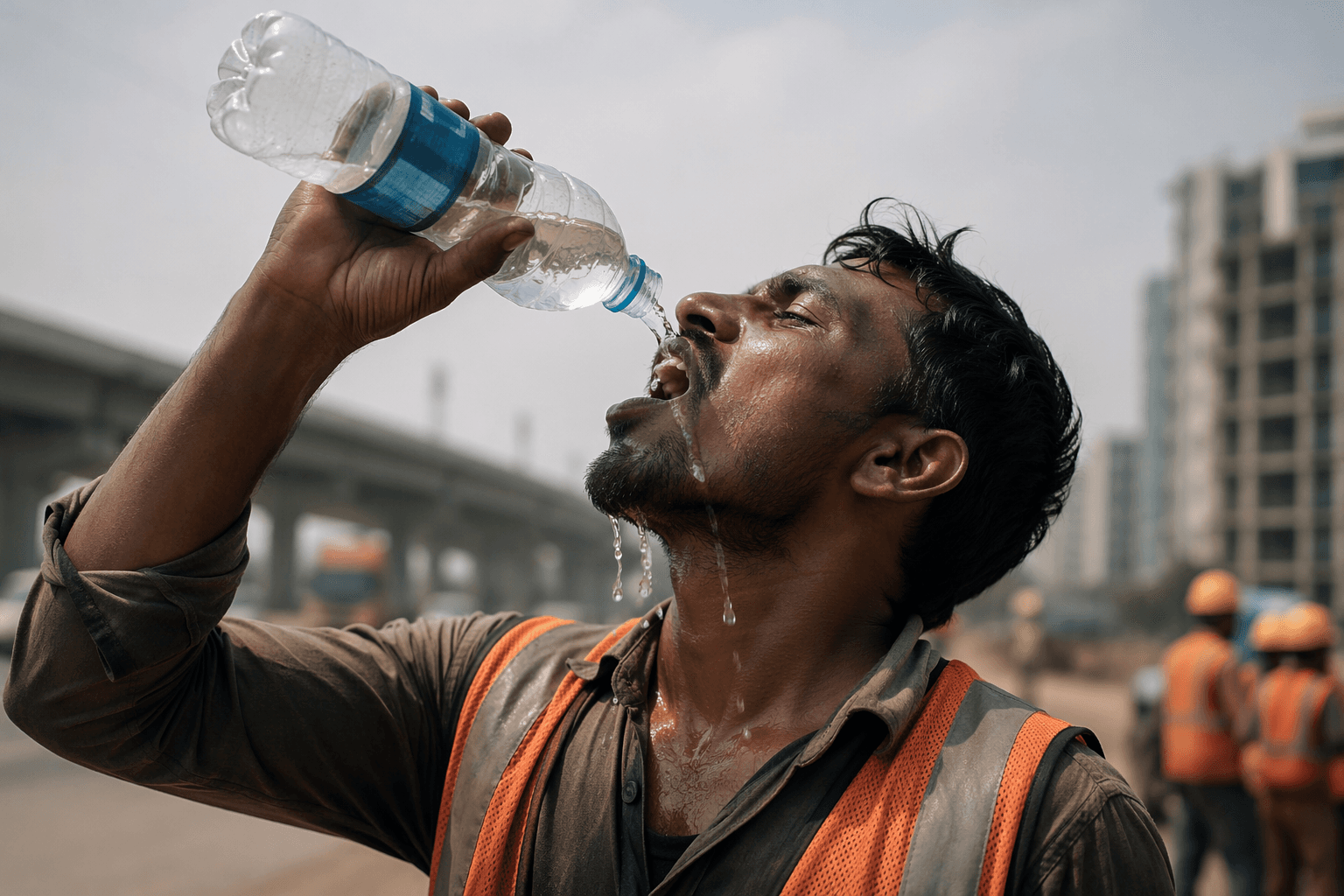
Outdoor workers in Delhi were left with a brutal calculation: keep going through the afternoon heat or walk away from a day’s pay. As temperatures climbed, the city recorded heat-wave conditions on April 23, 24 and 25, 2026, and the pressure spread beyond the capital as a fresh spell that began over Haryana on April 18 moved into Delhi, Uttar Pradesh, Uttarakhand and East Madhya Pradesh.
The response from health authorities was immediate but revealing. The Ministry of Health and Family Welfare had already issued a heat advisory on March 9 for the 2026 season. On April 23, it told states and Union Territories to operationalize dedicated Heat Stroke Management Units and to stock oral rehydration salts, essential medicines, intravenous fluids, ice packs and cooling equipment, while building capacity among health workers. The National Centre for Disease Control also urged employers and workers to be trained on the health impacts of extreme heat and warned people to avoid strenuous outdoor activity between noon and 3 p.m.
Delhi’s Heat Wave Action Plan 2026 went a step further by mandating a rest period for outdoor laborers from 1 p.m. to 4 p.m. It also called for cooling measures, ORS distribution and relief vans. City officials said Delhi has suffered temperatures above 40C for nearly 40 consecutive days in recent years, a reminder that the capital’s heat problem is no longer episodic but structural.
That is why labour advocates say the issue is bigger than weather warnings. They argue India’s labour codes still do not provide enforceable protections for extreme heat, leaving the country’s construction workers, brick-kiln workers, daily wage earners, casual labourers and gig workers to absorb the risk themselves. A white paper on heat in India says about three-fourths of the workforce is engaged in heat-exposed labour, underscoring how widely the burden falls on people who cannot simply stay home when the mercury rises.
The climate signal is growing stronger, and the economic stakes are expanding with it. A ClimaMeter analysis of the April 2026 heat wave found that about 146.53 million people were exposed to heat intensified by climate change, across areas representing roughly $1.3436 trillion in economic activity. For workers who rely on daily wages, the choice between rest and income is no longer abstract. It is the daily price of an urban labour market that still leaves heat safety unevenly enforced.
This article was produced by Prism’s automated news system from verified source data, official records, and press releases, then run through automated quality and moderation checks before publishing. The system is built and supervised by the people who set the standards it runs under. Read our full AI policy.
Know something we missed? Have a correction or additional information?
Submit a Tip