India’s Supreme Court stays Vijayawada order after AI‑generated citations
Top court stayed a lower-court property ruling after a junior judge relied on four AI-generated "judgements," calling the episode an "institutional concern" with possible legal consequences.
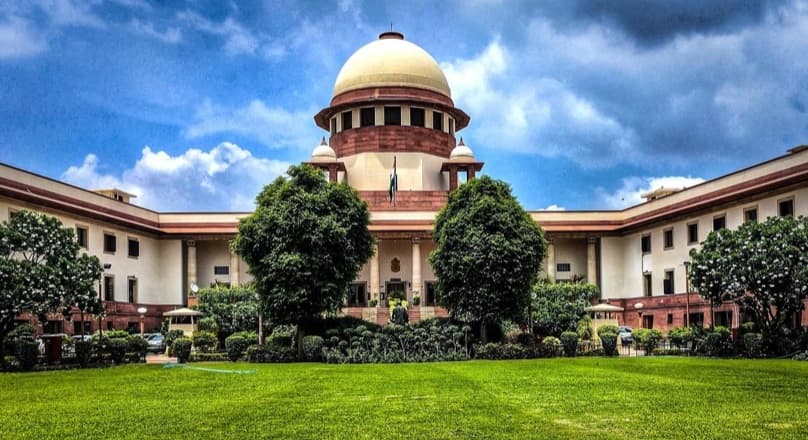
India’s Supreme Court has stayed a lower-court order and warned of legal consequences after finding that a junior civil judge in Vijayawada relied on four AI-generated judgments while deciding a property dispute. The top court said the episode raised "considerable institutional concern" and that the fake AI-generated judgements had "a direct bearing on integrity of adjudicatory process."
The underlying matter began in August last year when the trial court assigned an official to survey the disputed property and file a report. Defendants objected to that survey; the junior judge dismissed their objection and, in doing so, cited four precedents that were later discovered to be fabricated by an artificial intelligence tool. The Supreme Court characterized the use of AI in authoring or sourcing judgments not as "an error in decision making" but as "misconduct."
Before the apex court intervened, a high court reviewed the trial judge's order and issued a narrower view on the effect of incorrect citations. The high court wrote that "the citations may be non-existent, but if the learned trial court has considered the correct principles of law and its application to the facts of the case is also correct, mere mentioning of incorrect or non-existent rulings/citations in the order cannot be a ground to set aside the order." Acting on that standard, the high court sought a report from the trial judge about how the spurious citations entered the record.
The junior judge told the court it was her first time using an AI tool and that she had believed the citations were "genuine." She told the high court she had "no intention to misquote or misrepresent the rulings" and that "the mistake occurred solely due to the reliance on an automatic source." Those explanations did not prevent the Supreme Court from stepping in on appeal and staying the lower court's decision.
The Supreme Court has issued notices to the Attorney General and Solicitor General of India and to the Bar Council of India and said it will examine the Andhra Pradesh ruling in greater detail. The court’s language framed the issue as one that goes beyond this single property dispute: it implicated the integrity of adjudication and the duty of judges to verify authorities cited in their orders.
The incident arrives amid growing reports of generative AI disrupting legal processes. Generative AI systems are known for their ability to "hallucinate" and assert falsehoods as fact, even sometimes inventing sources for the inaccurate information. That technological risk now collides with judicial procedure and public trust in court records.
For courts and litigants, the case raises immediate questions about verification practices in lower courts, training for junior magistrates, and whether formal disciplinary or procedural safeguards are needed when electronic aids are used. It also touches on longstanding tensions in judicial administration about allocation of sensitive cases to junior judges, a controversy that has periodically animated India’s legal community.
The Supreme Court’s further orders will be watched for whether it treats the episode primarily as a problem of case law accuracy or as a disciplinary breach that requires new rules on the permissible use of automated tools by judges.
This article was produced by Prism’s automated news system from verified source data, official records, and press releases, then run through automated quality and moderation checks before publishing. The system is built and supervised by the people who set the standards it runs under. Read our full AI policy.
Did this article answer your question?


