India’s youth job crisis deepens as graduates struggle to find work
Nearly 40% of Indian graduates under 25 were unemployed as exam leak protests toppled education minister Dharmendra Pradhan, exposing a widening jobs mismatch.

India’s education system is struggling to keep pace with a youth-heavy population that is nearing the end of its demographic dividend, and the strain has spilled from classrooms into the streets and the cabinet. Dharmendra Pradhan resigned as education minister on July 25 after days of student-led protests over exam paper leaks, including a medical entrance question paper that forced more than two million candidates to re-sit the test.
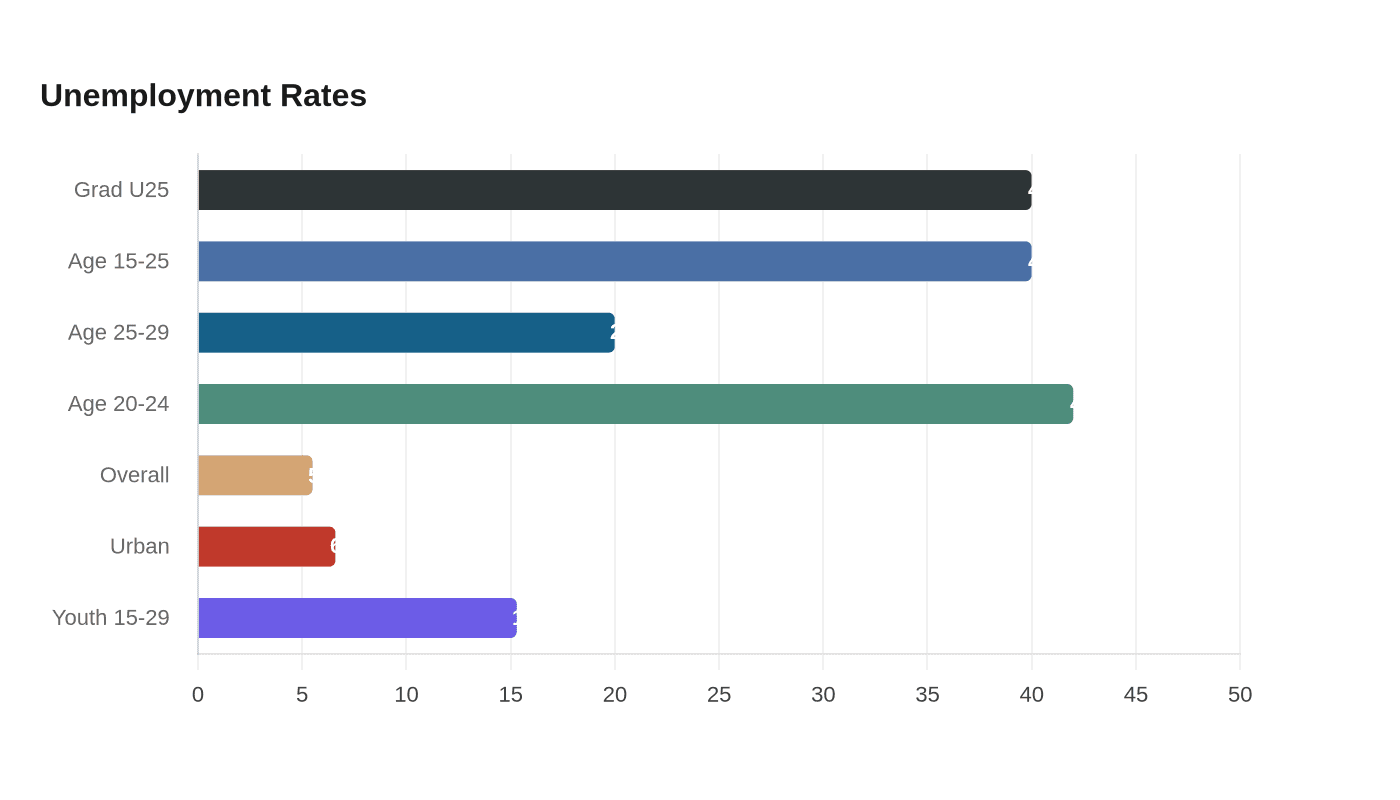
The deeper grievance is not only corruption in testing, but the limited payoff from higher education. Azim Premji University’s State of Working India 2026 found that nearly 40% of Indian graduates under 25 were unemployed. The same report put unemployment at about 40% for people aged 15 to 25 and about 20% for those aged 25 to 29, even as college and university enrollment has risen sharply. It described a widening gap between learning and earning, a mismatch that leaves many young Indians with credentials but not careers.
That mismatch lands at a dangerous moment for the economy. India is nearing the peak of its demographic dividend, and the share of the working-age population is expected to begin declining after 2030. If a larger share of the country’s young people cannot move into productive jobs, the result will be weaker consumption, slower upward mobility and a heavier political burden on Narendra Modi, whose government has made youth employment a central promise.
The job market data point in the same direction. BBC reported in 2024 that unemployment among 20- to 24-year-olds had risen to over 42%. More recently, India’s overall unemployment rate stood at 5.5% in June 2026, with urban unemployment at 6.6% and youth unemployment for ages 15 to 29 at 15.3%. Those national figures mask the anger concentrated among graduates who expected education to be a path into the middle class and instead found themselves competing for scarce, often informal work.
The exam leak protests turned that frustration into a national political problem. Reuters, France 24, CNN and Sky News described the movement as one of the toughest challenges to Modi’s 12-year tenure. The satirical Cockroach Janta Party emerged as a symbol of the anger, but the issue behind it was serious: a generation of better-schooled Indians confronting weak job creation, unreliable testing and shrinking faith that education still guarantees social mobility.
This article was produced by Prism’s automated news system from verified source data, official records, and press releases, then run through automated quality and moderation checks before publishing. The system is built and supervised by the people who set the standards it runs under. Read our full AI policy.
Did this article answer your question?