Indonesia and Australia Move to Build Trilateral Security Pacts With Japan and Papua New Guinea
Jakarta and Canberra announce plans to extend their new bilateral security treaty into two trilateral frameworks, reshaping Indo-Pacific defence architecture.
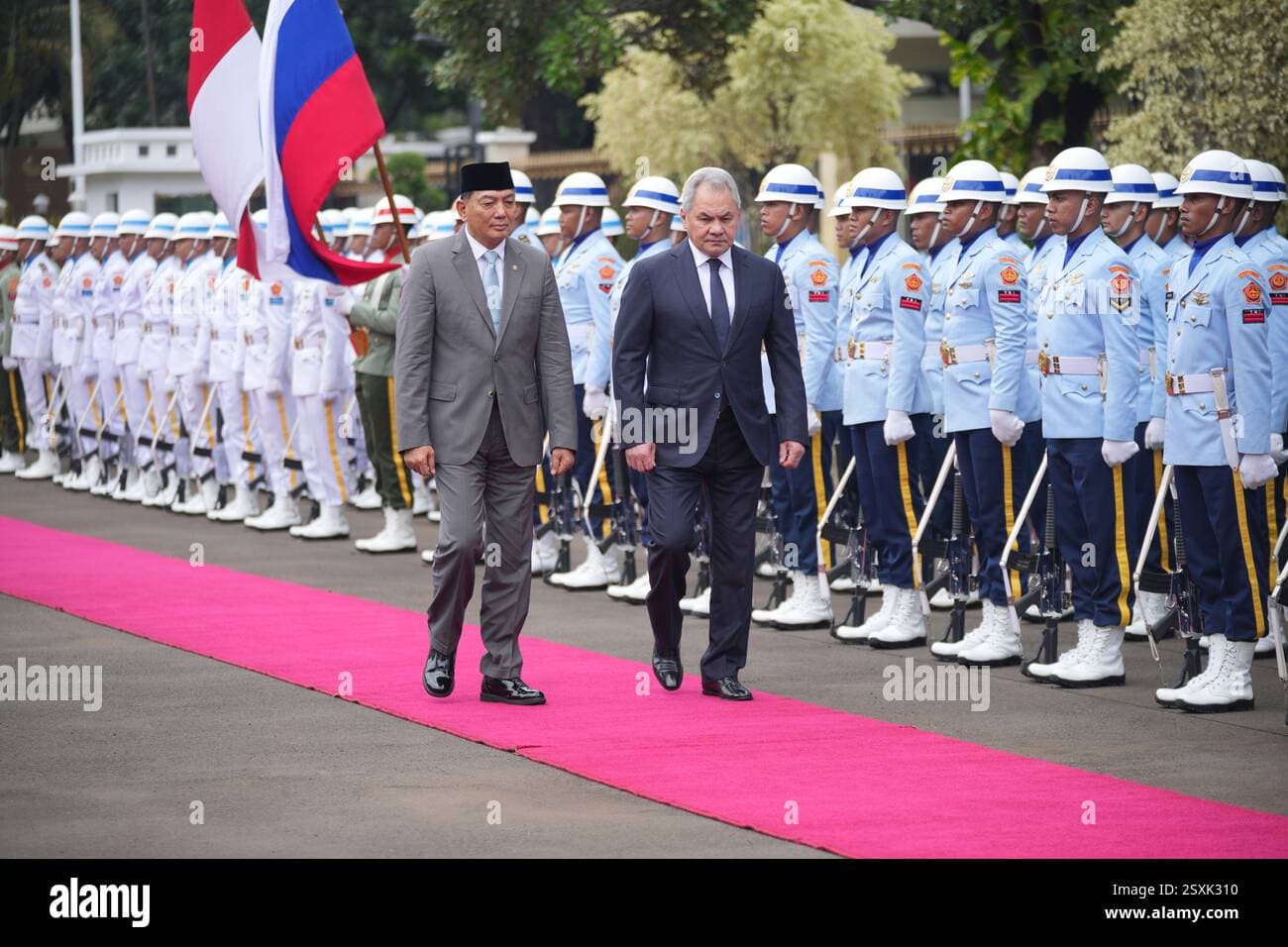
Indonesia and Australia announced plans Thursday to develop two separate trilateral security arrangements, one with Japan and another with Papua New Guinea, deepening a regional defence architecture that has expanded rapidly over the past year.
The announcement came after Indonesian Defence Minister Sjafrie Sjamsoeddin met with Australian Deputy Prime Minister and Defence Minister Richard Marles in Jakarta. Sjafrie told reporters that trilateral security arrangements would be developed between Indonesia, Australia and Japan, and between Indonesia, Australia and Papua New Guinea, though no formal agreements have been signed and the arrangements remain in a planning phase.
The talks build directly on the Treaty on Common Security signed by Indonesian President Prabowo Subianto and Australian Prime Minister Anthony Albanese last month, a pact Canberra described as historic. That treaty commits both countries to developing joint military training facilities in Indonesia, increasing cooperation and information sharing, and consulting "at a leader and ministerial level" on security matters affecting both nations. The two countries also said Thursday they will work together on intelligence sharing, though Sjafrie provided no details on scope or mechanisms.
At the centre of the infrastructure discussions is Morotai island in North Maluku province, a site with existing defence infrastructure that both sides discussed upgrading. Marles said the facility would belong to Indonesia, adding that "there would be opportunities we see for Australia to engage in training there," and that it is up to Indonesia to determine how it will be used. Sjafrie said of the upgrade plans, "We will work together to improve and utilise it." He added that military personnel from countries including the Philippines, Australia and Singapore would have access to the Morotai facility, as well as a separate facility in North Kalimantan being developed with Singapore.
The bilateral and trilateral moves fit into a broader pattern of overlapping defence agreements Australia has pursued across the region. Canberra signed a mutual defence pact with Papua New Guinea in October 2025, and in 2022 signed a treaty with Japan enabling greater engagement and "operability" between their forces. Those existing ties provide ready frameworks on which the proposed trilateral arrangements could be built.
Marles, in a social media post about the Jakarta meeting, described it as an opportunity to discuss "our defence relationship as we work together to support a secure and peaceful Indo-Pacific region."
Sjafrie also made separate remarks Thursday about Indonesia's readiness to contribute troops to an international security force in Gaza, saying the country had previously prepared 20,000 troops but was now ready to deploy 8,000 in phases, contingent on broader geopolitical conditions. Those comments were distinct from the trilateral security discussions.
The proposed Japan and PNG frameworks have no confirmed timelines or formal legal structures yet, and neither Tokyo nor Port Moresby has publicly confirmed its engagement with the proposed arrangements. What is clear is that Indonesia, long cautious about formal multilateral defence commitments, is signalling a willingness to anchor itself more firmly within a web of security partnerships that places Australia at its centre, and that stretches from the Pacific islands to Northeast Asia.
This article was produced by Prism’s automated news system from verified source data, official records, and press releases, then run through automated quality and moderation checks before publishing. The system is built and supervised by the people who set the standards it runs under. Read our full AI policy.
Did this article answer your question?


