Indonesia parliament starts finance law review, deficit cap not immediate focus
Indonesia’s lawmakers opened a finance-law rewrite that could hand Danantara more control over state investment, while keeping the 3% deficit cap off the immediate agenda.

Indonesia’s parliament has begun reviewing the country’s state finance laws, but the first battle is not over the long-standing 3% deficit ceiling. The sharper issue is who will control state money if lawmakers rewrite the rules around Danantara, the new sovereign wealth and investment board that President Prabowo Subianto has placed at the center of his economic agenda.
Mukhamad Misbakhun, who heads House of Representatives Commission XI, said lawmakers will draft an omnibus bill to align several financial laws with Danantara’s creation. That rewrite would move the appointed stakeholder for state investments from the finance minister to Danantara, and it would direct dividends from state-owned companies to the fund instead of the state budget. The shift would give the new vehicle greater control over capital that has traditionally flowed through the Finance Ministry, a change with clear implications for budget discipline and executive power.
The review comes as investors continue to watch whether Indonesia will loosen the fiscal rules that have anchored policy since Law No. 17 of 2003, passed after the 1998 Asian financial crisis. That law set a budget deficit ceiling of 3% of gross domestic product and a public-debt ceiling of 60% of GDP. Fitch Ratings has already flagged possible changes to those limits as a reason for its more cautious view of Indonesia. On March 4, 2026, Fitch revised Indonesia’s sovereign outlook to Negative from Stable while affirming the rating at BBB, citing rising policy uncertainty and weaker policy consistency.
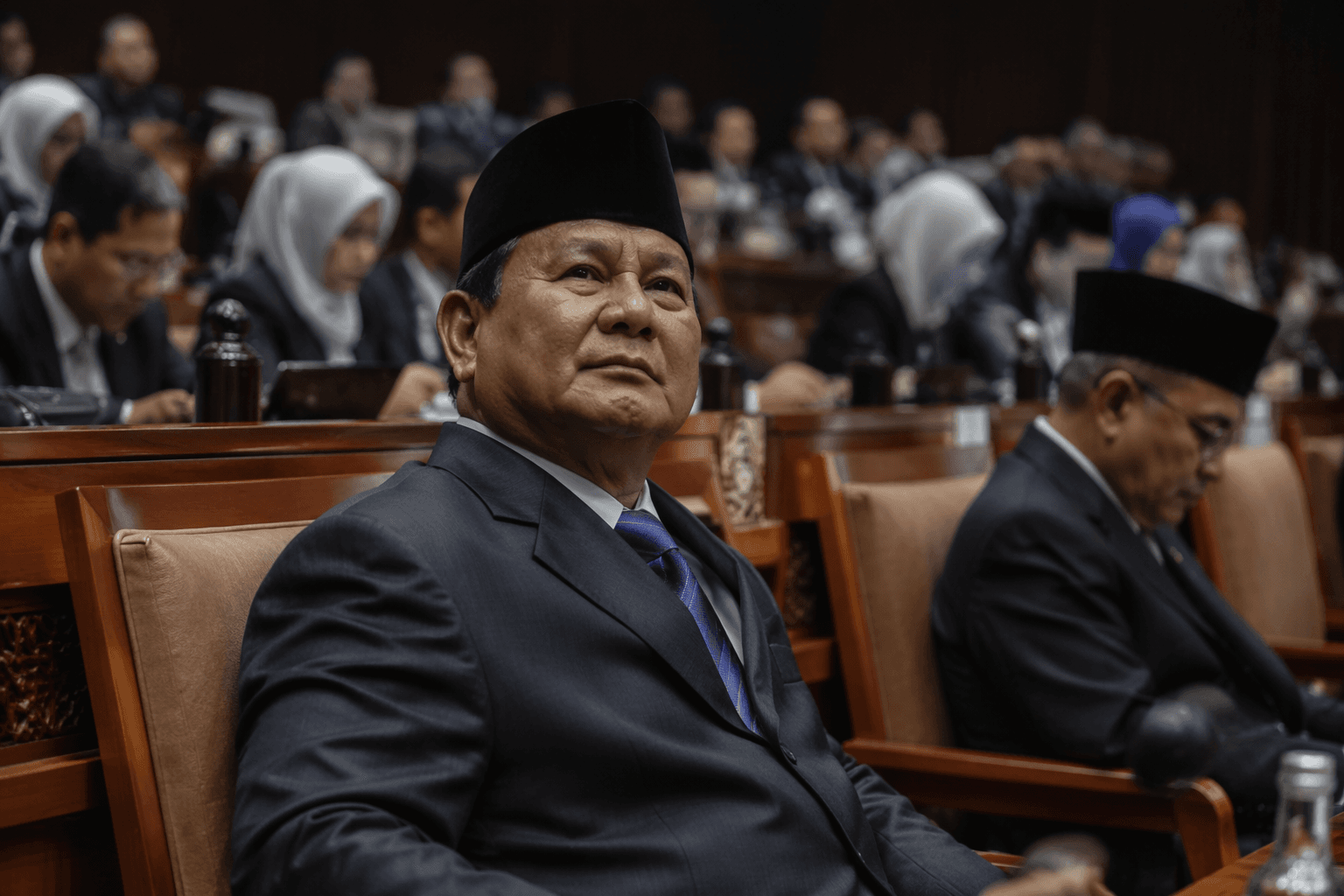
Fitch had earlier said in August 2025 that Indonesia’s 2026 budget target deficit of 2.48% of GDP showed continued commitment to stay within the legal ceiling, even as it warned about slippage risks. For now, lawmakers are signaling that the deficit cap is not the immediate focus. Instead, the broader package points to a more interventionist model in which the state channels more of its balance-sheet strength into investment and strategic industries.
Danantara was officially launched on February 24, 2025 at the Presidential Palace in Jakarta. Prabowo has said it will back renewable energy, downstream industries, advanced manufacturing and food production, and its managers say the fund’s assets are about $900 billion. That scale matters: Indonesia’s state-owned enterprises had consolidated assets of Rp 10,950 trillion in 2024 and paid Rp 86.38 trillion in dividends to the Finance Ministry that year.

Another proposed law would expand Bank Indonesia’s mandate to put more emphasis on growth, even though its current law already includes support for sustainable economic growth alongside rupiah stability. Finance Minister Purbaya Yudhi Sadewa said he had not seen the bill and stressed the central bank’s independence. Taken together, the revisions suggest Jakarta is preparing a quieter but significant shift in economic policymaking, one that could grant the state more direct control over investment while leaving the deficit cap in place, at least for now.
This article was produced by Prism’s automated news system from verified source data, official records, and press releases, then run through automated quality and moderation checks before publishing. The system is built and supervised by the people who set the standards it runs under. Read our full AI policy.
Did this article answer your question?

