Indonesia Plans Up to $5.9 Billion Energy Subsidy Boost Amid Middle East Conflict
Indonesia's finance minister revealed plans to inject up to $5.9 billion in additional energy subsidies, shielding consumers from oil price shocks linked to the US-Israel-Iran conflict.

Indonesia's Finance Minister Purbaya Yudhi Sadewa said the government was prepared to add between Rp90 trillion and Rp100 trillion, roughly $5.3 billion to $5.9 billion, to this year's energy subsidy allocation, citing rising global oil prices driven by a month-long conflict involving the United States, Israel and Iran. He made the announcement at a public briefing at Wisma Danantara in Jakarta on Wednesday.
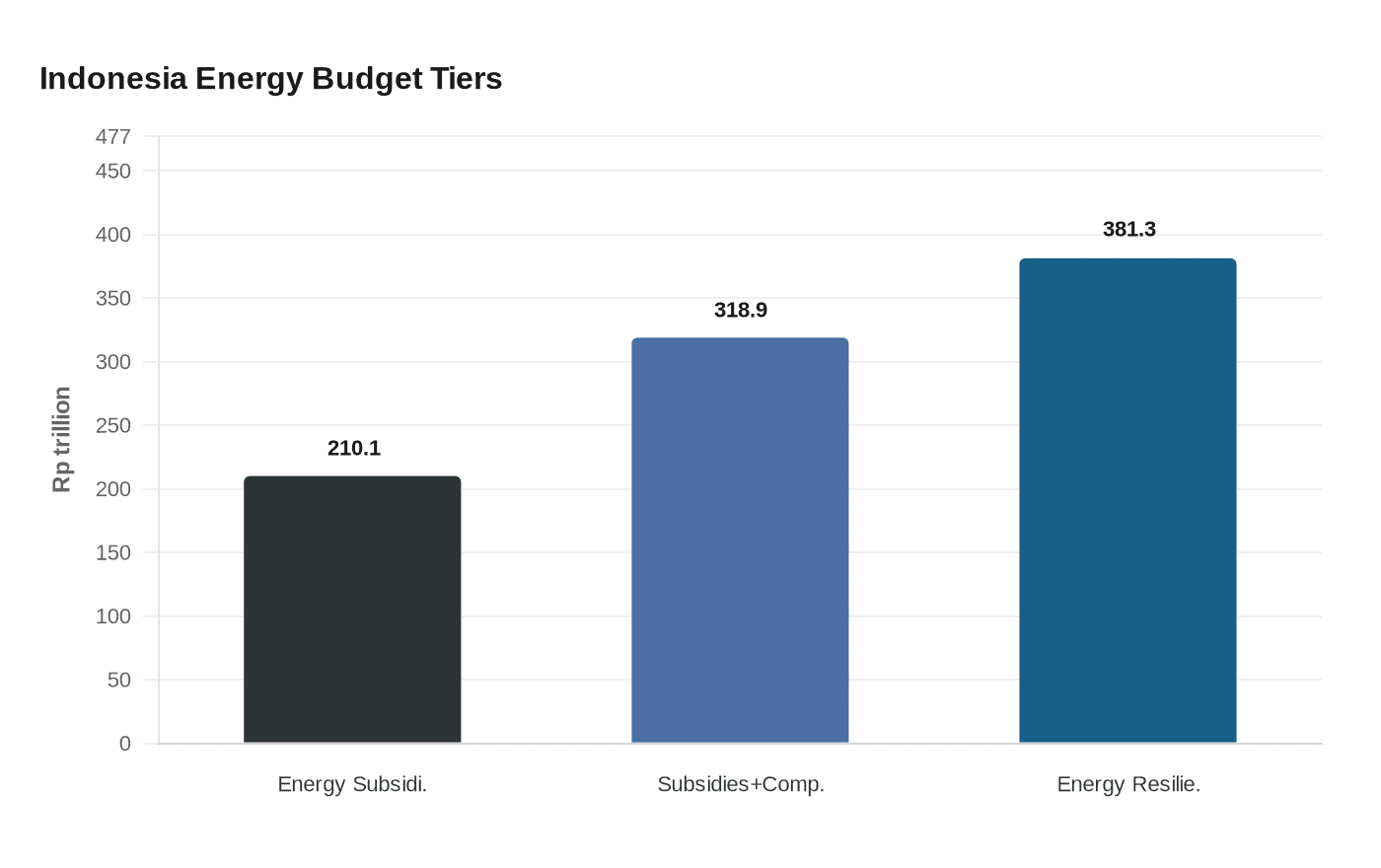
The figure would be layered on top of the Rp210.1 trillion the government had already budgeted for energy subsidies in 2026, which itself sits within a broader Rp318.9 trillion package covering subsidies and compensation combined. Total planned spending for energy resilience had been set at Rp381.3 trillion before the potential top-up was announced.
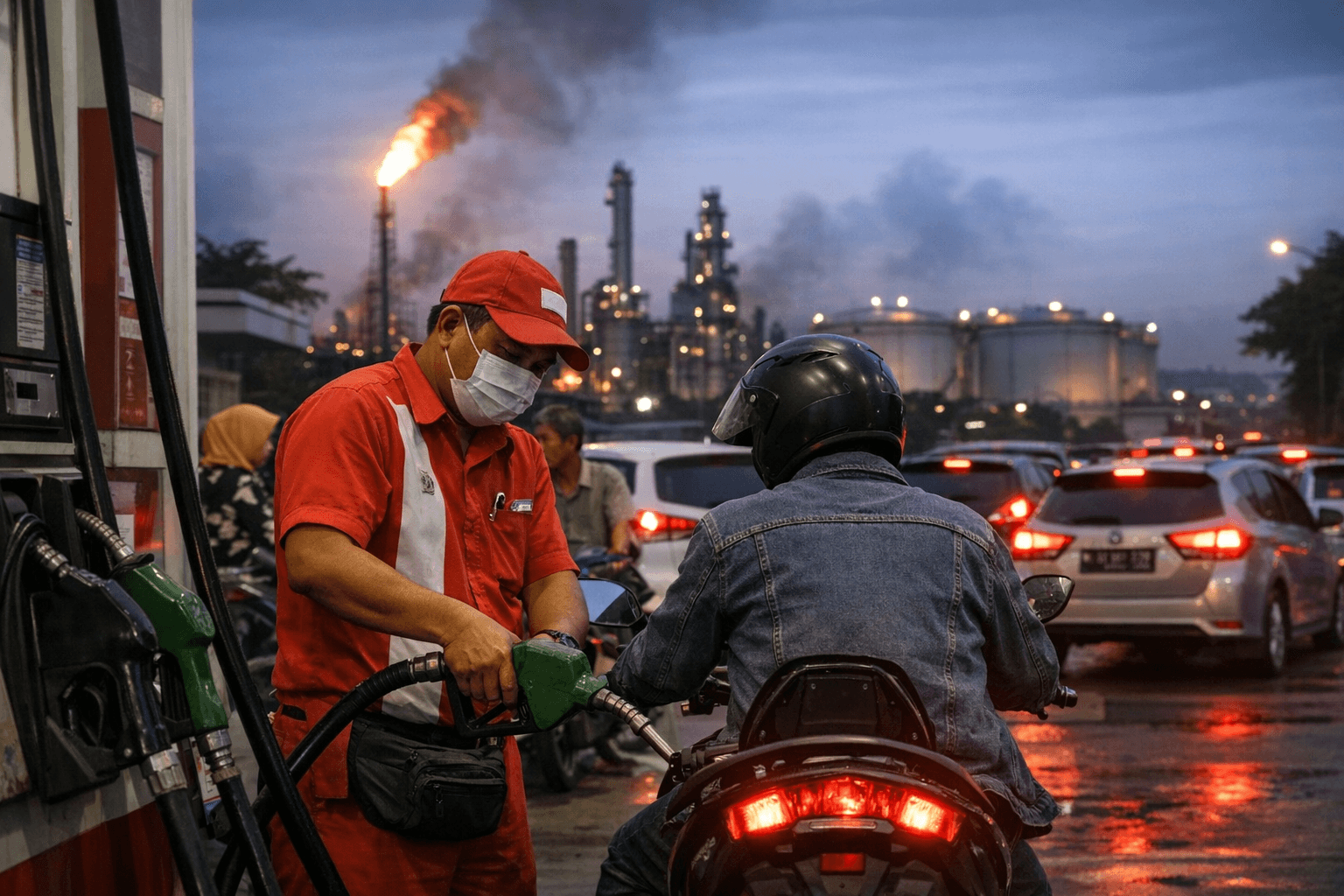
Purbaya was explicit about what the additional funds would cover: subsidies on essential consumer goods, specifically 3-kilogram LPG cylinders and diesel fuel, rather than compensation payments to state-owned energy companies such as Pertamina. That distinction matters in Indonesia's fiscal architecture, where compensation mechanisms reimburse Pertamina for losses incurred when retail prices are held below market levels. The minister said the new allocation would go directly to keeping pump and cooking-fuel prices accessible.
On the fiscal math, Purbaya offered direct assurance: "We have calculated everything. Even if average global oil prices reach US$100 per barrel, we have locked the deficit below 3 percent, at around 2.9 percent. So there is no problem." The finance ministry has stress-tested multiple scenarios. Under a moderate case, with oil near $97 per barrel and some rupiah depreciation, the deficit could widen to around 3.53 percent. Under a pessimistic scenario, with oil at $115 per barrel and a weaker currency, the pressures would intensify further.
The timing of the measure is not incidental. Indonesia faces a politically sensitive stretch ahead of major travel seasons including Eid, when fuel and cooking-gas demand spikes and the social cost of price increases is most acutely felt. By absorbing the shock through subsidies rather than allowing market prices to transmit to consumers, Jakarta trades near-term inflation containment for additional fiscal exposure.
That trade-off will be closely watched by bond investors and credit rating agencies. Indonesia, as a significant oil and gas producer and one of Southeast Asia's largest emerging-market economies, has built its fiscal credibility around the 3 percent deficit ceiling. Whether oil prices remain elevated will determine how much of the Rp90–100 trillion cushion actually gets deployed, and whether the government's modeled scenarios hold as the Middle East conflict continues to distort global energy markets.
This article was produced by Prism’s automated news system from verified source data, official records, and press releases, then run through automated quality and moderation checks before publishing. The system is built and supervised by the people who set the standards it runs under. Read our full AI policy.
Did this article answer your question?


