Indonesia’s new capital Nusantara faces doubts over funding and timeline
Nusantara’s skyline is rising in Borneo, but only about 2,000 civil servants live there as budget cuts and delays push the 1.2 million-resident dream further away.
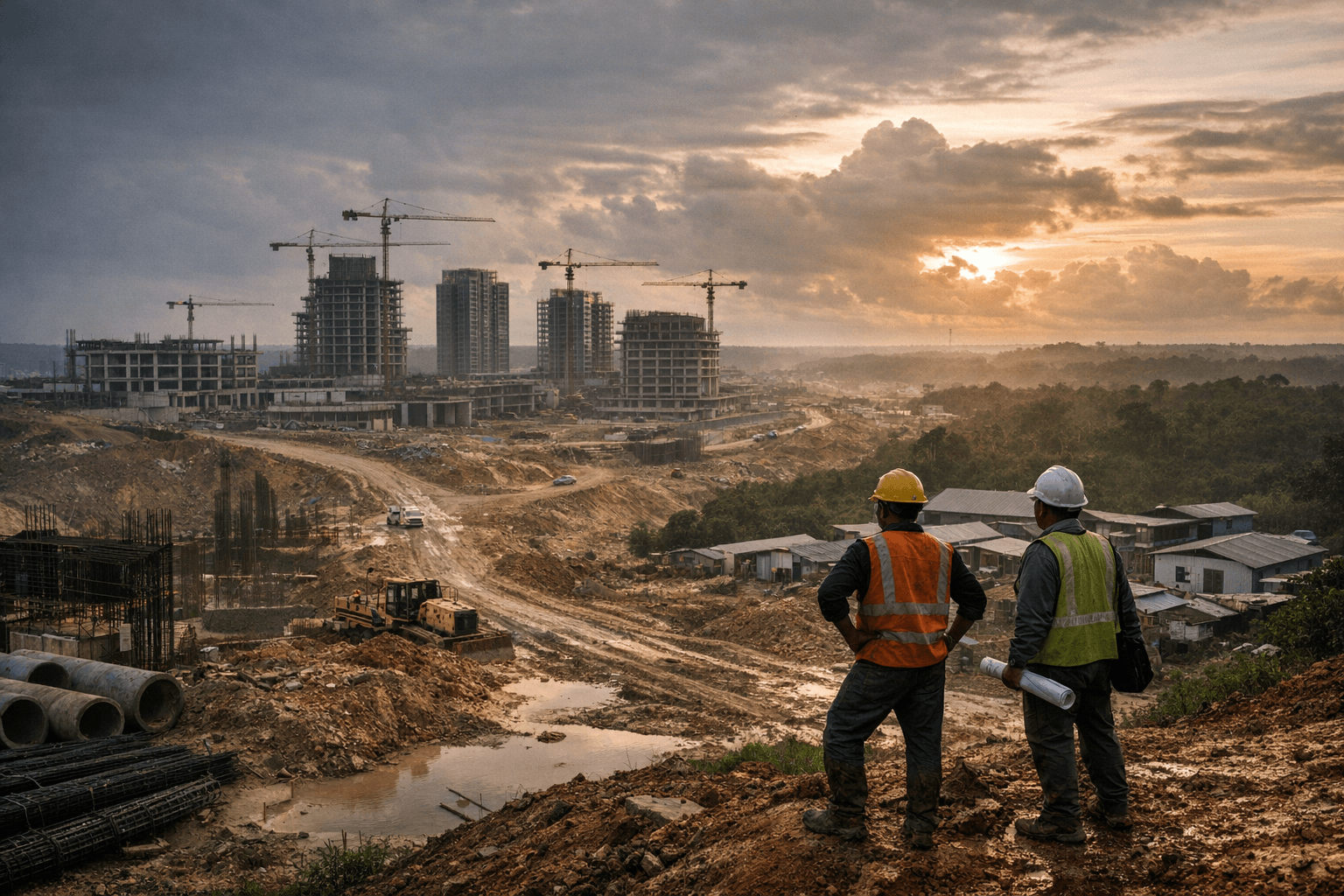
Nusantara was sold as Indonesia’s break with Jakarta’s chronic dysfunction, a greener capital in East Kalimantan meant to escape pollution, congestion and the sinking ground that has haunted the old seat of power. Yet the city built about a two-hour drive from Balikpapan is still far from the self-sustaining national center officials promised, with only about 2,000 civil servants and 8,000 construction workers living there while the government still aims for 1.2 million residents by 2030.
The project, announced in 2019, was originally designed as a five-phase buildout spread across five presidential terms. Joko Widodo pushed it as a legacy project and staged the first cabinet meeting in Nusantara in August 2024 to show momentum before leaving office. But under Prabowo Subianto, who took office in October 2024, doubts have sharpened over whether the new capital is getting the money, workers and political commitment needed to match its ambitious blueprint.
Those doubts grew after broad budget cuts ordered in January 2025. A March 2025 analysis said the money needed for Nusantara construction had effectively been frozen, even as the government publicly insisted the project would continue. Private money, which was supposed to cover about 80% of the project’s roughly US$30 billion cost, has lagged badly. One 2025 report said private investment was more than US$1 billion short of target, reflecting investor worries about policy swings, a sparse population and the uncertainty of Nusantara’s long-term commercial future.
The schedule has slipped too. Indonesia now says the legislative and judicial complexes should be finished by late 2027 or early 2028. Basuki Hadimuljono, who heads the Nusantara Capital Authority, said in April 2026 that those buildings remain a priority and that the goal is still to complete them in 2027 to 2028. One report also said Prabowo signed a regulation designating Nusantara as the country’s political capital by 2028, a move that left lawmakers and policy experts trying to reconcile the new label with the city’s still-incomplete infrastructure.
An academic article said the first development phase was 97.2% complete by early 2025, but that same work found the project depended on state funding for 85% of financing, with private sector participation at just 10%. Other reporting said the last 20 apartments for civil servants were pushed back to the end of 2025. The gap between the green-city vision and the numbers on the ground has turned Nusantara into a test of whether Indonesia is fixing the old problem of overcentralized, fragile governance or simply moving it to Borneo.
This article was produced by Prism’s automated news system from verified source data, official records, and press releases, then run through automated quality and moderation checks before publishing. The system is built and supervised by the people who set the standards it runs under. Read our full AI policy.
Did this article answer your question?


