Inflation hits three-year high as energy prices surge
Gasoline averaged $4.48 a gallon in May, helping drive U.S. inflation to 4.2% and the fastest annual pace since April 2023.

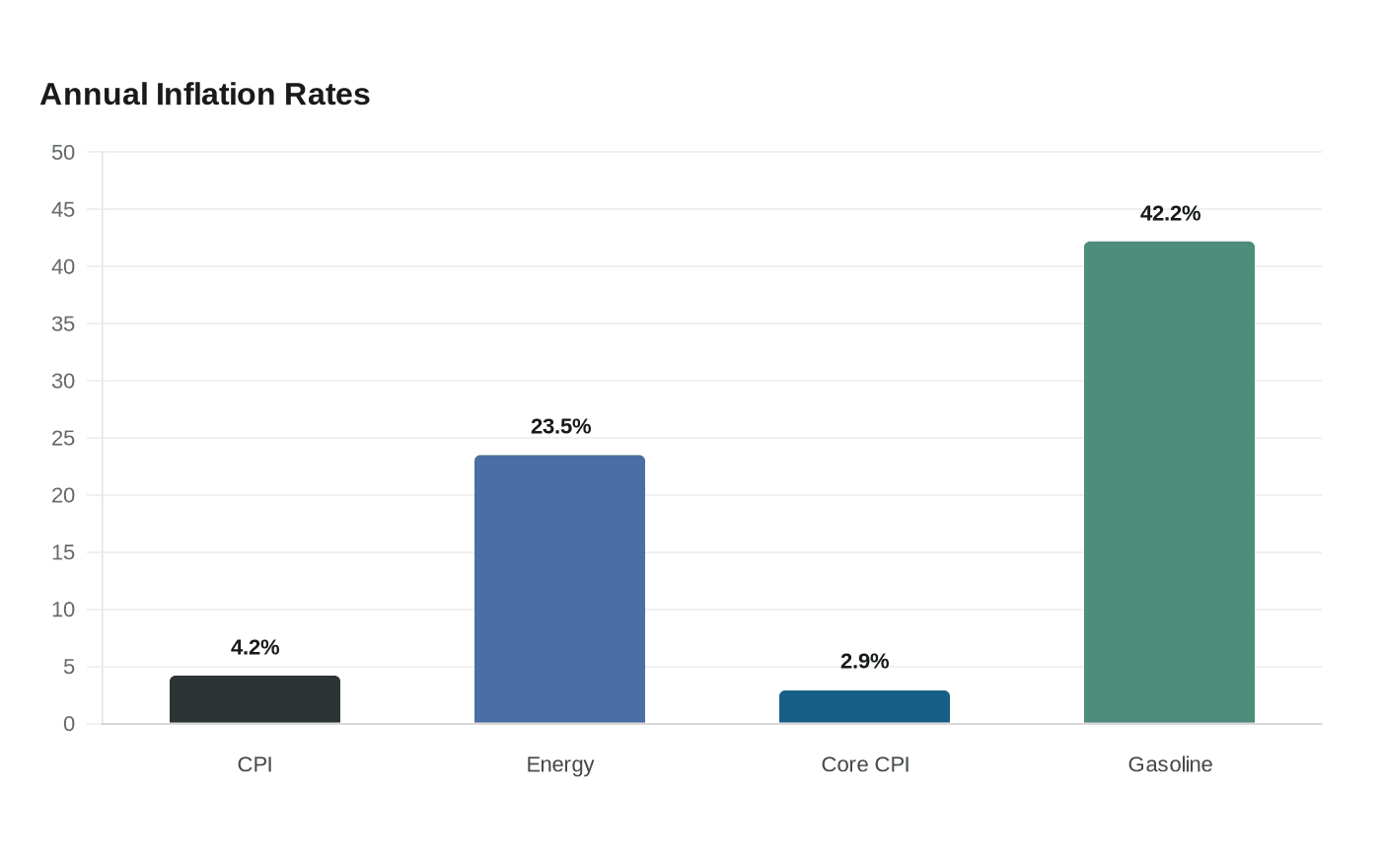
Gasoline's climb to $4.48 a gallon in May pushed the cost of driving higher just as broader consumer inflation accelerated to a three-year high, leaving households with pricier fuel, groceries and monthly bills. The Consumer Price Index for All Urban Consumers rose 0.5% from April and 4.2% from a year earlier, the fastest annual pace since April 2023. Energy prices did most of the damage, rising 3.9% in the month and accounting for more than 60% of the overall increase.
The U.S. Bureau of Labor Statistics released the May report on June 10, showing that the energy index had surged 23.5% over the prior 12 months. By contrast, the core CPI, which strips out food and energy, rose 0.2% in May and 2.9% over the year. The split matters for consumers: the monthly inflation burst was driven less by a broad-based acceleration in services and goods than by the sudden jump in fuel and power costs.
The average price of regular motor gasoline rose 9.2% from April and 42.2% from May 2025, according to the Bureau of Transportation Statistics. That increase fed directly into transportation costs and indirectly into store prices as shipping and delivery became more expensive. Economists tied the energy spike to the conflict in the Middle East and the Iran war’s pressure on global oil markets, which helped lift crude and gasoline prices at the same time.
For the Federal Reserve, the reading complicated the path back to lower inflation. Reuters described May’s increase as the fastest pace in three years and said it strengthened the case for the central bank to keep interest rates unchanged into 2027. The broader policy question now is whether the latest surge will fade as oil and gasoline prices ease, or whether geopolitical shocks are becoming a more persistent driver of U.S. inflation. Even after recent declines, gasoline remains elevated, keeping pressure on drivers and on the prices that move through the rest of the economy.
This article was produced by Prism’s automated news system from verified source data, official records, and press releases, then run through automated quality and moderation checks before publishing. The system is built and supervised by the people who set the standards it runs under. Read our full AI policy.
Know something we missed? Have a correction or additional information?
Submit a Tip