Infleqtion Projects $40 Million Revenue in 2026, Citing Growing Quantum Demand
Infleqtion posted $32.5M in 2025 revenue while losing $35.3M from operations; its $40M 2026 target hinges on defense sensing deals and a NASA space mission.
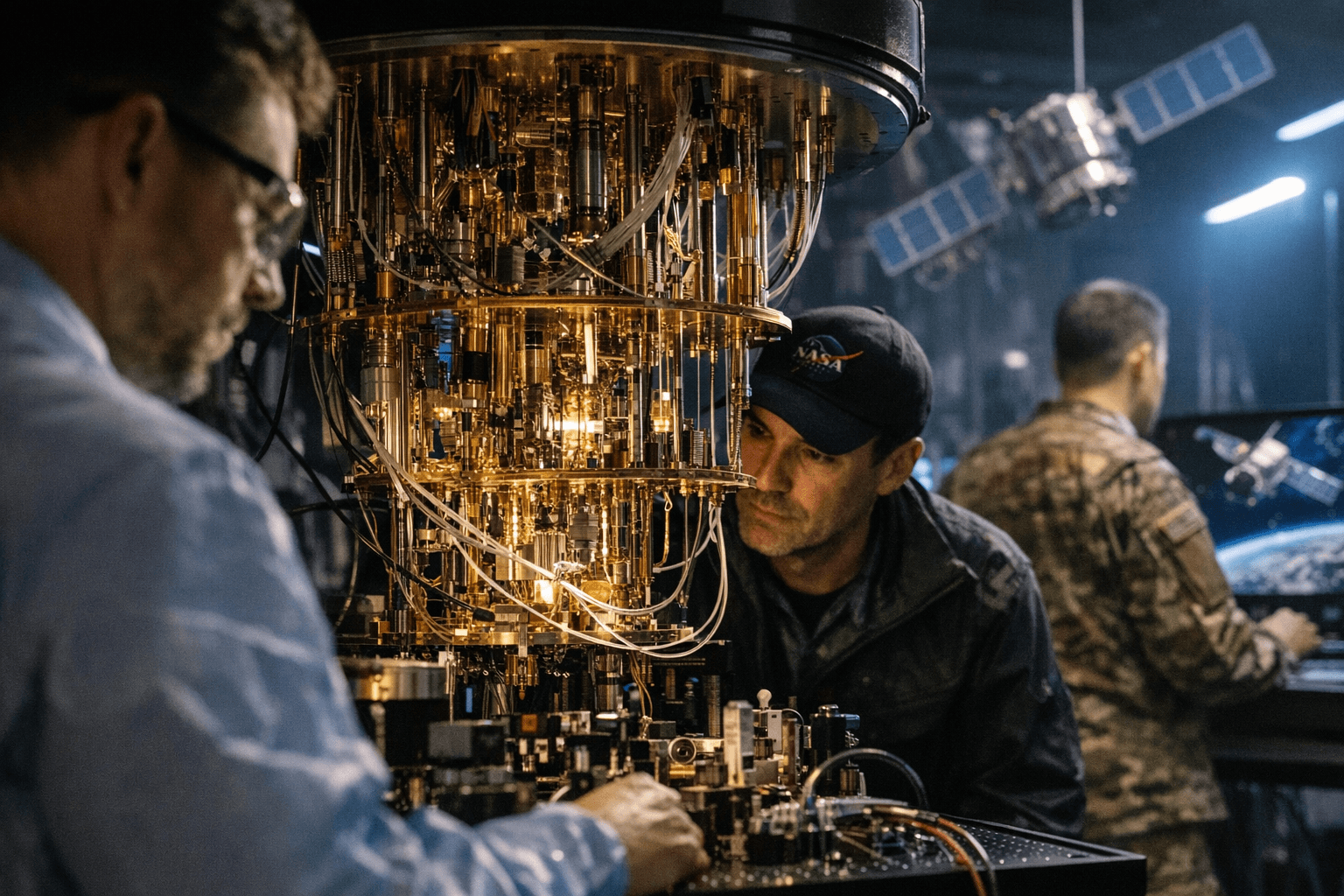
The $40 million revenue projection that Infleqtion published Tuesday is less a financial forecast than a stress test for whether quantum technology can actually earn money before it revolutionizes computing. The Louisville, Colorado company, which trades on the NYSE as INFQ, reported $32.5 million in revenue for full-year 2025 while posting a $35.3 million GAAP operating loss, $28.1 million on a non-GAAP basis. That gap between receipts and costs is a defining feature of quantum hardware companies, and the 23 percent revenue increase implied by the $40 million guidance will do little to close it.
CEO Matthew Kinsella framed the target as a product of tangible progress, saying 2025 "was a pivotal year for Infleqtion as we strengthened the business materially, advanced both our quantum sensing and quantum computing platforms, and expanded customer and partner relationships." He cited "growing demand for deployable quantum technologies in mission-critical applications, from precision timing and resilient navigation to large-scale quantum computing systems" as the commercial foundation for the company's confidence.
What makes Infleqtion's near-term revenue profile unusual in the quantum sector is where it actually comes from. Infleqtion generates quantum technology revenue from defense and sensing contracts even before its quantum computers achieve advantage, a structural distinction that sets it apart from peers betting entirely on computing access fees. The most commercially mature asset in its portfolio is not a quantum processor but the Tiqker optical atomic clock, integrated with Safran Electronics and Defense's White Rabbit and SecureSync systems and brought to market on April 1. In a live demonstration, the combined solution was validated in a real-world environment, demonstrating picosecond accuracy versus the nanosecond accuracy of standard GPS, targeting defense, telecommunications, and critical infrastructure customers who cannot risk signal disruption or denial.
The computing side delivered its own concrete milestone in March, when Infleqtion installed the United Kingdom's only operational 100-physical-qubit quantum computer at the National Quantum Computing Centre, meeting what the company described as a major UK national quantum mission goal. Government funding rounds out the pipeline: two ARPA-E awards totaling $10.1 million, a prior $6.2 million ENCODE grant followed by a $3.9 million QC3 award for chemistry and materials science, alongside more than $20 million in contracted funding tied to NASA's Quantum Gravity Gradiometer Pathfinder mission to fly the first quantum gravity sensor in space.
The contrast with better-capitalized competitors is stark. IonQ crossed a historic threshold in 2025 as the first quantum computing company to exceed $100 million in GAAP revenue, reporting $130 million at 202 percent year-over-year growth, driven heavily by cloud access contracts its trapped-ion hardware supports. On the neutral-atom side, QuEra achieved 96 logical qubits with 448 physical atoms in January 2026, the most logical qubits of any company using encoded methods, the subject of a Nature paper validating below-threshold error suppression, though that technical result has not produced comparable revenue disclosures.
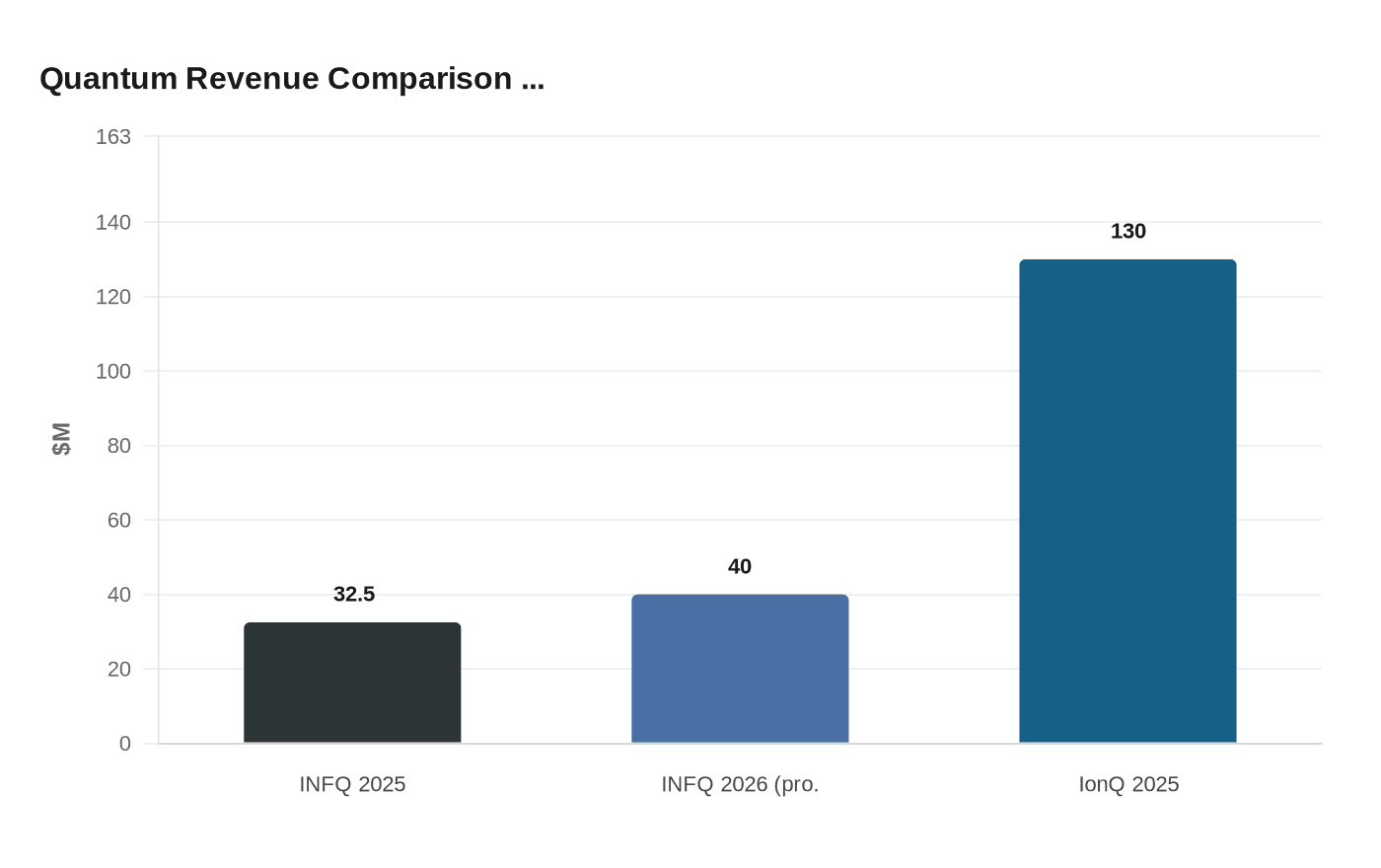
Infleqtion's dual-use neutral-atom architecture, the same physical platform underpinning both sensing and computing products, is management's argument for why the company can generate revenue from precision timing and gravity sensing contracts today while scaling toward fault-tolerant computation tomorrow. The $40 million number will ultimately be judged not by how it sounds but by whether government deliveries like the NQCC installation and the Safran timing product convert into sustained commercial contracts rather than one-time program milestones.
This article was produced by Prism’s automated news system from verified source data, official records, and press releases, then run through automated quality and moderation checks before publishing. The system is built and supervised by the people who set the standards it runs under. Read our full AI policy.
Did this article answer your question?

