Inquiry finds white working-class pupils still lag behind peers
White working-class pupils were still falling behind from early years to university, as the inquiry polled 2,007 young people, 2,003 parents and about 500 school staff.

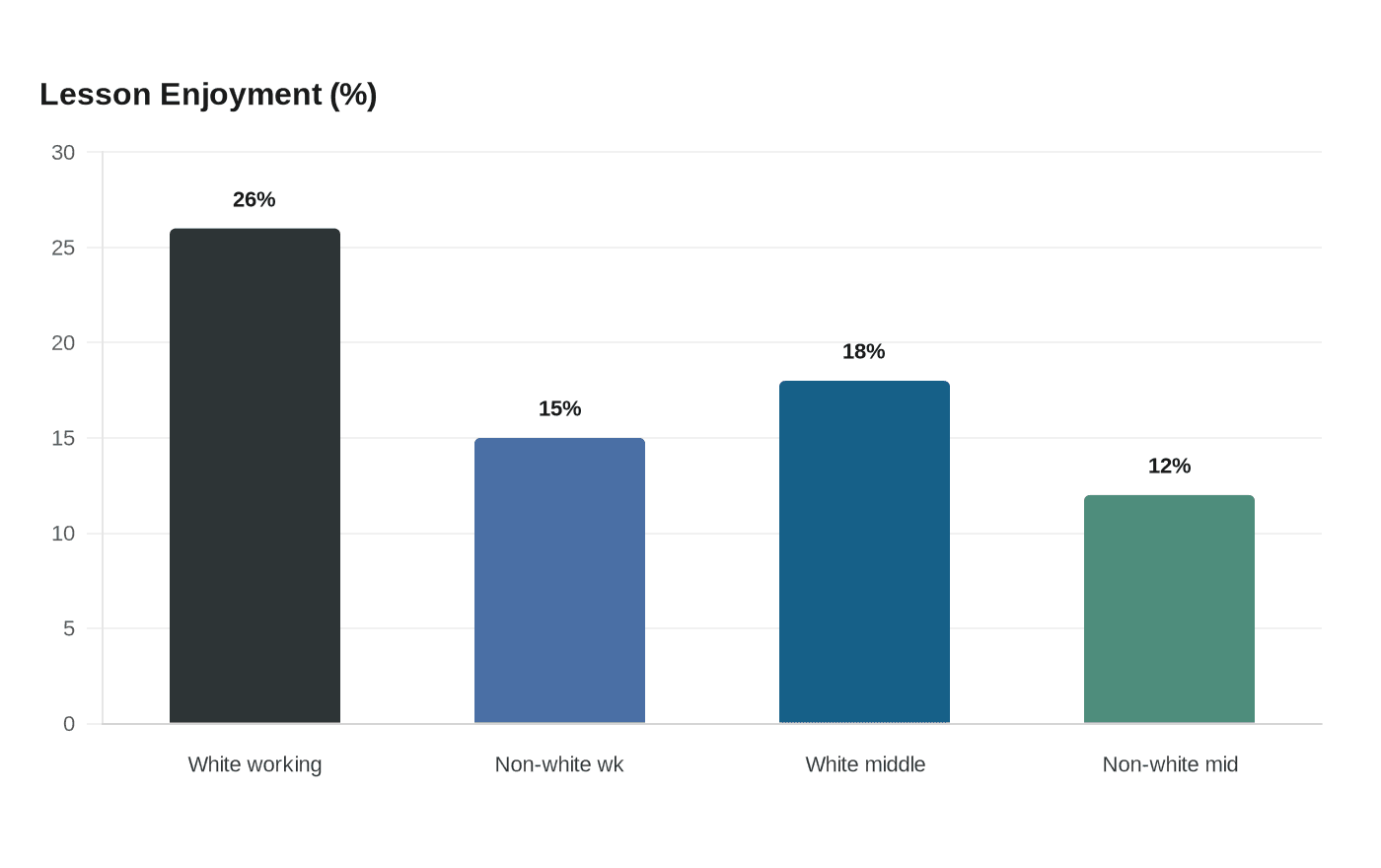
Polling of 2,007 young people, 2,003 parents and about 500 school staff under the Independent Inquiry into White Working-Class Educational Outcomes found 26% of white working-class students rarely or never enjoy lessons, compared with 15% of non-white working-class peers, 18% of white middle-class students and 12% of non-white middle-class young people. Launched in June 2025 and backed by the Department for Education, the inquiry is running until March 2026 and plans a final report for summer 2026. The term white working class is contested and has no consistent definition.
Its evidence sessions have been split across curriculum and teaching, transitions and destinations, inclusive practices, community influences, and vocational learning, colleges and technical and skills policy. It wants the voices of white British working-class children, young people, families and communities at the core.

A House of Commons Education Committee report in June 2021 found White British pupils eligible for free school meals underperformed persistently from early years through higher education. It found that 53% met the expected standard of development at the end of early years in 2018/19, 17.7% achieved grade 5 or above in English and maths GCSEs in 2019, around 39,000 children in that group missed two strong GCSE passes, and 16% started higher education by age 19 in 2018/19.

The inquiry’s October 2025 polling found 47.5% of white working-class children reached the expected early-years development level, 18.6% achieved a good pass in English and maths, and just 3.2% reached a highly selective university. Close to half of white working-class parents were deeply disillusioned with their child’s school by Year 11, while only 52% said teachers respected them in Years 10 and 11 and 36% saw good grades as part of success. A quarter of white working-class boys never spend any time reading.
The next stage will add qualitative work, quantitative research, expert evidence gathering and policy development.
This article was produced by Prism’s automated news system from verified source data, official records, and press releases, then run through automated quality and moderation checks before publishing. The system is built and supervised by the people who set the standards it runs under. Read our full AI policy.
Did this article answer your question?


