Inside New York City’s oldest working farm and living history museum
A 47-acre farm in Queens has endured since 1697, preserving Dutch farm buildings, Indigenous and Black histories, and a rare city landscape.

Tucked into Glen Oaks, Queens, Queens County Farm Museum looks like a contradiction in motion: a working farm inside the nation’s largest city, holding on to 47 acres of open ground where towers and traffic might have been expected. The site dates to 1697, making it one of the oldest still-operating farms in America and New York City’s largest remaining tract of undisturbed farmland. What survives here is not a museum frozen behind glass, but a living record of agriculture, land use, and preservation layered across more than three centuries.
A farm that never stopped being a farm
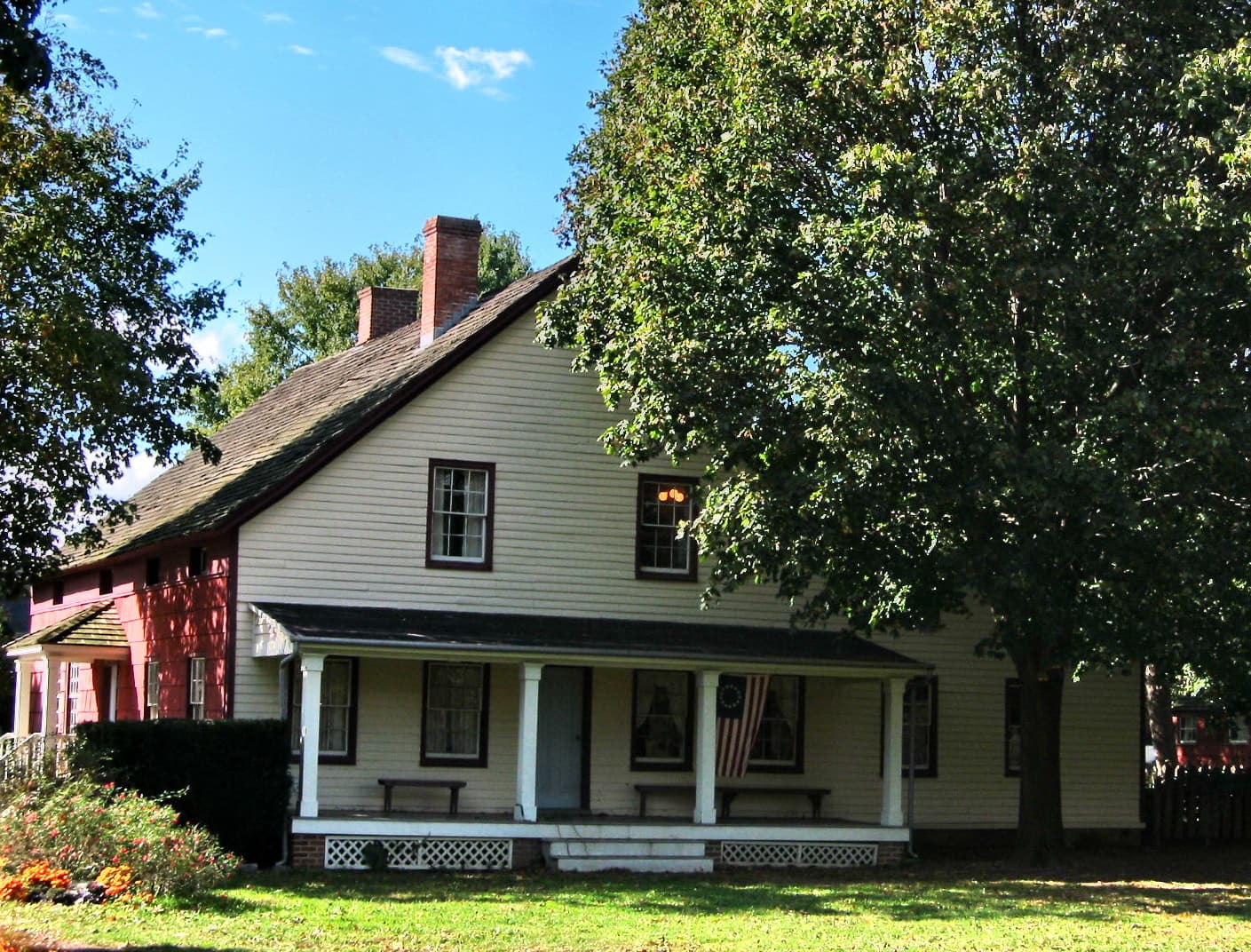
Queens County Farm Museum is built around continuity. John Harrison sold the land to Elbert Adriance in 1697, and Adriance family ownership stretched for more than a century after that. The earliest part of the farmhouse, a three-room Dutch farmhouse, was built in 1772 by Jacob Adriance and his wife Catherine; the house was expanded again in the 1830s, preserving the changing footprint of a working homestead rather than replacing it with a single preserved snapshot.
The land’s modern survival is just as important as its colonial-era origins. Private ownership ended in 1927, when New York State bought the property and folded it into the adjacent Creedmoor Psychiatric Center. In 1973, area residents, with support from State Senator Frank Padavan, pushed to save the historic buildings from demolition. The museum opened in 1975, and the farmhouse restoration was completed in 1986. That sequence matters because it turned a threatened farm into a public institution without erasing the working landscape that made it worth saving.
What the 47 acres preserve
The museum’s value is not limited to one house. The Queens County Farm Museum says the property connects visitors to agriculture and the environment through historic buildings, a greenhouse complex, livestock, planting fields, an orchard, and an herb garden. Its mission is to preserve, restore, and interpret the site’s history and the lifestyles of its owners, which gives the farm an unusually broad mandate: it is part garden, part historic site, part working classroom.
The scale is what makes the place feel exceptional in New York City. The museum says the farm welcomes more than 500,000 visitors annually and describes itself as the most visited farm museum in the United States. It is owned by the New York City Department of Parks and operated by the Colonial Farmhouse Restoration Society of Bellerose, Inc., and it holds the additional weight of being both a New York City Landmark and a property listed on the National Register of Historic Places. Those designations place the farm inside the city’s preservation system while keeping it open as an active, public landscape.
The histories the land carries
The farm’s past reaches beyond the Adriance family and beyond European settlement. The Queens County Farm Museum says the site sits on the ancestral homeland of the Matinecock-Algonquin, and archaeological research there has uncovered historic artifacts linked to Indigenous ancestors. That makes the property part of a much older land history than the farm records alone can tell, one that predates the colonial deed chain that now defines the site’s paper trail.
The property also holds documented evidence of enslaved labor. NYC Parks says 14 enslaved people were documented there in records from 1698 to 1820. That fact changes how the farm should be read: not just as a preserved rural relic, but as a place where agriculture depended on coerced labor as well as family ownership and later civic rescue. The museum’s interpretation now has to hold all of those histories at once, and that tension is central to what makes the site matter.
How the museum works today
The farm’s public life is built around education as much as preservation. Its programs are aligned to New York State learning standards, and school visits use hands-on instruction to teach historic homesteading, sustainability, biodiversity, nutrition, and local history. That approach makes the site useful not only as a heritage attraction, but as a working demonstration of how land, food, and memory fit together in a city that usually hides its agricultural past.
Seasonal programming keeps the farm in the city’s cultural calendar. The Amazing Maize Maze began in 2003 and has become one of New York City’s beloved fall traditions, adding a contemporary draw to a site whose core appeal is historical depth. The museum is free to the public on most days, which helps explain why a place rooted in 17th-century land transfers still reaches such a large modern audience.
Queens County Farm Museum endures because it still performs the basic function that made it valuable in the first place: it keeps land in use. In a city defined by reinvention, this 47-acre tract shows how preservation can protect more than architecture. It can preserve the shape of a working landscape, the traces of Indigenous and enslaved histories, and a rare reminder that New York’s story is also an agricultural one.
This article was produced by Prism’s automated news system from verified source data, official records, and press releases, then run through automated quality and moderation checks before publishing. The system is built and supervised by the people who set the standards it runs under. Read our full AI policy.
Did this article answer your question?