Inside the Premium Bubble, Where Luxury Shields You From Real Life
Ultra-luxury airline cabins cost up to $22,000 round-trip, yet the passengers inside them are quietly bankrolling cheaper fares for everyone behind them.
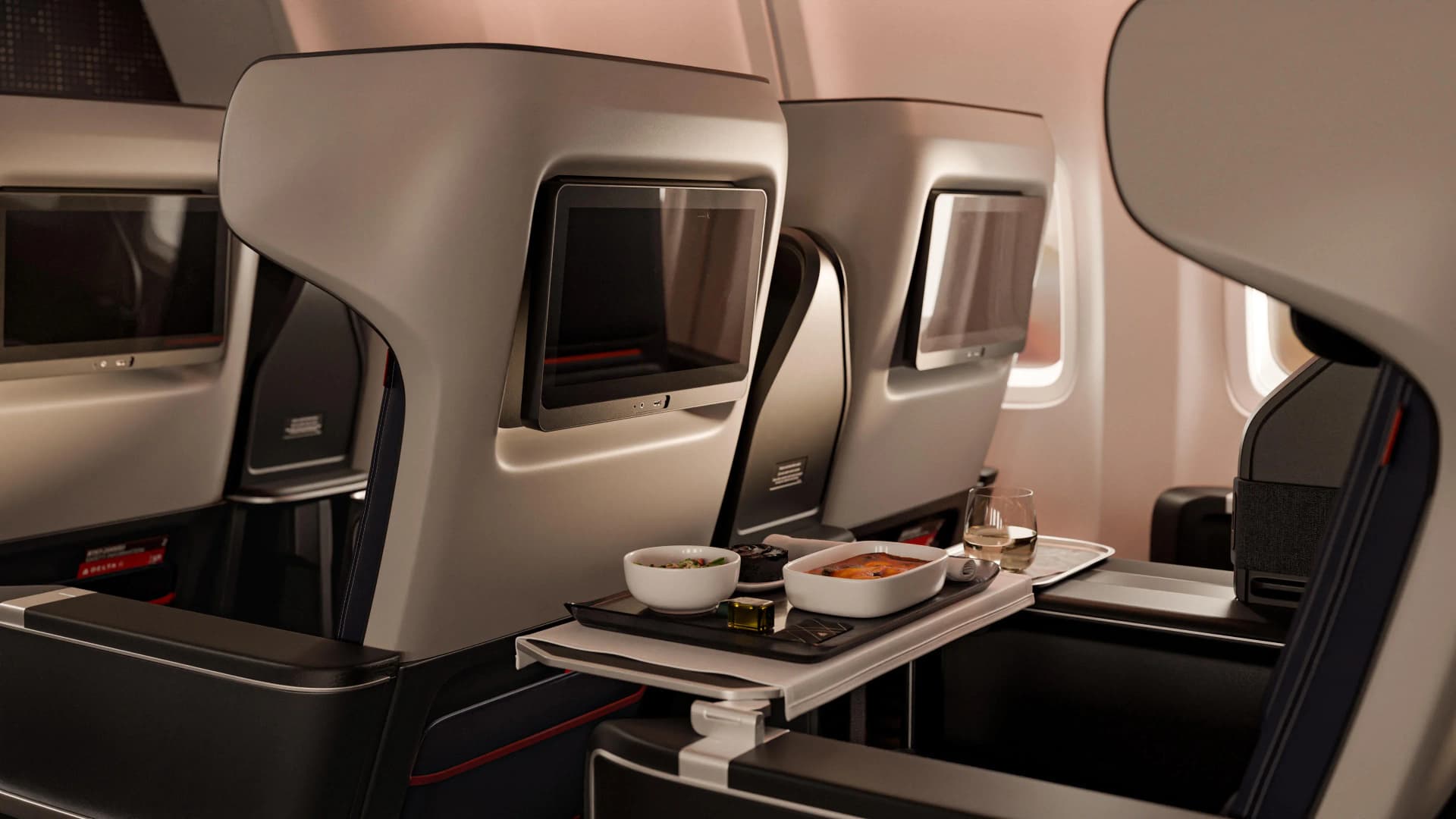
Fewer than 3% of airline passengers worldwide have ever booked a true first-class cabin, according to estimates from the International Air Transport Association, yet the experience at the very front of the plane has never been more deliberately, almost aggressively, removed from the realities of the aircraft everyone else is boarding. The premium bubble is not simply about comfort. It is a parallel journey, engineered to ensure that turbulence, inconvenience, and the mundane friction of mass transit never intrudes on those willing, or positioned, to pay for its absence.
The Hardware: What $22,000 Actually Buys
Some airlines have added private suites with privacy doors, double beds, and high-end luxury amenities and fine dining. Business class has become the new first class, but the carriers still operating dedicated first-class products have responded by leaning further into the extraordinary. The sliding door, the double bed configuration for pairs, and the 32-inch 4K monitor set the Singapore Airlines Suites product apart from almost anything in the sky in 2026. The seat itself converts to a 76-inch flat bed with a proper mattress topper, rather than a fold-flat mechanism over storage units. No other scheduled product combines a closing door, a six-suite cabin, and ultra-long-haul non-stop routing.
Emirates takes a different approach to excess. That feature is exclusive to Emirates: two shower spas on A380 First Class, with a 25-minute water allocation per passenger. The ability to shower at 40,000 feet, then return to a suite with a bar and a fully flat bed, is not incidental to the product. It is the product. Emirates wins on amenity breadth, including the shower, the onboard bar, and a longer bed; Singapore wins on dining quality, exclusivity, and the unique double-bed suite option.
Air France entered this competition aggressively. Air France's 2025 La Premiere relaunch was framed as part of a strategic roadmap to position the carrier as one of the most elite premium carriers in the world. The carrier is explicitly targeting customers who would otherwise be more likely to book private jets.
The Price Tag: Cash, Corporate, and Points
At $12,000-$22,000 round-trip per person versus $150,000 or more for a private charter, the gap between the two options funds a substantial portion of a luxury hotel stay or additional travel. Emirates and Singapore Airlines deliver a genuinely world-class experience. That price range is for cash buyers, who represent only a fraction of the passengers actually sitting in those seats.
United Airlines is reshaping the way premium long-haul travel is priced. As part of a sweeping overhaul, the airline is introducing a new, multi-tiered pricing model for its elite international cabins in 2026, transforming the economics of luxury air travel with a more sophisticated and tailored experience for high-end passengers. That tiered structure reflects a market reality: first and business class cabins are filled by three distinct buyer types. Corporate travel programs book in bulk, often securing negotiated fares. Points-and-miles enthusiasts, who have accumulated currency through credit card spending and loyalty programs, redeem for experiences that would otherwise cost five figures. And a smaller group of cash buyers simply purchases without reference to the price.
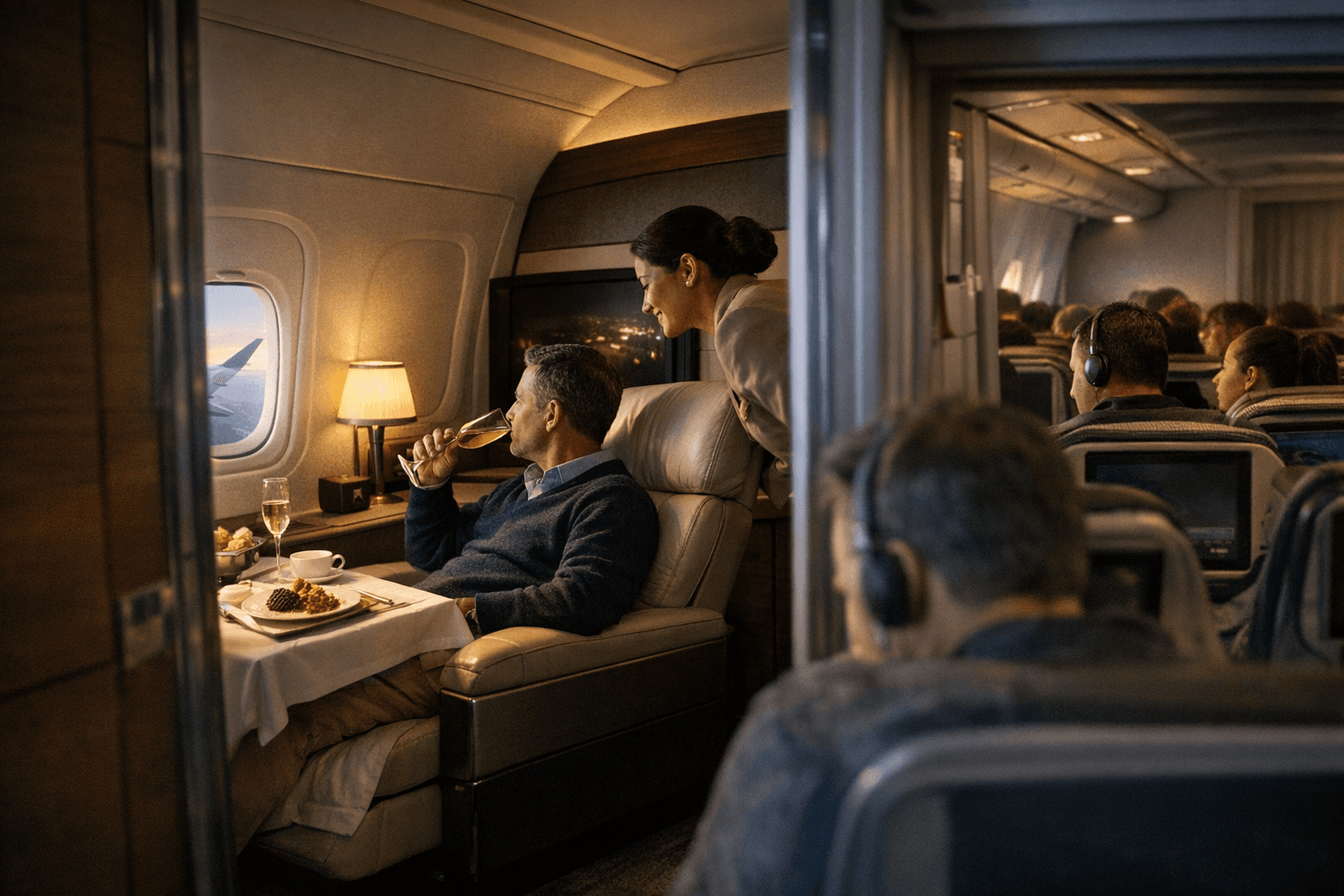
Corporate travelers and high-yield leisure passengers are willing to pay several times the cost of an economy fare for schedule flexibility, lie-flat seats, and premium service. These tickets often carry far higher margins than economy, especially on long-haul routes where demand for comfort is strongest.
The Cross-Subsidy: Who's Really Paying for the Rest of the Plane
The economics of the premium cabin extend far beyond the passengers sitting inside it. Business class seats return far better profit per passenger, but they pose a greater risk of not selling. That tension has driven airlines to invest heavily in the middle tier. Premium economy cabins have become a major profit center for airlines, offering higher yields than economy class with only marginally higher costs. Major airlines including Korean Air, United, Delta, Air France-KLM, and Virgin Atlantic are expanding these products.
Meanwhile, the back of the plane operates on a fundamentally different financial logic. Economy class is typically the least profitable cabin on a per-seat basis. Fares are highly competitive and price sensitive, while costs such as fuel and catering remain fixed. The practical consequence for most passengers: tighter pitch, unbundled services, and fees attached to choices that were once included. The revenue that makes those economics tolerable for airlines flows disproportionately from the front.
The Inequality Engine at 35,000 Feet
Airlines want to attract high spenders where cost is no object and bring in extra revenue. That pursuit has created a physical and experiential bifurcation that is unique in mass transportation. The same aluminum tube carries two radically different journeys. Behind the curtain, seat pitch has contracted, carry-on fees have proliferated, and the boarding process has become a multi-tiered ritual of status display. Ahead of it, flight attendants address passengers by name, menus are printed on heavy card stock, and the entire cabin is engineered to filter out the awareness that air travel is, for the overwhelming majority, a cramped and transactional experience.
The frictionless bubble is not an accident of excess. It is a business model. The premium cabin's high margins directly underwrite the competitive pricing that fills economy seats, and those economy revenues keep the aircraft economically viable in the first place. The shower at 40,000 feet, the sliding suite door, the mattress topper on a 76-inch bed: these are not simply luxury amenities. They are the financial architecture holding the whole enterprise together, with the price of admission invisibly distributed across every seat behind the curtain.
This article was produced by Prism’s automated news system from verified source data, official records, and press releases, then run through automated quality and moderation checks before publishing. The system is built and supervised by the people who set the standards it runs under. Read our full AI policy.
Did this article answer your question?